Dental Practice Solutions
Schedule My Opportunity Call Call us now (623) 252-1941 Client login
  • Home
  • About
    • About Us
    • Testimonials
    • Videos
  • Services
    • Hire a Dental Hygienist
    • Dental Hygiene MAX Course
    • 6-Month Dental Hygiene Department Optimization
    • 12- Month Dental Hygiene Department Training
    • Dental Hygiene Department / Team Workshop
  • E-Learning
    • Free Resources
      • BOOST CASE ACCEPTANCE eBook
      • Treating the Gingivitis Patient
    • More Courses
      • Oral Inflammation and Systemic Vitality
      • Properly Sequence Hygiene Appointments
      • Alzheimer’s Disease Prevention.
  • Webinar
    • Current Webinar
    • Power Hour March 15 2024
  • Blog
    • Podcasts
  • Contact Us

Your Dental Practice Profitability Compass

By: admin

November 29, 2017

How much time did you spend planning your last vacation?

Did you map it out?

Or, did you just throw some clothes in a suitcase and take-off in your car headed in what you thought was the quickest path to your destination?

I bet that you took many hours to plan your last vacation and you started packing probably the week before you left.

In today’s world of technology, you pulled up your map using your mobile device and maybe you printed the directions on your laser printer.

How much time do you spent planning your day at the dental office?

Does your team have a practice profitability compass?

Your Compass

The compass we provide our clients is what you probably know as a “team huddle.”

Once you have this system in place, it should take about ten minutes to plan your day.

The entire team will audit their area of expertise.

Here are a few suggestions to organize your team huddle:

  1. Begin with the financial coordinator (Office manager or similar position) reporting on production/ collections: Monthly goal and your current month-to-date production/collections. Talk about what went well the previous day and what did not go well, etc.
  2. Scheduling coordinator reports on open holes in today schedule and in the near future. Let the team know about ER patient availability. Provide doctor with a list of new patients for him/her to call before their 1st (Yes! This is something different and you will stand out among other dentists in your community if you do this one thing!)
  3. Hygienists come to this meeting with an understanding and communicate to the team about which patients need: new medical history, Oral ID™ FMX/BWX, doctor exam, perio charting, outstanding restorative needs, family members who also need a hygiene appointment or restorative care, post-op call update (For all patients who received local anesthesia), etc.
  4. Assistants audit their schedule to share and inquire about patients with special needs, local anesthetic needed, type of impression needed, results of post-op calls from the day before, which patients have family members who need a hygiene or restorative appointment, etc.
  5. Yes, even doctor has a part in the morning team huddle. We suggest that our doctor call all new patients scheduled during the week prior to their 1st appointment. Doctor will report on the outcome of this quick call to welcome the new patient.

When everyone takes time to look at their schedule and review their patient needs as listed above, you will discover adjunctive and necessary services your scheduled patients and their family members need.

When you look at your practice profitability compass you can work together as a team to close various gaps in meeting your goals. You will also be able to serve your patients at a much higher level.

Closing the Gaps

Maybe you are still scratching your head. Some of you think meetings are a waste of time.

What I am suggesting is that everyone let the team know what is needed to make the day profitable, efficient and provides the best care for the patients.

Your morning team huddle will help navigate your day and eliminate any un-necessary bottlenecks which might occur.

This compass is what makes a day that has a smooth landing without turbulence.


Debbie Seidel-Bittke, RDH, BS is a dental consultant, coach, speaker and author. She is also CEO of Dental Practice Solutions. Debbie is a world-class leader in creating profitable hygiene departments. She is well-known as a former clinical assistant professor at USC in Los Angeles and a former hygiene department program director. Dentistry Today recognizes Debbie as a Leader in Dental Consulting.

Be sure to grab this free 3-part hygiene video department training, webinar on the Gingivitis Code plus flowchart on training the patient with gingivitis and Strategic Planning Session: http://www.dentalhygiene.solutions/

You can reach Dental Practice Solutions to schedule a complimentary strategic planning session by calling 949-351-8741 or you can send an email to: admin@dentalpracticesollutions.com

You can also go to the website: www.https://dentalpracticesolutions.com

Posted in Blog

More compliance. Less defiance. Innovative model for case acceptance by patients…the path of least resistance.

By: admin

November 22, 2017

By Steven Ury, DDS, Periodontist
      Randy Nolf, DDS, Periodontist

Dentists and hygienists are using a simple to complete analytical software making discussions with the patients easier…making the progression to treatment compliance easier… and enabling a practice to substantially increase case acceptance for periodontal therapy. This technology makes available a single language, with everyone “on the same page”, to discuss periodontal disease, and the necessary treatment.

The software allows for thoughtful and readily understandable discussions with patients thus improving the progression to treatment acceptance through a path of least resistance.

Implementing innovative technology into the practice, using risk and disease severity health scores as clinical support, will no doubt increase patient compliance.

PreViser™ Corporation www.PreViser.com provides their web enabled Oral Health Information Suite (OHIS) software for free. The use of the technology provides three (3) numbers, or scores, indicating patients’ risk of future periodontal disease, existing disease state and their ongoing oral health stability. With these 3 scores, patients then have a clearer idea of the severity and comprehensiveness of their problems. In other words, they know how things are going.

A nice feature of the OHIS is that it allows practitioners to recalculate the risk scores, just as if the patients had completed the advised treatment. So, a patient can visualize what will happen without treatment compared to what will occur with the recommended care. That’s when the fun begins. These scores predict whether the treatment plan will be working. Outcomes are the key.

Dental practices are utilizing this powerful method to impact a patient’s decision to proceed with care for a lifetime of oral health. Case acceptance is markedly improved providing more treatment for periodontal disease by the dentists and hygienists including any necessary subsequent restorative care.

Why now? Well, there’s a new sheriff in town. Patients and practitioners, as well as insurance companies and employers, are relying less on subjective findings to determine if periodontal care is working.  Welcome the new law of the land – objective findings derived by an analytical software. Practitioners are accurately communicating with patients about their risk of disease and the outcomes of treatment. Everyone’s “on the same page”. We’re talking Evidence Based Practice here; the integration of clinical expertise, patient values, and the best research evidence into the decision-making process for patient care.

Instead of dentists and hygienists potentially disconnecting on a diagnosis, a treatment plan or a prognosis, they can agree and provide an easy to use, objective and reproducible way to measure, understand and communicate patients’ risk and disease level as simple numeric scores.

People relate to scores and knowing their numbers gets them involved. Physicians supply blood pressure, cholesterol, and diabetes numbers to their patients to follow their progress. Now dental patients will know their periodontal disease scores and look for improvement in the numbers.

More and more dentists in the know are advocating the principles of a medical model of healthcare for dentistry. Less repair and more interception and prevention. Consider the PerioCentric™ practice, defined as a best practice in which treatment revolves around sound periodontal diagnosis and treatment, utilizing metrics to evaluate treatment outcome.  It employs a simple step by step, reproducible, algorithmic approach to care we call the PerioBlueprint™.

When implemented it provides dental professionals the knowledge and tools to discover undiagnosed and untreated periodontal disease in an existing practice. The appropriate care for these conditions will result in improved health for patients as well as production and revenue for the dental practice that may prove to increase exponentially.

Dentistry is adjusting to a new paradigm that is better for patients by shifting focus away from procedures for repair of disease… to a model of interception and prevention of disease.

There is unprecedented demand for increased care for periodontal disease. The most recent data from the Center for Disease Control revealed that 47.2% of adult Americans exhibit periodontal disease and the disease increases to 70.1% of adults over 65 years. Contemporaneous insurance company data reports only about 7% obtain periodontal treatment…Only 7%.

Dentistry has a busyness problem. Nationally, approximately 1 in 3 dentists say they are not busy enough. Imagine the increase in production and revenue when discovering that perhaps 50% of patients require some form of periodontal care. And not just code 1110 “prophy” care – we’re talking anesthetized scaling/root planing, pocket reduction and tissue grafting surgery. LANAP, and more. Of course, when maintenance starts, using the obligatory code 4910 will result in more comprehensive visit than a code 1110 “cleaning” and thus, improve hygiene production.

We are in a time of transformational change in healthcare and tremendous opportunities for enhanced collaboration among healthcare providers exist. Dentists have a chance to fundamentally rethink their role within the healthcare system and take advantage of these new opportunities. It would not only help peck away at dentistry’s busyness problem but would also allow dentists to contribute much more significantly to whole-body health. And really, isn’t that what it’s all about.


Dr. Steven Ury, Periodontist
Dr. Randy Nolf, Periodontist
PreViser Corporation and AdViser Corporation Co-Founders
Directors, The Synergy Academy (www.TheSynergyAcademy.com)
UryAdViser@gmail.com


About Dr. Ury

Dr. Steven R. Ury, Periodontist

Academic Faculty Director, The Synergy Academy

An entrepreneur at heart, Steve Ury altered his career from engineering to focus on the potential of the burgeoning dental industry. He earned a degree in dentistry, owned a general practice and then became a periodontist with an office in NY.

During his leadership of dental study groups and as past president of the largest periodontal organization in the northeast United States, Dr. Ury interacted with other dental professionals. He foresaw the changing landscape of periodontal care and referral.

As co-founder of PreViser Corporation, he witnessed the development of analytic software to help expose undiscovered periodontal disease. More disease revealed equates to more treatment rendered resulting in more healthy patients.

Lack of busyness is problematic in dental practices. Realizing periodontal disease concerns approximately 50% of the adult population but only about 7% have related care, he considered the possibilities. Dr. Ury believes that dentists could easily increase production and revenue by administrating in-office, non-surgical and basic surgical periodontal treatment.


About Dr. Nolf

Dr. Randy Nolf, Periodontist

Clinical Faculty Director, The Synergy Academy

As a periodontist, Randy Nolf has witnessed the changing dental industry as an opportunity is expanding for general dentists and specialists alike. Dr. Nolf believes that the same is true for dental education which is at the dawn of a major shift to less centralized, more affordable, and rapid practice adoption model of delivery.

He has continually been involved with teaching since he received his advanced certificate in Periodontology from Temple University in 1981. His outstanding credentials include a certificate from the gIDE Master Clinician program and as co-founder of the PreViser Corporation.

Dentistry is adjusting to a new paradigm, better for our patients by focus shifting away from repair to interception of disease. Interception as a treatment model is possible through sensitive artificial intelligence permeating into our practices. Randy is gratified to witness this evolution in part through software he created and now being adopted throughout the Us and UK.

Dr. Nolf has been an advocate of supporting general dentists with in-office training as well as on-site surgical procedures his entire career. 35 years integrated into dentists’ offices has led to a new system of training called “Synchronized Dental Learning™” facilitating rapid adoption of new surgical procedures into general practice.

Posted in Uncategorized

Maximizing Your Capacity Inside the Dental Jungle

By: admin

December 28, 2016

Dental Practice Success

Maximizing Your Dental Practice Capacity

In the dental jungle there are thousands of success stories. Let me introduce you to our guide an elite dentist, a peak performer, in our dental industry. His name is Dr. Frank Frederickson.

DENTAL HYGIENE DEPARTMENT/TEAM EMPOWERMENT – MAXIMIZING YOUR CAPACITY INSIDE THE DENTAL JUNGLE

Dr. Carley Carlson is a dentist of five years. She purchased a dental practice three  years ago from a dentist who basically let his practice die. She was able to get a good deal on the price of this practice because it was run down by the previous dentist.

Dr. Carlson decided that in 2017 she wants to take a big leap forward so she has paid to travel into the dental jungle and she has hired her guide named Dr. Frederickson.

Dr. Carlson’s first goal is to break the two million dollar mark for 2017. She knows that focusing on her dental hygiene department will be one of the best ways to accomplish her big goal for 2017.

Dr. Carlson’s question to Dr. Frederickson is, “How do I break the two million dollar mark in 2017?” Dr. Frederickson’s response: “In all honesty, not many dentists think like this but those who do, they actually do it. Size doesn’t matter. You will only be limited by what lies inside the mind.”

Simply put, dentistry is a series of interactions. The student learns from his or her professors and then they will apply what they learn on their patients. A dentist learns from his advanced General Practice Residency and applies what he or she learns on her patients. An experienced dentist moves up the ladder of success by taking continuing education courses; one symposium at a time, adding to their repertoire to help patients.

The king of dental learning experiences a life of success inside the dental jungle with their guide such as Dr. Frederickson.

In the team training with Dr. Frederickson; an experienced mentor or coach, combined with the “Empowered Hygiene” curriculum, you exactly what your team needs to grow your dental practice. Each member of your team will have a leadership role with specific responsibilities, accountability and support to grow the dental practice.

Dr. Frederickson says that empowering the team, providing leadership and accountability from your guide, aka: your coach, will yield the biggest boost to your dental practice.

I’m not just boasting about being “The Guide” so that others can achieve the same outstanding results that our other doctors who walked through the Dental Jungle have experienced, but I do know that doctors who allow a guide to take them through the dental jungle, they double their practice production.

Because they follow a guide who has traveled through the jungle before them, it’s conceivable that a two million dollar practice for Dr. Carlson is easily within reach.

Within a local study club, you have dentists who are competing for patients. By contrast, your guide and everyone supporting you, take a personal interest in you doing well. That in itself can’t hurt when you have the right mindset.

In our Hygiene Department, Team Training, we ensure success by creating a team driven practice. The team members are empowered to be their very best. This means that your team members are peak performers. Each member of the team has a leadership role with accountability and rewards for their success.

I really enjoy helping doctors walk through the dental jungle to maximize their capacity. The leap to your next million dollars in 2017 is only limited by your mindset.

The Hygiene Empowerment with Team Training, will be the best investment you can make for your success in 2017. There is no other place you can go to deposit one dollar and have a return of ten dollars! And those dollars earn dividends for years to come.

Let me know if you are ready to walk with your guide through the dental jungle in 2017. I’d like to show you the way.

You may want to ask about our Mastermind Training which begins on Friday January 20, 2017. Schedule a Call with Debbie Seidel-Bittke, RDH, BS and Dr. Bill Williams

One of Dentistry Today's top dental consultants

Debbie Seidel- Bittke, RDH, BS Dental Hygiene Consultant

Debbie Seidel-Bittke, RDH, BS is a dental consultant, coach, speaker and author. She is also CEO of Dental Hygiene Solutions, powered by Dental Practice Solutions. Debbie is a world-class leader in creating profitable hygiene departments. She is well-known as a former clinical assistant professor at USC in Los Angeles and a former hygiene department program director. Dentistry Today recognizes Debbie as a Leader in Dental Consulting. She can be reached at (888) 816-1511. Send an e-mail to info@dentalpracticesolutions.com or go to her website: https://dentalpracticesolutions.com


Posted in Dental, Marketing

Your Doctor/Hygiene Exam Science Project

By: admin

July 16, 2013

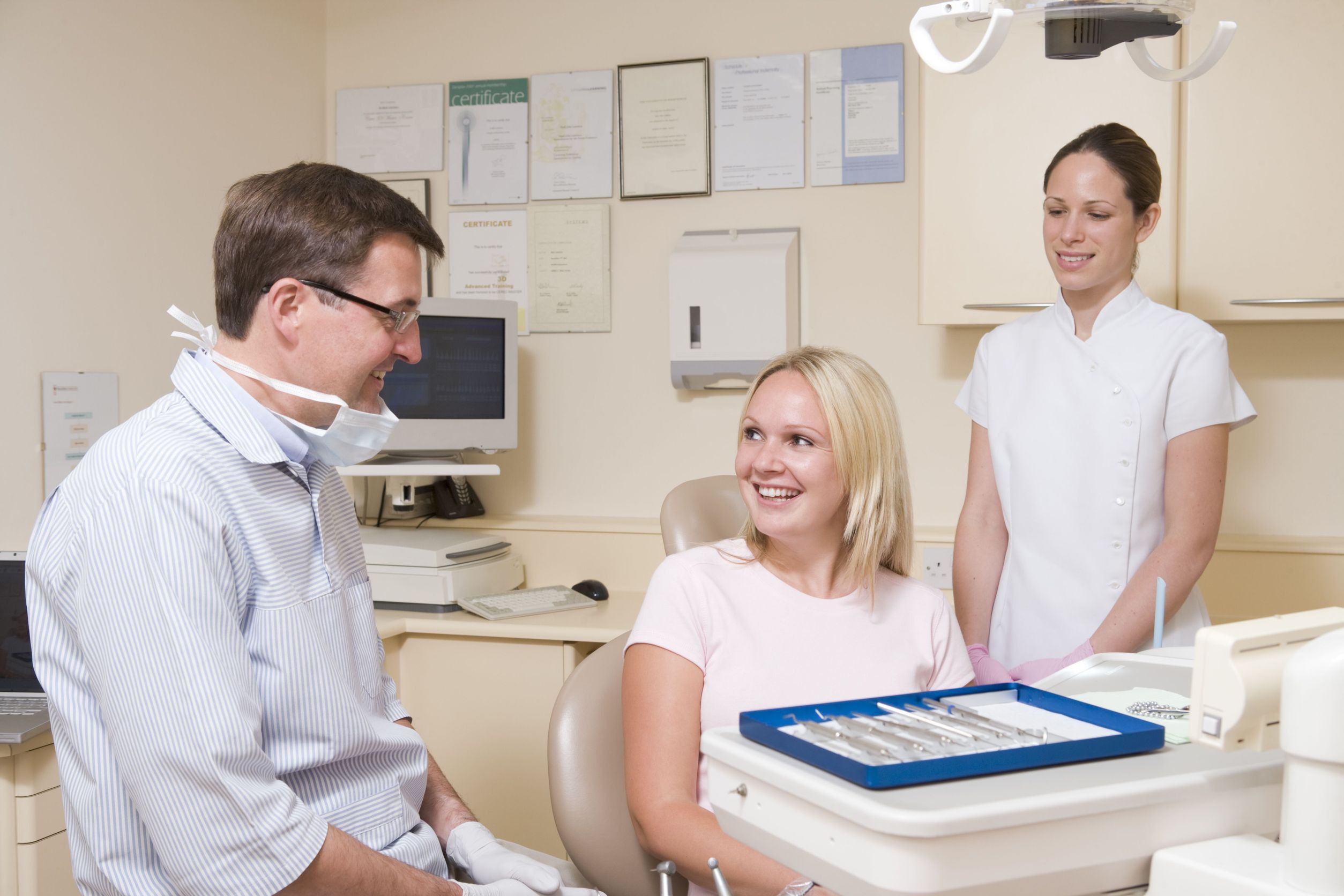
Male dentist assistant and patient

Dentistry has experienced many changes these past ten years. The economy is a lot different and the way we will deliver our treatment recommendations to our patients also needs to change today.

The dental hygienist has a big influence on how and when patients will accept treatment.

In addition, the entire dental team must rely on advanced communication skills to improve case acceptance. The dental hygienist plays a very important role in case acceptance for comprehensive care.

Let’s take this apart and study this system for the doctor/dental hygiene exam and how it can affect case acceptance. Doctor needs to write down how he/she wants this to be streamlined to create highly effective case acceptance. Role-play with your team using scripts and practice this system until you have it down perfectly.

 The Doctor/Dental Hygiene Exam

The doctor/dental hygiene exam is highly effective when there is a specific format for delivering the information: 1st from the hygienist to the patient and 2nd the delivery from hygienist to doctor while your patient is present in the treatment room.

Often times the doctor enters to complete a patient exam and it is rush-rush. Either the hygienist is running behind, maybe the hygienist has been waiting ten minutes for doctor to complete the exam and in addition, the patient may be stressed because they need to leave to return back to work, etc.

At Dental Practice Solutions we recommend a specific method for determining when doctor will complete an exam. The doctor should never wait until the end of a dental hygiene appointment to complete an exam.

When the doctor enters the treatment room, the computer monitor should show images of the teeth, showing calculus, plaque, BOP, fractured restorations, etc.

The dental hygienist also needs to have the most recent radiographs available for doctor to view when completing the exam.

Here is a scenario of how this exam process will be completed:

The dental hygienist needs to have written notes to herself/himself about what they discovered with the patient. Now the doctor and hygienist will have a specific flow to the exam conversation. (This is your roadmap)

Doctor only needs a quick “Hello, how are you Mr. XYZ?” For a patient of record there does not need to be a lot of conversation. Anything over 2 minutes is too long!

The hygienist can begin reporting to doctor with a quick personal update.

 Example:

Hygienist:“Dr. Goodtooth, Mr. Dundee’s son is getting married this summer!”

Doctor: “Congratulations! I remember when Matt was only six years old! How can it be that he is getting married?!”

Hygienist: “Dr. Goodtooth, today I reviewed Mr. XYZ’s health history and there are no changes. I took his blood pressure and it was 100/70. We completed an oral cancer screening with the ORALID®. That was negative. Mr. XYZ told me that he wants to have whiter teeth for his son’s wedding. We talked about completing those implants and before you complete those he wants to do the whitening of his teeth. I told Mr. XYZ that you would like to have the annual x-rays next time we see him in 6 months. His pocket depths were all within normal limits and there was no bleeding today. We talked about him using the Sonicare and he may buy one next time he is here.”

Doctor: Nods in agreement and says something like “Ok, or ah-huh.”

When the hygienist is finished with her/his verbal report doctor can begin to expound on the necessary treatment.

Before the patient leaves the treatment room the hygienist will schedule Mr. XYZ’s next hygiene appointment.

REPETITION IS KEY

Patient’s usually need to hear something new about three times before they are able to fully comprehend their treatment needs. Now they can attempt to make a decision to schedule and pay for treatment.

Imagine we are speaking Greek to them! They have no clue what these funny sounding words mean!

Do not attempt to discuss payment options or schedule the treatment until the patient has confirmed they understand the diagnosis.

Three Verbal Communication Opportunities

When the patient has a new condition that needs treatment it is helpful if you can talk about this three different times during this appointment. The 1st time is when the hygienist completes her or his assessments and discovers the need for treatment. At this point in time the hygienist will co-diagnose the area(s) of concern with the patient seated upright in the dental chair.

The 2nd time the patient will hear about the condition in their oral cavity is when the hygienist reports to the doctor.

The 3rd time with be at the front desk with the treatment coordinator.

STOP AND DO NOT PASS THE FRONT DESK!

Always have patients stop off at the front desk before they leave the dental office. Patient’s should always be escorted to the front desk and the dental hygienist or other auxiliary will report to the treatment coordinator or another auxiliary at the front desk, what was completed at today’s appointment and what will the next appointment be scheduled for. If the patient was scheduled in the back office treatment room, this needs to be reported when the auxiliary is speaking to the treatment coordinator at the front desk.

When patients are left to wander out of the office without a team member escorting them, appointments will many times go unscheduled and/or payment is often not received the day services are rendered.

COMMUNICATION SKILLS: REFINEMENT AND DOWN TO A SCIENCE

As a Dental Practice Management Consultant, I always recommend that you create scripts for all communication that routinely occurs. If you are talking to a new patient on the phone or maybe you are talking to a patient of record about a recent diagnosis, script out these various scenarios and role-play with your team. Role-play these various opportunities and create solutions to overcome patient objections and discover how to work in harmony as a team. Effective communication is key!

This should be an ongoing process. Learn how to understand the various ways your different patients communicate and learn how to respond to these various personality and communication styles.

LARGER COMPREHENSIVE TREATMENT PLANS

Not every patient will accept your treatment recommendations the 1st time a patient is informed of a diagnosis. Many larger cases, above $2,000.00 USD  may take three follow up attempts to finally have patient schedule for treatment.

This means that the dental hygienist plays an important role in follow up each time they see the patient.

CONCLUSION

There is a very systematic, scientific way to complete an effective doctor/dental hygiene exam.

This process really does need to be practiced until you have it down to a science.

Write scripts for everything that is said in your office between the team and patients. Always take time to role-play with the team. Practice until you make it perfect.

If you want to dig deeper into this topic Dental Practice Solutions has a one-of-a-kind 30 Day Dental Hygiene Profits Program which spends 3 Days of the 30 days on this topic of the doctor/hygiene exam. You can find more information about this program here: READ MORE

About Debbie

ME not too high jpeg

Debbie Seidel-Bittke, RDH, BS, is founder of Dental Practice Solutions and for over 20 years she has been committed to creating a dental hygiene department that works enthusiastically, creating a high performance teams, improving patients’ total health and consistent profits to the dental practice.

She is an author for journals such as Dentistry Today, HygieneTown and RDH. Debbie speaks internationally about systems and services in the dental hygiene department to create a team that works like a well-oiled machine,  improving the total health of patients’, utilizing the most recent science to prevent disease and consistently increase profits.

In 1984 she graduated from USC in Los Angeles in with a Bachelors Degree in Dental Hygiene. She is a former clinical assistant professor from USC. In 2000-2002 Debbie co-taught the practice management course for the dental students. Debbie is also a former dental hygiene program director for a school in Portland, Oregon where she wrote the accreditation, hired the instructors, purchased all the equipment, worked with project managers on the building of the school while managing a 2 million dollar budget.

Debbie works with dental practices throughout the world and is considered a leader in creating consistent profits to a dental practice through services and systems in the dental hygiene department.


Posted in Uncategorized

Check Your Dental Hygiene Department Pulse and Increase Your Profit Potential

By: admin

May 21, 2013

Dental RDH an intraoral camera

Is your dental hygiene department the second highest profit center of your dental practice? What do profitable hygiene departments have in place that will allow them to work like a well-oiled machine and be their most profitable? Why does one hygiene department create more treatment plan success from their dental hygiene department than many others? Do these hygiene departments see more patients to create these higher results? Do they perform more dental hygiene services? Do these auxiliaries work longer hours?

Strategic Systems

New patients are the lifeline to every successful dental practice. Without new patients, production will decline and the practice will not exist. Every dental practice has a normal attrition of patients. This is a fact of business. People move, pass away, or leave because you are not on their “insurance plan” and this can mean an annual loss of 10%. Just as your heart beats at least 60 beats per minute, you must have a continual flow of new patients walking in the front door to make up for those patients who are walking out the back door.

Patient retention (continuing care) is the heartbeat of the dental practice. Your active patient base consists of patients who value your care, accept your recommendations, and pay for treatment. These are the people who trust you and your team. They refer their families, friends, and colleagues to you. These are the are key players to the ongoing success of your business Most patients see the hygienist more than any other auxiliary of the dental team. This is what makes the hygienist carry and important role in building and maintaining the current active patient base.

Maintaining the Active Patient Base

Always preschedule 90 percent of your hygiene department patients. Patients are more likely to understand the importance of why they need to schedule their next hygiene appointment. When the hygienist schedules the patients for their next hygiene visit there is a continuation in the practioner/hygiene communication process. You most likely see a positive patient attitude and an increase in patient compliance occur when the hygienist is engaged in scheduling the patient next hygiene appointments. Ideally this should occur when the patient is still present in the hygiene treatment room.

Words do matter

The dialogue between the auxiliary and patient is extremely important. Here is an example of how the conversation may go:

Example: “Today I found a few areas of bleeding that were considered abnormal and doctor is observing and area where you have the beginning of decay. Our schedule is very tight because patients usually schedule before they leave their dental hygiene appointment. I know that you like to come in first thing in the morning on Thursdays so I recommend that we reserve your next appointment to assure that you can return on that day of the week and at that time in fact that is a very valuable and popular time for most of our patients. To make sure you have your next appointment on this day of the week and at this time, I want to schedule and reserve this time for you now. I can see you on Thursday, October 18th at 8am. Will this work for your schedule? ”

The dental hygienist is the oral health educator for every dental practice. It is the role of the dental hygienist to educate patients about the relationship between oral health and systemic health. Patient involvement and active participation create ownership and accountability and will ultimately reduce the cancellation and failure rates of the continuing care patients. The preventive care and supportive periodontal maintenance appointments have the highest cancellations and failed appointment rates of any service in the dental practice. If you have one hygienist working four days a week and each day you have one cancellation you this can lead to an annual loss as high as $150,000 in hygiene department profits and this does not account for the treatment normally diagnosed from the hygiene appointments.

For a hygiene department achieve success they should be scheduling 95 percent of their future dental hygiene appointments at the time of the patients current dental hygiene appointment. Always create monitors and track the scheduling ratio. Count the total number of patients seen in the hygiene department each month and divide this number by the number of appointments available for the month. The hygiene or scheduling coordinator should then report the current scheduling rate to the team at monthly team meetings. The scheduling coordinator needs to always report in the morning huddle the open times available on the hygiene schedule each day for the next week.

Many dental practices charge a fee for failed appointments, and the effect of doing this has been positive in raising patient awareness of the importance of the time set aside for their appointments.

Team approach

Everyone on the team should understand the words which are effective for a positive patient response. Courtesy confirmation calls, emails, text messages and written communications define the hygiene appointment (continuing care) with dialogues such as this:

“Hello Mr. Goodman, its Megan calling because Maria (Insert the name of the hygienist seeing the patient) and I are looking forward to seeing you tomorrow at 3 o’clock for your preventive care appointment. I see on the schedule that Maria will be doing your annual periodontal screening exam and Dr. Goodtooth mentioned to me that you were in tested in the new whitening product we are using. We’ll see you then. By doing this, patients are moved beyond the“just-a-cleaning-and-a-check-up” mentality. It is best not to discuss any type of cancellation policy because this is only a subconscious reminder that if something else comes up they can cancel and it sets up for failure for your continuing care systems’ success. Do not ask for calls back to the office to verify an appointment. Have the expectation that patients understand the importance of their dental service and desire to come to see the doctor and/or hygienist.

Accountability

Chart audit and patient activation must be ongoing systems that are frequently performed in the office. This is completed through daily reviews and computer reports. While everyone on the team plays an important role, one auxiliary (the hygiene or scheduling coordinator) is responsible and accountable for keeping the daily schedule full and productive. At team meetings, the scheduling coordinator reports and discusses the scheduling effectiveness rate. Everyone needs to be aware of what is working and what is not working so that problem-solving can take place.

Create a plan of action when there is a crack in the system. Ask for suggestions to overcome these challenges which may occur and when you are feeling like a hemorrhaging is occurring in your dental hygiene schedule you may want to consider the advise of a dental expert who is knowledgeable in overcoming these challenges, especially during these stressful economic times.

Scheduling effectively for today and the future

To achieve and assure a full and productive schedule (for all providers), the team should always prepare for the day by auditing patient records. The hygienist reviews patient records for incomplete dental treatment, updated X-rays, status exams, perio, update the medical history, etc. The hygienist needs to be prepared to discuss, demonstrate (with an intraoral camera), answer questions, and provide the facts and findings, risks and benefits, when the doctor enters the treatment room to provide the patient exam. Ideally, a brief meeting (the morning huddle) enables the entire team to communicate, delegate, and maximize the day. One of the most important topics reviewed at huddles with my consulting clients is having the clinical assistants audit their records and identify patients who are seeing the doctor that day that are overdue for hygiene care.

Picture Paint

When patients are in for the appointment with doctor and overdue or need a dental hygiene appointment ask them to stay for the dental hygiene appointment using words such as: “save you-time missing work another day, Save you time returning to the office, etc. Create statements that are certain to benefit the patient. The hygienist does the same if the doctor has an opening and the hygienist has a patient with undone dentistry.

PHILOPHYSHARE (PLAYING WITH PHILOSOPHY)

Finally, by working together, the doctor, hygienist and entire team, communicate and share a practice philosophy for the patients, the hygiene department, and the practice. Working with the dentist as a partner in oral/systemic health care, everyone on the team is committed to the vision of the practice, proudly recommends dental treatment, and refers family and friends to the doctor.

Facilitate change by regularly scheduling meetings with your hygiene team and as a whole team to support and reinforce initiatives and explore new ideas and opportunities for growth and development. Open pathways for communication will lead to mutual respect and admiration and will be reflected in increased profits, a harmonious dental team, and most importantly, healthier patients. It’s a win for all!

Posted in Uncategorized

Debunking the Myths and Sharing Some Tips

By: admin

March 25, 2013

Myths

Keeping our patients’ teeth and gums healthy is essential for a beautiful smile. But wait! — did you know that profitability begins with preventive procedures not  those reconstructive services?

Common myths

Patients who think getting their teeth cleaned every six months must understand that this is not enough for maintaining healthy teeth and gums And it is not a guarantee for optimal overall health. Many adult patients who schedule only six month hygiene appointments soon find out at some point in life that they will develop periodontal disease. Patients, who skip their dental hygiene appointments trying to save money, are actually costing themselves more money the longer they put off regular dental hygiene appointments. We need to repeatedly communicate to our patients that regular hygiene visits are extremely important for the prevention of diseases; oral diseases as well as systemic. And regular dental hygiene visits will save them money – long term.

Regarding patients teeth, gums and overall health; dental hygienists have an important role of educating patients about nutrition and whole body wellness. Hygienists need to be the ‘go to’ person about overall health when patients return for their hygiene visits.

Patient tips for keeping their teeth white

It takes less than 5 minutes to complete a smile evaluation. This simple evaluation will open many doors for referrals as patients learn ways to make their smile even more beautiful!

Hand your patient a mirror and ask a few questions about their smile. This is a great time to share some simple tips for keeping their teeth white. I mention this because almost all of your patients will tell you they want whiter teeth!

One simple tip to share with your patients is to drink coffee with a straw to avoid coffee stains on the teeth. After they drink coffee or something which is likely to stain their teeth, it is very helpful to have them rinse their mouth (or brush if possible) so that the coffee or staining food does not sit on the teeth and lead to staining. The same goes for teas or dark liquids. After drinking red wine, make sure to have patients brush. Their teeth will stay whiter longer if the stains are removed sooner than later.

Trends in dentistry

Men really are starting to whiten their teeth a lot more in recent years and they are getting smile makeovers almost as much as women. These “makeovers” include whitening, veneers, replacing discolored fillings, implants, etc. In general, women tend to opt for veneers more often than men. Men would rather just bleach their teeth instead of getting veneers, or at least would like to bleach before making the commitment for veneers.

As dental professionals we are changing lives and doing something important to improve the quality of life for our patients and our profession of dentistry. When you give someone a new smile, in many cases it truly changes the way they feel every day.

Posted in Uncategorized

Forever White™ : How to Keep Patients Coming Back!

By: admin

January 4, 2013

I recently spoke at a dental conference and asked the audience “What is one thing that your patients want more than any other procedure?” 100% of the attendees answered in harmony “WHITER TEETH!”

You may be offering patients something they never knew they really wanted so here is how to open up the conversation.

Step One
While patients are seated in the treatment room and as you are reviewing the patient medical history, ask a few simple questions. One of the questions can be something such as: “Mrs. Jones, if there is one thing you could change about your smile, what would that be?” Wait for her to answer. This is not a yes or no answer but allow the patient to think of their own answer. It must be answer that doesn’t require a “yes” or “no” but their honest opinion about their teeth. Most of us have at least one thing we would like to change about our smile or how we can look better! We are our own best and worst critic!

Another question you may want to ask is “Mr. Holmes, If I could wave a magic wand and create any wish about your teeth or smile, what would you wish for?” Now that can be a powerful question, as well as get a smile from most people you ask this question!

Asking one of these two questions or developing your own simple questions about how a patient would like to change their smile, can open the door for more cosmetic procedures. Most will want teeth whitening, Invisalign®, Six-Month Smiles®, Veneers, Ortho or even implants. Give it a try for the next month and keep account of the additional services that can come out of your dental hygiene appointments and of course new patient appointments!

Ask a few simple questions to your patients about their smile and you will create a consistent profit stream to your dental practice.

Changing Lives One Smile at a Time
As a dental professional you and your team are changing lives. You are able to truly change the way people feel every day about themselves.

“White teeth is one of the first things people notice about a persons appearance. You have the valuable expertise to not only change how long and healthy your patients live but also how beautiful their smile is. A smile can affect their day to day life in a positive way!”

Men and women of all ages throughout the world are now opting for teeth whitening to improve their smile.

Many patients today are still clueless about the variety of various products and this is why it is very important to educate your patients on the variety of whitening products and procedures you have available to patients in your office.

Keep Them Coming Back for More
For several years, dental offices have seen a decline in New Patient numbers. I see advertisements through social living sites and Google Ads; dentists are spending thousands of dollars in advertising for new patients.

I would never say not to advertise to increase New Patient numbers, but I know there are two ways to get production numbers up as well as New Patient numbers.

If you advertise for New Patients, I suggest that you include teeth whitening in the New Patient fee. (YES! At no charge) You can easily and cost-effectively offer free whitening in your dental office and every six months when the patient returns offer them a free whitening syringe. There is a simple way to deliver this without losing money but gaining patient loyalty and also referrals from your patients. You will gain more attention with your ad if you include the whitening in the New Patient appointment.

The thought here is “give patients something they really want” and use whitening as an incentive for keeping their regularly scheduled hygiene appointments.

There are many patient loyalty programs available to dental practices but they have a hefty monthly fee to participate. Forever White™ is a Premium Patient Incentive Program that has no monthly enrollment fee for the dental practice. Forever White™ is a system for dentists to use and create other income streams.

Forever White™ is a premium patient incentive program dentists can market and brand as their own. View it as a private label program that the dentist can offer their patients, that they can’t get just anywhere. The office will be using the same quality premium whitening gel but at half the price. This means the dentist keeps their patients and more money stays in the dental practice.
It also can used to reactivate those overdue patients and helps to gain patient loyalty. A series of calls and letters are sent to the patients explaining the premium whitening program. The best part of this type of program is that whitening only costs the dentist a few dollars (Pounds, EURO) to use because of the special pricing offered to dentists worldwide.

Why Does This Concept Work Well?
One of the reasons this concept works so well is because patients feel like a VIP when they are given the special treatment. Patients will respond kindly when you give them what they want. People feel much better about themselves when they see a beautiful smile. This is what will give you a competitive edge over other dental offices down the street or even a few miles away.

This is also a fantastic tool to get a “YES!” from patients to continue with further restorative needs. The whitening is only the tip of the iceberg.
Not only do your patients have a reason to smile, they have a great reason to continue returning to your office and you will also smile when your bank account grows over your 2012 balance!

Need more information about how to order? Send us an email: support@dentalpracticesolutions.com or call us: 503-970-1122

Toll-free: 888-816-1511

Please note:

* There is no monthly membership charge. You are only charged the wholesale price for the whitening gel. We provide the materials at no additional cost to you so you can reactivate, retrain your patients why their hygiene appointment is so important and your will retain your patients for life! We coach and guide you to utilize whitening most successfully.

Our product has a 100% guarantee! If you are not satisfied send it back. We’ll return your money paid for the product. That is how confident we are you will love Forever White™!

Posted in Uncategorized

What is the Location/Destination Listed on Your GPS?

By: admin

December 13, 2012

You will not reach your destination if you don’t have the final location listed on your GPS. Can you imagine jumping into your car with your family and driving for hours without knowing where you are going? Frustration, confusion and questions are certain to pop up.

While taking that family road trip, definitely, the kids will ask:

“How long ‘til we get there?”

“Do we have enough gas to get there?”

“Do we have enough money for this trip?”

“Are we on the right road?”

And also without a doubt, everyone else after a long drive will ask “Where the heck are we going?!”

When I talk to dentists, I hear them say “I fly by the seat of my pants,” and others just tell me “I don’t know what I am doing next week let alone six or nine months from now.”

Years will pass and many dentists (Business owners) have never taken time to discover their financial destination. In today’s world if this is you, it’s most likely your profits are down.

The uncertainty about what is achievable tends to prevent many of us, particularly new dentists, from determining what we want to achieve throughout our life as business people – entrepreneurs. (Did I really say entrepreneur?!)

Once you decide on a final destination, you can and need to plan appropriately to actually arrive. What is the goal of your destination? People will be most likely to reach the goals that are set. Remember about the “self fulfilling prophecy”? It is very true in this situation.

When you have failed to plan, you drive blind-folded. Once you decide where you want to go, your efforts, consciousness, and even subconsciously, you are now geared up for success.

When you take time to plan you can create the perfect budget, understand how many days, (i.e. How many hygiene days do you really need? Not just what you have scheduled every year but what needs to be scheduled for 2013) you really need to work in 2013 to accomplish the goals and you can work with the correct number of employees to accomplish your goals. One of my favorite authors Stephen Covey, wrote in his book “7 Habits of Highly Effective People,” that it is essential to “begin with the end in mind.” I have learned a lot about planning from this book and others he writes.

Planning is how success is found and your profits will increase.

Now I will ask you the 60 million dollar question:

“Do you know where you want to go?”

“Do you know what to do to reactivate those 200+ overdue hygiene patients?”

“What is your plan to increase profits over 100k in 2013?”

“How much more would you like to take home in 2013?”

“Do you wish to work 200 days or 150 days in 2013?”

“Have you take time to map our how you can do work 175 days in 2013, working smarter and not so hard?”

“What is your plan to do it?”

As a business owner and dentist, you have an incredible amount of freedom and flexibility to create a wide variety of future destinations, for yourself and your family. You are in a great profession and provide an important service to the people in your community. Patients come to you and you have the tools to create a healthier and happier patient.

Once you have created your plan and written down your destination, you’ll be amazed at how energized you will become. Your mph or kilometers per hour will ramp up! It is amazing how much time is freed up in your brain and now you have time to think about new strategies for success. Strategies that you never before had time to think about.

You will create a whole new world. And guess what?

This is YOUR World! Stop focusing on “what may be” but now, today, focus on what YOU want.

What is it that you want in 2013?


Posted in Uncategorized

Important Points to Understand and Increase Your Net Production

By: admin

October 20, 2012

Most Dentists today tell me their primary concern is to increase New Patient numbers. Do you know how much it costs you to market and then capture a new patient? What is the cost to you if you can reactivate a current patient of record?

Many dental offices are eager to spend money on external marketing efforts to capture new patients when in fact they are cutting back on dollars spent on building patient loyalty and getting patients back to the office. What makes you think that a new patient will be better than a patient you have not seen in the past year?

If you have limited dollars in your practice today, the best way to spend any money to raise patient numbers is spend any money available on your existing patient base. How much does it cost you to lose an employee? This is the same when you lose a patient of record. A lot of time and money is lost!

 Benefits of Retaining Patients

 Increasing your patient retention numbers will boost your profits and minimize other costs such as marketing for new patients.

Not only does retaining your current patients boost your profits just by having then visit the hygienist on a regular basis but imagine the dollars the current patients will spend when you offer various services such as:

  • Oral Cancer Screening technology/tests
  • CAMBRA (Caries Management by Risk Assessment)
  • Non-surgical periodontal services, adjuncts, lasers, etc.
  • Same-day services (Such as Whitening, fluoride, night guards, etc.)
  • Home-care products
  • Cosmetic dentistry
  • Implants
  • Six-month Smiles, Invisalign
  • Etc.

Your long term patients most likely have a great rapport with you and the team. Their trust factor is high. They are most likely to accept your treatment recommendations.

Do you know the average money spent from your current patients per visit? The longer the history for the patient of record the more comfortable they will be spending money in your office.

Statistics tell us that in dentistry we have a 70% chance that our patients will accept treatment but only 20-25% of patients schedule an appointment to complete treatment and pay for this.

The average dental practice loses 10-15% of their patient base annually due to patients moving, dying or just because they changed insurance providers. This means that if you have an active patient base of 1500 patients you will lose 150-180 patients annually. During this current economic climate case acceptance in general is low and with many practices gaining less than 20 New Patients per month, your revenue is very low!

The company New Patients, Inc. did a study in 2003 and found that the lifetime value of a patient is $1,502.27. When you adjust the rate of inflation you have a lifetime value of at least $2,000.00, as of 2011.

You can estimate the loss of value with the inactive patients by multiplying the total number of inactive patients by $2,000.00 –the current lifetime value of your patient.

Imagine that if you lose just 150 patients in 2012, your lost revenues will equal $300,000.00. Now that can hurt!

But let’s get to the bottom of this challenge and create solutions.

1. Count the active patients in the practice
a. This is the # of patients who have been to the office in the past 12 months
b. Not a surprise when you see this # is different that the number of patients in your database
c. Review these numbers each month at the team meeting and
d. Create systems to grow your patient post

2. Survey your patients
a. Ask patients about their recent visit
b. Did you meet their expectations?
i. Did they enjoy their experience?
ii. Did they have to wait?
iii. Do they feel comfortable referring their friends and family?
iv. Do they have frustrations? Any challenges?
v. Are there services they wish to have but you did not offer?
c. You can use www.surveymonkey and email to those patients who informed you that it is ok to contact them by email.
d. Offer a gift, something of value from your office, in return for their response
e. Once you have 75-100 responses discuss these at your next team meeting
i. Any frustrated patients or needs you have not met, be sure to correct these and let the patients know you have addressed their frustration or need

3. Create a WOW experience. One like no other office in your area!
Many patients will come to your office because of your fees but there will be many who come to your office because of the team, their personal relationship and the specific culture of your dental office.

Each patient is different. Their needs vary and so do their personalities. Make sure that everyone on the team is able to effectively communicate with the various personality types. You can go here to update your skills and assessment of personality types: http://www.humanmetrics.com/cgi-win/JTypes2.asp

Treat your patients with honesty. If you say you will call them back, call them back at the time promised. If the fees change explain why and show them where this was projected to change. Be sincere in everything you do, say and stand for.

This is how you will continue to keep their trust and remain credible.

When you know your patients expectations and over deliver you will have them at WOW and create raving fans!

Meet with you team and discuss one thing that you can do now to create more fans and WOW them even more.

4. Communicate
a. Your website is a great place to communicate with current and New Patients
b. Does your website have an area to submit questions?
c. Do you use social media to keep patients up-to-date with happenings in your office?
d. How will you communicate special offers to your patients?
i. And/or New Services?
e. Email patients and/or post on social media about courses you and the team are completing
f. Post and communicate about any changes in the office
i. New employees
ii. New equipment, chairs, services, etc
iii. Tell them interesting health facts
g. Find various communication methods to keep patients in the loop between their dental appointments
i. Social media
ii.Newsletters
iii. Email
iv. Educate, educate, educate
v. Etc.

5. Reactivation tips
a. Call patients who cancel an appointment and don’t reschedule within the next 48 hrs
i. Ask when they cancel and don’t reschedule if you can call them to reschedule at X date at Y time
ii.Make a point to call and reschedule at this scheduled time!
b. Plan to have a reactivation system in place and use this every 3 months to send post cards, various letters at specific times, etc.
i. Just like collections: the longer the person owes money, the less likely you will receive payment
* Same thing with reactivating patients – don’t delay the process!
ii. Run reports to reactivate overdue patients every month and send the various letters approximately every 90 days
iii. Add the date of last appointment
iv. Make the letter directly from the doctor showing concern
v. Follow up with a  live phone call from the team when there is no response to the letter
* Goal of call is to schedule the patient

The key factor to the success of every dental practice is reactivating patients. If your patients can experience a sense of loyalty you will experience higher profits and practice growth. You need to implement a strong reactivation system to prevent the loss of 10% or higher in your patient base.

Reactivation of patients can be complex but in the long run this will cost you less money than finding a new patient to replace a lost patient. Imgaine if you can cut back to losing 50 patients this year vs. 150 patients. This is worth it’s weight in gold!

Posted in Business, Marketing

Your Comprehensive Treatment Plan Part II: “Get Them to Say YES!”

By: admin

October 13, 2012

In part I of Your Comprehensive Treatment Plan we discussed the necessary fact that you need to build trust in your patients and understand their needs. It is also very important to understand their personality style before presenting treatment.

Case presentation is complex and involves numerous steps to get patients to say “YES”. These steps are:

  1. Coordination of the New Patient exam
  2. Communication to their patient of their needs
  3. Present the big picture
  4. Offer flexible financing

Continue reading “Your Comprehensive Treatment Plan Part II: “Get Them to Say YES!”” »

Posted in Business

Post navigation

  • ← Older posts
  • Newer posts →

Return to Your Training Vault

Contact Info

  • 15508 W. Bell Road Suite 101 PMB 431, Surprise, AZ 85374
  • (623) 252-1941
  • admin@dentalpracticesolutions.com

Office Hours

  • Mon-Thu 8:00am - 5:00pm PST
  • Friday 8:00am - 2:00pm PST

Useful Links

  • Home
  • About
  • Sitemap
  • Terms of Use
  • Privacy Policy

Recent PR

  • PrestoSmile® and Dental Practice
  • Dental Practice Solutions - Debbie Bittke
  • Dental Practice Solutions - Debbie Bittke
  • Dentistry Leaders
Copyright 2026 Dental Practice Solutions

    Input this code: captcha

    captcha

    • Home
    • About
      ▲
      • About Us
      • Testimonials
      • Videos
    • Services
      ▲
      • Hire a Dental Hygienist
      • Dental Hygiene MAX Course
      • 6-Month Dental Hygiene Department Optimization
      • 12- Month Dental Hygiene Department Training
      • Dental Hygiene Department / Team Workshop
    • E-Learning
      ▲
      • Free Resources
        ▲
        • BOOST CASE ACCEPTANCE eBook
        • Treating the Gingivitis Patient
      • More Courses
        ▲
        • Oral Inflammation and Systemic Vitality
        • Properly Sequence Hygiene Appointments
        • Alzheimer’s Disease Prevention.
    • Webinar
      ▲
      • Current Webinar
      • Power Hour March 15 2024
    • Blog
      ▲
      • Podcasts
    • Contact Us

    Schedule your free coaching call here client login

    (888) 816-1511

    Introduction to Orientation Video Part 1