Dental Practice Solutions
Schedule My Opportunity Call Call us now (623) 252-1941 Client login
  • Home
  • About
    • About Us
    • Testimonials
    • Videos
  • Services
    • Hire a Dental Hygienist
    • Dental Hygiene MAX Course
    • 6-Month Dental Hygiene Department Optimization
    • 12- Month Dental Hygiene Department Training
    • Dental Hygiene Department / Team Workshop
  • E-Learning
    • Free Resources
      • BOOST CASE ACCEPTANCE eBook
      • Treating the Gingivitis Patient
    • More Courses
      • Oral Inflammation and Systemic Vitality
      • Properly Sequence Hygiene Appointments
      • Alzheimer’s Disease Prevention.
  • Webinar
    • Current Webinar
    • Power Hour March 15 2024
  • Blog
    • Podcasts
  • Contact Us

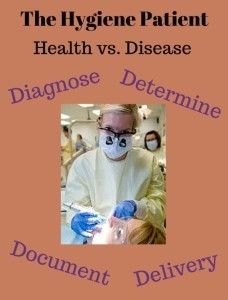
Determine: Treatment Planning for the Periodontal and Gingivitis Patient

By: admin

June 11, 2015

The Blog  last week focused on determining a diagnosis for your patient: Are they healthy or do they have periodontal disease?

Now that you have determined the patients status, you will determine a treatment plan for your patient with periodontal disease or gingivitis.

The American Academy of Periodontology has a wealth of scientific information to base your decision. The information presented in this blog and the video below are provided by the information listed on the AAP website. (perio.org)

Your treatment plan will be based 1st on the prognosis of your patients oral health condition.

There are 2 Types of Gingival Diseases: Plaque-Induced Gingivitis and Non-Plaque-Induced Gingivitis.

A couple of months ago I wrote an eBook about treatment for these patients who do not have periodontal disease, they do not have any probing measurements above 4mms and there is no radiographic evidence of bone loss. (See below under “Plaque-Induced Gingivitis”)

How do you treatment plan this type of patient?

And how do you get paid for a patient when it is more than a prophy and not a patient who needs scaling and root planing?

Now sure?

Get this eBook and 4 Video Training Series to Dive Deeper Into This Months Topic. eBOOK AND VIDEO TRAININGS AT THIS LINK


                    PLAQUE-INDUCED GINGIVITIS

Therapeutic Goals are to establish gingival health. The plaque-induced gingivitis patient will need more than a prophylaxis and less than Phase I Periodontal Therapy. Please download the free resource to the left if you are not sure how to treatment this patient. (Or click this LINK to download)

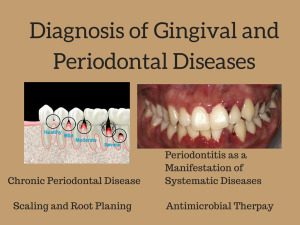
CHRONIC PERIODONTITIS

This is the most common type of Periodontitis.

Non-surgical Treatment considerations will include the following:

1. Initial therapy (SRP)

2. Antimicrobial therapy – adjunct

3. Oral hygiene instructions, reinforcement, evaluate plaque control

4. Remove factors: i.e. overcontoured crowns, overhanging restorations, etc.

Please review the traing video (19 minutes in length) for more patient treatment information. See this video below.

At the end of this month of June there will be an eBook which takes a deep dive into all the information on Treatment of the Hygiene Patient: Health or Disease.

Just as in real estate they say “LOCATION!” “LOCATION!” “LOCATION!” in dentistry we must be dilegent and “DOCUMENT!” “DOCUMENT!” “DOCUMENT!”

Documentation needs to be completed before the patient leaves your office. If this is not completed before the patient leaves your office is not considered a “Legal” document.

I will talk in more depth about documentation next week. I will have an interesting resource to check out on Record Keeping and Documentation so be sure to check back next week!

Be sure to view this training video for more in-depth information on this topic in today’s blog: (CAUTION: It’s 19 mins in length! YIKES! I have so much to tell you today. lol)

[video_player type=”embed” width=”560″ height=”315″ align=”center” margin_top=”0″ margin_bottom=”20″]PGlmcmFtZSB3aWR0aD0iNTYwIiBoZWlnaHQ9IjMxNSIgc3JjPSJodHRwczovL3d3dy55b3V0dWJlLmNvbS9lbWJlZC9IT2l6T1RTQjNhNCIgZnJhbWVib3JkZXI9IjAiIGFsbG93ZnVsbHNjcmVlbj0iIj48L2lmcmFtZT4=[/video_player]

Posted in Blog

Adult Dental Hygiene Patients. What is Your Percentage of Your Adult Hygiene Patients Enrolled in Periodontal Therapy?

By: admin

June 4, 2015

The American Academy (AAP) states that approximately 50% of the US adult population has periodontal disease. (See homepage of perio.org)  If this is true for the US population, how is your dental practice’ hygiene department in alignment with this statement?

Do you know the information on your practice’ adult dental hygiene patients? What percentage of your adult hygiene patients have been enrolled in peridontal therapy?

If you have not completed the perio percentage formula, I recommend that you create a baseline for this number of Adult Patients in your dental practice enrolled in periodontal therapy. Think about this statistic provided by the AAP and understand how your practice is in alignment of this important information. It will be a WIN-WIN. Improved health for your patients and healthier profits for your practice. Honestly, hygienists will not work as hard when they treat peridontal disease at an early stage and stop the wait and watch syndrome.

If our over arching message to patients is “Optimal Oral Health Leads to a Longer, Healthier Life” then this information from the AAP is valuable for us because we are treating our patients at the highest level of care.

This week’s video training, will walk you through Diagnosis of your hygiene patient. Are they a health patient or do they have periodontal disease? After you read this click the video to review this information.

QUESTIONS TO PONDER: GETTING TO YOUR NEXT LEVEL OF CARE

  1. When do you complete a comprehensive periodontal exam?
  2. How often do you probe your hygiene patients?
  3. Do you find time to complete the Comprehensive Periodontal Exam? (Review the blogs in May on Time Management if you don’t think you have time to pick up the probe before you scale) to read the Time Managment Blogs you can go here: TIME MANAGEMENT AND DATA COLLECTION
  4. What examination instruments are on your tray set-up? (Hint: Besides the curettes)

These and more are questions I provide answers to create a level of care which represents the statistics reported from the AAP when you view the video below.

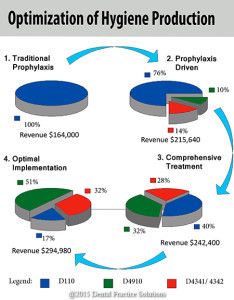
OPTIMIZATION OF HYGIENE PRODUCTION

As you begin to refine your treatment of the periodontal patient, not only will your patients improve their total health, but your hygiene department production will increase. The hygienist should find that they are not working as hard. Trying to “get it all clean” when in fact, the patient is “More than a prophylaxis” truly creates more work for the hygienist and is not appropriate treatment for optimal oral health.

Do You Need the Formula to Determine Your Adult Perio Patient Percentage?  (Click on the picture and you will receive the formula to determine this)

As you begin to refine your treatment of the periodontal patient, not only will your patients improve their total health, but your hygiene department production will increase. The hygienist should find that they are not working as hard. Trying to “get it all clean” when in fact, the patient is “More than a prophylaxis” truly creates more work for the hygienist and is not appropriate treatment for optimal oral health.

Do You Need the Formula to Determine Your Adult Perio Patient Percentage?  (Click on the picture and you will receive the formula to determine this)

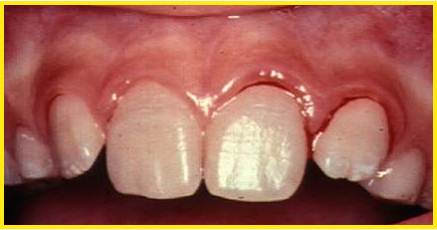
This picture represents a patient who is “More than just a prophylaxis” How often do you see this and think “It’s Just a Prophy!”??

Below is the Examination of the Gingival Clinical Markers and this is shared in the video. Use this information now so everyone: Doctor and hygienists, can get on the same page for calibrating what they agree is a healthy mouth and what is considered disease.

eBook and Video Training Series on the Topic of Diagnosis of the Perio Patient, Determining a Treatment Plan, Discussing the Treatment Plan and Simplified Documentation Skills.

Click on this Link for More Information on this Training Series.

Posted in Blog

Hygiene Time Management: Phase IV The Last Leg of the Race

By: admin

May 27, 2015

During a relay race the last leg of the race is the most valuable leg.

Imagine, the baton is your dental hygiene patient and if the dental hygienist drops the baton you know what happens – – YES?

If you don’t know what happens watch my VLOG today (Video below) and I will tell you what happens when the baton is dropped.

This last leg of a relay race uses the strongest runner to run this leg of the relay race. That means the dental hygienist has a strong and powerful position, in the dental practice. They can’t drop the baton.

Time Management can make or break your hygiene appointment, in fact, it can make or break everyone’s day at the office; including your patient!

We are talking about last phase of your dental hygiene appointment: dismissal, hand-off and disinfection.  During this last phaes of the appointment, the hygienist can create additional value and talk or reinforce, the benefits for why the patient needs to return sooner than later, for routine preventive care and/or restorative needs, as necessary.

Some of the important points to remember during your dismissal of the dental hygiene patient are:

1. No more wating until the end of the hygiene appointment for the doctor exam to be completed (See last weeks Video and Blog for more on this)

2. Plan for the last 5-10 minutes to dismiss the patient, hand-off (Verbal communication) to the front office team member. and disinfect/turn the room over for the next patient

3. Patients first language is not “Dental Terminology” so they most likley will need to hear things about three times before it sinks in

i. the three times can be: During the hygiene treatment discussion with patient, the doctor-hygiene exam and the dismissal at the front desk with patient and front office team member

4. Remember these three words need to be discussed before the patient leaves:

i    The WHAT. WHAT does your  patient need to return for? Is it a routine preventive care visit with the hygienist? Restorative treatment? Let the patient know a 2nd and 3rd time (3rd time upon dismissal at front desk)

ii. The WHY. Explain WHY your patient needs to return for “X,Y and Z”, etc.

iii. The WHEN. WHEN does your patient need to return? Does your patient need to return in 3 months or next week?

5. The hygienist is the best auxilary to make the hygiene patients next hygiene appointment.

Why you may ask?

This is the best team member to do this and if planned correctly it can be completed in only 90 seconds of time.

Here’s WHY: The hygienist just spent over thirty minutes with their patient and they understand the WHAT, WHY and WHEN, so I suggest the hygienist schedule the patients next hygiene appointment.

The answer is clear: The hygienist explains the what, why and when while he or she is with the patient in front of the appointment book and usually this is a computerized schedule. It is the click of a mouse and the patient usually will come on the same time and day of the week for their future appointment.

I explain more reasons WHY in the video but this is enough here. I know it can be a sore subject for many hygienists.

Don’t ask the patient when they want to return. Tell the patient what day and time you have available on your schedule. You are in control of your schedule so own it and lead the conversation with the best time for you.

Yes, many patients request a specific time and date but you take the lead and hopefully that patient already is there on their preferred time and day so just keep it the same as much as you can when scheduling the patients next appointment.

Scheduling the patients next appointment means less chance of open holes in the schedule. I have experienced the positive change in offices schedules from utilizing this suggestion. It makes a huge difference in the future of your schedule when the hygienists feel adamant about scheduling their patients next appointment.

View the video this week for more information. I have a lot more to tell you about this so take some time to watch. It’s about 14 minutes long.

[video_player type=”youtube” width=”560″ height=”315″ align=”center” margin_top=”0″ margin_bottom=”20″]PGlmcmFtZSB3aWR0aD0iNTYwIiBoZWlnaHQ9IjMxNSIgc3JjPSJodHRwczovL3d3dy55b3V0dWJlLmNvbS9lbWJlZC81dzIydGFQOG80NCIgZnJhbWVib3JkZXI9IjAiIGFsbG93ZnVsbHNjcmVlbj0iIj48L2lmcmFtZT4=[/video_player]Would you like to have this information at your fingertips?

Posted in Blog

Time Management Phase 3: Do Treatment

By: admin

May 21, 2015

This week I share Phase 3 of Time Management for the dental hygiene routine appointment. These are tips to stay on time when you “do treatment.”

Staying on time is what made me feel stressed during my career as a clinical dental hygienist and this week I have put together tips to keep the hygienist running on time and reduce any stress created.

If you can follow these tips, you will discover you don’t feel like you are running on a treadmill and your patients will leave your office more satisfied because they did not have to sit and wait for doctor to complete their exam.

The follstop watchowing are a few tips: (View the video below for more in-depth tips)

1. Doctor needs to enter for the hygiene exam no later than 30-45 minutes into a 60 minute hygiene appointment. If you have less than 60 minutes you will need to adjust this time. No more waiting until the end of the hygiene appointment to notify doctor of a patient exam

2. A patient of record can remain in a supine position when doctor enters for the exam. The hygienist will leave their provider chair and move to a position opposite of the doctor for the exam process.

3. The hygienist can lead doctor by providing small chitchat about something personal regarding the patient. This chitchat lasts only 6-90 seconds

4. The hygienist will lead doctor through the exam process by giving a report of what was discovered during the data collection process, the determination of treatment and what is necessary for the next hygiene appointment. For example does patient need a full mouth series of x-rays. The exam communication with doctor is a great time to add value and some benefits for why the patient will return for their next hygiene appointment

5. The hygiene exam (When doctor and hygienist have calibrated their services) should last approximately 5-7 minutes

Watch the video below for more specific information to streamline your time management especially when you “Do Treatment.”

[video_player type=”youtube” width=”560″ height=”315″ align=”center” margin_top=”0″ margin_bottom=”20″]PGlmcmFtZSB3aWR0aD0iNTYwIiBoZWlnaHQ9IjMxNSIgc3JjPSJodHRwczovL3d3dy55b3V0dWJlLmNvbS9lbWJlZC9ISlVyaldCcWlCNCIgZnJhbWVib3JkZXI9IjAiIGFsbG93ZnVsbHNjcmVlbj0iIj48L2lmcmFtZT4=[/video_player]WANT MORE HYGIENE DEPARTMENT INFORMATION?

Posted in Blog

Time Management for the Dental Hygiene Patient

By: admin

May 7, 2015

Working in a dental office can often feel stressful; like you’re running on a treadmill.

I had no clue how rushed I would feel once I began working as a clinical dental hygienist many decades ago.

Now as a consultant, I find it rewarding to help other dental hygienists overcome some of the challenges they face daily. It feels like a grind for most dental professionals I talk to. It happens; patients come late and yet you want to do your very best to provide optimal care. Even when patients do arrive  on time, situations occur and you may still find yourself running behind.

To overcome these daily challenges and help dental hygienists provide optimal care for their patients, I have created this short training about time management for the dental hygiene patient. Please view the short video below.

When you watch the video you will learn about this “Down to a Science Practice Principle” which I have created to support you with staying on time and more easily do what you do best — provide optimal patient care!

After viewing the video and reading this my hope is that you will have more time to enjoy your day with patients. I remember how much I enjoyed my patients and I hope this information takes you to that next level, whether it is a higher level of satisfaction during patient care time or that next level of treating patients with optimal preventive care.

If you don’t have sixty minutes of patient time you will need to tweak this information to fit your hygiene patient appointment time.

DURING TODAY’S SHORT VIDEO I WILL WALK YOU THROUGH:  [video_player type=”youtube” youtube_force_hd=”hd720″ width=”560″ height=”315″ align=”right” margin_top=”0″ margin_bottom=”20″]aHR0cHM6Ly95b3V0dS5iZS9zQWZuRU83ckUzNA==[/video_player]

[bullet_block large_icon=”0.png” width=”” alignment=”center”][/bullet_block]Data collection and the timing of various important procedures you need to complete to provide optimal patient carePlease send me an email if you want to create your own protocol for the timing of your services during the data collection. mailto:support@dentalpracticesolutions.com

Be sure to view next weeks video and read the blog which details the Discussion with your patient about your findings. This is where you and the patient determine the correct treatment to completed that day – perhaps you discovered the patient needs perio therapy or you need to discuss resotorative treatment. Next week I will share more about Time Management for the Dental Hygiene Patient.

* Did you find this information helpful?

* Do you have something challenging you during your timing of the hygiene appointment?

Please leave a comment below so we can provide a solution, let us know if this information is helpful to you and please share your successes with others below.

Posted in Blog

Top 10 Reasons Why Bleeding Gums are Not OKAY!

By: admin

April 23, 2015

I am certain that you have heard patients say “…But my gums always bleed…”

If someone washes their hands and they start to bleed, what does that mean? Do you think they would feel a bit panicked? Would they call their doctor or maybe go as far as rush to the emergency room?

You probably get my point here. It is not normal!  (Be sure to click on the picture to the left to view the video with more information)

My next question is: “Why do patients come to the dental office and think it is no problem that their gums bleed when they brush their teeth?”

Here is a list of Top 10 Reasons Your Patient should not be okay with their gums bleeding:

  1. Bleeding gums are a sign of inflammation
    • Inflammation leads to other diseases in the body – Real important one here!
  2. Trauma to the gums
    • Aggressive tooth brushing or tooth picking, mouth trauma, etc.
  3. Early sign of Periodontal Disease
  4. Can be associated with a vitamin deficiency
    • Scurvy, Vitamin K, etc.
  5. Hormonal changes
    • Pregnancy, Puberty and Menopause, etc.
  6. Medications
    • Aspirin, medications for patients at risk for heart attack or stroke, epilepsy, chemotherapy drugs, etc.
  7. Liver disease
    • Liver disease associated with chronic alcoholism disturbs the liver metabolism which may lead to bleeding gums
  8. Various cancers
    • Leukemia or multiple myeloma may cause gums to bleed
  9. Stress
  10. HIV

Next time you hear a patient say “…but my gums always bleed…” be sure to review a list of reasons they need to be concerned about their gums bleeding.

Use statements that paint a clear picture of why a patient needs to be very concerned about their gums bleeding.

Many times dental professionals don’t want to scare their patient so they eliminate the important words such as bleeding. Next time you have a patient with bleeding gums say the word “Bleeding” and tell your patients why they should be concerned about bleeding gums.

We are in the business of providing a longer and healthier life for our patients. Give them this important message and you are most likely to see them say “YES” to treatment and return for routine dental hygiene appointments.

How do you treat patients who have a lot of bleeding? What does your treatment plan look like when a patient is slightly overdue for their hygiene appointment and they have more than normal amounts of sub and supra-gingival deposits?

When showing patients their bleeding gums and when talking about why bleeding gums are not healthy, use words that will add value to your patient so they understand the benefit for accepting treatment, want to pay for necessary treatment and schedule for future routine visits.

Many patients will create a change in their thinking of the hygiene appointment when they understand the value and benefits of a healthy mouth.

Write down words that you know add value and next to these words write the benefits when patients make the change from disease to health.

Each patient will have different values so understand what is important to them.

Write down the words you can say to help them shift their view on bleeding gums. Next to the “value” word draw a vertical line and write a benefit next to that word on the other side of the vertical line. Practice saying these words that add value and benefits to your patients. Now you will see your patients return for routine visits and not cancel thinking “It’s JUST a cleaning!”

Is this a nebulous area in your dental office? Not sure if your patient will return for another prophy appointment?

Please comment below and tell us more about your side of this story on bleeding gums.

Posted in Blog

Treatment and Billing Guidelines for Dental Hygiene Patients: Plaque-Induced Gingivitis

By: admin

April 16, 2015

How often to do you have patients scheduled for a dental hygiene appointment and they have no radiographic signs of bone loss, their periodontal screening exam is WNL, but… they have heavy bleeding?

And what about those patients who are overdue to see the hygienist. They should have been to your dental office over a year ago. They finally come to their dental hygiene appointment and they have no signs of perio but there is more than a normal amount of calculus and there is a lot of bleeding during the appointment.  You can also click on the video in the picture above.

How do you treat these patients?

Do you tell them to brush and floss better and you’ll see them in six months?

When a patient is a slightly overdue and they have more than normal amounts of supra and/or subgingival calculus, do you do your best and hope they look better in six months?

Are you telling patients such as these mentioned about, “We’ll see you for your “cleaning” in six months and hope it looks better!” ????  (Note the word “Cleaning”.  Is it really “JUST a cleaning?!”)

Are you concerned about what insurance will pay so you just see the patient back in six months not wanting to deal with a patient complaining that their “insurance won’t pay for another prophy”???

Here is an answer to treating these challenging “Bloody Prophy’s”.  Use this as a guideline but not something set in stone for every bloody prophy.

Each patient is treated individually not everyone gets the same treatment plan. 

At the end of this information I have developed a protocol and you can download this which includes how to get paid and where to read more about the treatment and billing guidelines for dental hygiene patients with “Plaque-Induced Gingivitis”.  Also see the American Academy of Periodontology for their Parameter on the patient with Plaque-Induced Gingivitis.

Let’s look at what the ADA says about the role and responsibility of a dentist and dental hygienist:

“A career as a dental hygienist offers a wide range of challenges. In the dental office, the dentist and the dental hygienist work together to meet the oral health needs of patients.” See www.ada.org for this description. 

Key phrase here is “Meet the oral health needs of patients.”

It says nothing about meeting their financial needs but it specifically states that we meet their oral health needs.

Let’s look at the definition of a Prophylaxis:

Removal of plaque, calculus and stains from the tooth structures in the permanent and transitional dentition. It is intended to control irritational factors.

Now, back to the question of how to treat a patient who has plaque-induced gingivitis?

Here is how the appointments will flow. (See the below for more information about the patient treatment sequence and how to bill for services rendered.)

The first appointment when you discover the patient has gingivitis with the absence of periodontal disease will be a gross debridement. Gross debridement is not a definitive treatment however; this procedure is performed so the doctor can perform a comprehensive oral evaluation or a comprehensive periodontal evaluation at a subsequent appointment. The patient may or may not be a patient who needs active periodontal therapy.

Full mouth debridement is not intended to be reported as “prophy” but this preliminary procedure is completed so that a comprehensive exam may be completed at the second visit. The patient may be either a perio on a non-perio patient.

The main purpose of full-mouth debridement is to “Pave the way” for the oral evaluation by removing “roadblocks” and to allow for preliminary healing. The roadblocks being excessive plaque and calculus that interferes with the patient’s ability to sit through a painful dental hygiene appointment due to inflammation, the hygienist’s ability to pave the way through excessive calculus and hemorrhagic tissue and the dentist to complete a comprehensive exam.

Subsequent Appointments

At the next appointment approximately two weeks later you will complete a prophylaxis or scaling and root planing and at this appointment the comprehensive exam or a comprehensive periodontal exam will be completed.

Plan to schedule a re-evaluation or tissue check in 4-6 weeks. This is considered a post-op appointment and it is billed as another prophylaxis. At this appointment you will check to be sure proper healing as occurred and the patient is now healthy.

Now that you have cleared the roadblocks when you complete a comprehensive periodontal exam it is possible to discover the patient has active periodontal disease and needs scaling and root planing.

During this appointment the hygienist will schedule routine hygiene appointments for future dental hygiene preventive care.

Think about what the patients balance point is. Balance point refers to how long the patient can go between dental hygiene appointments and still remain healthy. (No signs of active perio. i.e. bleeding gums, pockets > 4mms, etc., etc.)

Each patient is an individual and this is only a guideline. Some patients may only need to return for one more prophylaxis after the initial debridement. Use your best judgement as this is only a guideline for you to make your job easier and not have to re-create the wheel yourself.

Wonder HOW you will be reimbursed (especially if you are billing insurance)?

Under the current nomenclature, there is no alternative classification code for a second prophy or a “difficult prophy”. To report a difficult prophylaxis requiring additional time.  Simply report Prophylaxis at a higher fee.

Take insurance out of the equation and think about your role as a healthcare professional. Go back to the description listed above from the ADA.

One primary role of the dental hygienist is to not only collect that data but deliver and communicate the data in a way that adds value to the patient and benefits their life in a way that is most appropriate for each individual patient.

For billing information please refer to: Practice Boost by Charles Blair, DDS or Dentalcodeology by Patti DiGangi, RDH

Conclusion

It is important to understand WHY we do what we do as dental professionals. Today’s dentistry is about treating the whole patient not just the patient’s mouth.

Dental Hygienists do more than clean teeth.  Sit down with your team and review your office protocols and your philosophy of care for the periodontal patient as well as the patient with only plaque-induced gingivitis.

What is doctors’ expectation of how he or she wants patients to be treated? Review the standard of care: ada.org and perio.org

Bottom-line for today’s dental professional is that we are now in the business of helping our patients live a longer and healthier life. When we embrace this thought process it provides satisfaction for what we do and creates patients who want to pay and return for services in your dental office.

Should you want a written protocol and take a deeper dive into this important topic which sometimes seems like a nebulous topic; download the information below.

[button_2 color=”blue” align=”center” href=”https://dentalpracticesolutions.leadpages.net/plaque-induced-gingivitis-optin/”]Send me the Flowsheet for Treating the Patient with Plaque-Induced Gingivitis[/button_2]Have a question or comment? Please feel free to comment below.

Posted in Blog

Strategies for Treating and Billing for the Periodontal Patient

By: admin

April 9, 2015

The large majority of the questions I receive on a consistent basis are about billing for a prophy after scaling and root planing has been completed. Like it or not, the majority of offices accept PPO assignments. Even if your office is not a provider of a PPO, you most likely offer to submit for payment to your patients’ insurance company. Today I will write about some strategies for treatment and billing for the periodontal patient. At the end of this blog, you can opt-in to get more tools to get everyone on your team “on the same page.” You can read this article and then grab the tools to implement immediately. (Click on the picture to the left and you will be able to view the video that goes along with this blog)

1. When do we submit for periodontal maintenance?

2. Can we alternate a prophy with periodontal maintenance?

These questions are very common and they can also be very confusing but the employees who bill for payment and the dental hygienists who are providing treatment. This can also be hazardous to legal and ethical reasons as well as being confusing. First let’s look at the definitions set by the American Dental Association for these services. Prophylaxis D1110 is one of the most misinterpreted codes in dentistry.

The CDT Procedures book describes a prophylaxis as a preventive procedure NOT a therapeutic procedure.  You may not ask “What does this mean for the hygienist treating patients?” and/or “What does this mean for billing the patient and/or insurance company?”

What this means is that if a patient has bleeding with 4 and 5 mm pockets (or greater), radiographic bone loss, even slight mobility, furcation involvement, muco-gingival involvement and/or recession, it means that this patient is not treated as a prophylaxis patient.

Know that the above paragraph describes a periodontal patient. This means that you will complete scaling and root planing. If the patient has only 1-3 teeth in any quadrant you will bill D4342 and if there are more than 3 teeth involved in a quadrant you will bill D4341.  Four to six weeks after scaling and root planing is completed you will have the patient return for a post-op (re-evaluation) visit. This visit is billed as the first of a life-time of Periodontal Maintenance appointments. (The Periodonta Patient will return approximately every ninety days and if billing insurance, the CDT code will be D4910) Think of this very similar to a patient with Diabetes and they will return to their physician or a lab to have a HbA1c blood test. If a patient has high cholesterol they will routinely see their physician for blood work to check their cholesterol levels.

It’s the same thing when a patient is diagnosed with periodontal disease. You will treat with scaling and root planing, then re-evaluate. This re-evaluation is the first of future periodontal maintenance appointments.

Now let’s review the most recent definition of the Periodontal Code D4910:

Following periodontal therapy is periodontal maintenance and this continues at varying intervals determined by the clinical evaluation of the dentist and hygienist for the life of the dentition or any implant replacements. Periodontal maintenance includes removal of the bacterial plaque and calculus from supragingival and subgingival regions, site specific scaling, and root planing where indicated, and polishing the teeth. If new or recurring periodontal disease appears, additional diagnostic and treatment procedures must be considered. The definition of Periodontal Maintenance states that this procedure should continue for the life of the dentition.

There is no mention in the definition to only providing this service for a specific period of time after initial therapy.

I am consistently asked: Do we ever revert back to billing D1110?

It’s very important to note that treatment should always be based on diagnosis. If periodontal infection exists, it needs to be maintained to minimize recurring infection (meaning that if active disease returns you will complete D4341 or D4342 as necessary) and destruction of the periodontal support system and bone. If periodontal maintenance is needed, this is what should be completed regardless of insurance limitations.

Posted in Blog

What Makes Your Dental Practice Irresistible?

By: admin

April 2, 2015

For most of my life, I lived in Orange County, California and I was a clinical hygienist in Newport Beach, California for more than twenty years.
If you are familiar with the area, what comes to mind when you think of Newport Beach, California or Orange County, California?

I looked up how people describe Orange County and here is a description I found:

“…an urban paradise in California where Amusement parks… Ice cream lovers and Soccer moms coincide and live with each other in peace and harmony.”  Orange County may be expensive, but it is a fun place to live!

Now, from a hygienist’s point of view and one who worked in Newport Beach, just think about this; there are actually patients who want their teeth perfect!  For the majority, that is what they want, and cost was not a factor!  It sure makes life easy when they ask for it!

Now, think about your dental office…What is it about your dental office that keeps your patients coming back?  Do you do have impeccable service? What is it that you can do to keep patients returning to your office? What makes your dental practice irresistible?

Watch the video today and then talk with your office about what makes your dental office unique.

Many offices today offer “Laser Dentistry”.  What would happen if you offered laser dentistry?  Patients today want to know they are receiving the latest and best technology.

Do you offer Lifetime Whitening for your patients? Exactly what does that mean to your patients? Do they understand that Lifetime Whitening is a reward system for coming to their routine appointments?

What really matters is whom you want to serve in your community.  In addition, how will you use your irresistible services to get your message out to these people?

Think about the words that you use to communicate to your patients that make you irresistible and keep your patients coming back to YOUR office!

What makes your dental office irresistible? Please leave in the comments below.

Posted in Blog

Keep Patients Returning to Their Dental Hygiene Appointments

By: admin

March 26, 2015

Think back to your last visit to Nordstrom. What type of service did they provide?

Did you see value in their services? Do their clothes and the way you are treated make you feel special; like you are fit to be King or Queen?

Personally, I prefer to shop at Nordstrom because I know I receive quality products and great customer service.   The results are that it makes me look and feel great! I especially like the way I am treated and valued as a customer.

Just like customer service is key; value propositions will keep your patients coming back to your office for a lifetime.

What is a value driven proposition?

Simply put, value driven propositions are what keep your patients returning to your dental office for their appointments. And, it especially means they will keep their routine dental hygiene appointments.

Offering your patients value driven propositions:

  • explains how your services will improves their specific dental situation
  • delivers specific benefits (this adds to the value),
  • tells your patients why they should continue returning to your dental office

During this month of March I have been sharing tips to reduce cancellations. Many of you have asked what words will add value.

Below is a list of words and phrases you can use to add value:

  • Optimal Oral Health
  • Preventive Care
  • Periodontal Maintenance
  • Inflammation
  • Disease
  • Bleeding Gums
  • Healthier and Longer Life
  • Loose teeth
  • Jaw pain
  • Eliminate grinding

While the dental hygiene patient is seated upright in the chair, explain what you will be doing (before you recline them back in the chair) during their time in the office and use some of the above words. These words and phrases are suggestions that add value to the patients’ appointment. (This is just a short list with examples.) Talk with your team to gain insight into what other words you can use to add value and benefits to patient appointments.

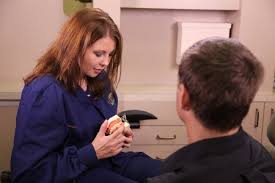
Here is one example of how benefits for returning to the hygiene appointment is driven by benefits.  Dentist and Patient eye to eye

Hygienist Susan: “Mrs. Jones, today we will complete your periodontal maintenance appointment. As I reivew your medical history, I see that are taking insulin for your Diabetes. Did you take your insulin today? That’s great! I want to commend you for continuing to return for your routine periodontal maintenance appointments. This is what helps maintain optimal oral health and a longer, healthier life.

In a few minutes I will recline you back in the chair and begin the periodontal exam. As you may remember, you will hear me call out those numbers. When you hear me say numbers like 1 thru 3 this means your gums are healthy. If I call out a 4 this is a sign of inflammation. If I call out a 5 or higher, as you may remember, these are numbers that relate to periodontal (gum) disease. If you hear me say bleeding point, this is not good. It means that you have active disease. Healthy gums do not bleed.”

During this communication with the patient, imagine how the hygienist has set up the patient to engage with her during the hygiene periodontal exam. This is an example of “co-diagnosis” between the hygienist and the patient. They are developing a partnership during the patients service today.

Other value driven propositions may sound like this: (Imagine now that it is the end of the dental hygiene appointment. Below is what it may sound like.)

“Mrs. Jones, It was great to see you today and congratulations on an excellent periodontal maintenance appointment today! As recommended by the American Academy of Periodontolgy, patients with diabetes and especially with a diagnosis of periodontal disease, need to return at least every 3 months for a periodontal maintenance appointment. This is where we re-evaluate the health of your gums and provide treatment to create healthy teeth and gums.  The latest science and research says that we can even reverse diabetes. At the very least, routine periodontal maintenance appointments support  status-quo with patients who have a diagnosis of diabetes. sThis means that you can live a long and healthy life. I can see you on Thursday July 16th at 11 am, for your next periodontal maintenance apppointment. Will that work for you?”

Do you see how the hygienist complimented the patient, keeping a positive environment in what can many times be  a stressful environment?

Susan, the hygienist, also gave a valuable reason for her patient  to return for future routine periodontal maintenance appointments. Susan also explained the benefits of why it is important for Mrs. Jones to return in 3 months.

What words to you use in your patient appointments that add value and benefits for patients returning to your office?

Do you want to know more about ways to reduce cancellations? Grab our free eBook here: Reduce Cancellations and Increase Profits

Posted in Blog

Post navigation

  • ← Older posts
  • Newer posts →

Return to Your Training Vault

Contact Info

  • 15508 W. Bell Road Suite 101 PMB 431, Surprise, AZ 85374
  • (623) 252-1941
  • admin@dentalpracticesolutions.com

Office Hours

  • Mon-Thu 8:00am - 5:00pm PST
  • Friday 8:00am - 2:00pm PST

Useful Links

  • Home
  • About
  • Sitemap
  • Terms of Use
  • Privacy Policy

Recent PR

  • PrestoSmile® and Dental Practice
  • Dental Practice Solutions - Debbie Bittke
  • Dental Practice Solutions - Debbie Bittke
  • Dentistry Leaders
Copyright 2026 Dental Practice Solutions

    Input this code: captcha

    captcha

    • Home
    • About
      ▲
      • About Us
      • Testimonials
      • Videos
    • Services
      ▲
      • Hire a Dental Hygienist
      • Dental Hygiene MAX Course
      • 6-Month Dental Hygiene Department Optimization
      • 12- Month Dental Hygiene Department Training
      • Dental Hygiene Department / Team Workshop
    • E-Learning
      ▲
      • Free Resources
        ▲
        • BOOST CASE ACCEPTANCE eBook
        • Treating the Gingivitis Patient
      • More Courses
        ▲
        • Oral Inflammation and Systemic Vitality
        • Properly Sequence Hygiene Appointments
        • Alzheimer’s Disease Prevention.
    • Webinar
      ▲
      • Current Webinar
      • Power Hour March 15 2024
    • Blog
      ▲
      • Podcasts
    • Contact Us

    Schedule your free coaching call here client login

    (888) 816-1511

    Introduction to Orientation Video Part 1