Dental Practice Solutions
Schedule My Opportunity Call Call us now (623) 252-1941 Client login
  • Home
  • About
    • About Us
    • Testimonials
    • Videos
  • Services
    • Hire a Dental Hygienist
    • Dental Hygiene MAX Course
    • 6-Month Dental Hygiene Department Optimization
    • 12- Month Dental Hygiene Department Training
    • Dental Hygiene Department / Team Workshop
  • E-Learning
    • Free Resources
      • BOOST CASE ACCEPTANCE eBook
      • Treating the Gingivitis Patient
    • More Courses
      • Oral Inflammation and Systemic Vitality
      • Properly Sequence Hygiene Appointments
      • Alzheimer’s Disease Prevention.
  • Webinar
    • Current Webinar
    • Power Hour March 15 2024
  • Blog
    • Podcasts
  • Contact Us

Tips to Improve Case Acceptance

By: Debbie Seidel-Bittke, RDH, BS

May 3, 2023

improve case acceptance

What is your current percentage of patients who have accepted your care this year?

Case acceptance in the dental practice is at an all-time low. If you notice 50% of your patients are leaving with the “I need to think about it syndrome,” continue reading and discover a few tips to optimize your treatment acceptance.

It’s essential that dental professionals are able to communicate the diagnosis and recommend a treatment plan in a way that patients can more easy to understand their oral conditions, how inflammation and infection will affect their overall health.

We must take the time to truly understand our patients, their concerns and what they value for their life and overall health.

Truly understanding our patients requires a certain level of skill, which includes the ability to actively listen, understand the patient’s needs and concerns, and articulate the benefits of the recommended treatment according to their needs and values.

By asking open-ended questions about what the patient hopes to accomplish with their smile, and what their main concerns are, dental professionals can gain valuable insights into the patient’s goals and expectations. This information can then be used to tailor the treatment plan to better meet the patient’s needs and preferences.

It’s also important for dental professionals to understand the emotional factors that may be influencing the patient’s decision-making process. Patients may have fears or anxieties about dental procedures, or they may be seeking a cosmetic improvement to boost their self-confidence. By understanding these underlying emotions, dental professionals can frame their services in a way that resonates with the patient and addresses their concerns.

We must use words our patient understands and not speak in dental lingo which patients most likely do not understand. Use words that paint pictures of what is happening in their mouth.

Break it down into a conversation centered around what your patient values and use words to describe their dental condition. Use words they can easily understand.

These are tips that build trust and trust is a #1 reason your patients will accept your care.

Examples of descriptive words:

  1. Bleeding
  2. Inflammation
  3. Infection
  4. Hole
  5. Crack
  6. Etc, etc.

Take intra oral images. Show the patient these images while you are seated with your patient knee-to-knee and eye-to-eye. Make your patient part of the decision-making process. Help your patient “Own their disease.”

This is called Proxemics which is part of rapport and building trust.

When dental professionals improve case acceptance they provide better care to their patients. Ultimately, the goal is to build trust and establish a long-term relationship with patients by providing the best possible care and a patient-centered experience.

Engaging in non-interruptive conversation is a great way for dental professionals to better understand their patients and their needs.

When you seek to understand what your patients desires and attach the benefits of your services around a benefit for them, case acceptance improves.

What are the primary values of dental patients?

  1. Money
  2. Aesthetics
  3. Health
  4. Time
  5. Pain

Ultimately, it’s important for dental professionals to recognize that patients make decisions for their own reasons, and that it’s the dental professional’s role to provide patients with the information and guidance they need to make informed choices. By adopting a patient-centered approach and focusing on building relationships, dental professionals can help their patients achieve their oral health goals in a way that feels comfortable and supportive.

Patients often feel more comfortable and engaged when they are given the opportunity to express their thoughts and feelings about a proposed treatment plan. Encourage a dialogue to help patients take ownership of the decision-making process. Patient’s will feel more confident about scheduling and paying for treatment when you make treatment planning a partnership with patients not a one-way path.

In addition to promoting a more comfortable atmosphere, a conversational approach to case presentation can also help to build trust and establish a stronger relationship between the patient and you, the expert.

By demonstrating a genuine interest in the patient’s concerns and needs, and by providing clear and honest information about the proposed treatment plan, dental professionals can help patients feel more confident about the care they are receiving.

Ultimately, the key to improving case acceptance rates is to focus on building strong relationships with patients, and this can be accomplished through open dialogue, active listening, and a patient-centered approach to care. By putting the patient’s needs and concerns first, dental professionals can help their patients achieve better oral health outcomes while also building a loyal and satisfied patient base.

The motivational interview (MI) philosophy is a great way to create a partnership with your patient, understand their needs, get them to own their disease and accept your best care.

Below I have attached a resource to learn more about motivational interviewing. I believe you will discover this philosophy is very helpful to overcome challenging case acceptance.

  • How do you get patients to “Own their disease?”
  • When was the last time you looked at your percentage of patients who have outstanding treatment?
  • What’s is your plan to get these patients to schedule their necessary treatment?

Please know that I am here to support you and your team to have your best year ever.

Schedule a coffee chat and let’s determine your best path to achieve your goals this year.

References.

  1. Motivational Interviewing. https://bit.ly/VideoMI411
  2. https://bit.ly/ProxemicsRapport
Posted in Case Acceptance

Overdue Dental Hygiene Patients

By: admin

October 19, 2016

reactivate-patients-b4-dec-2016

                                                 CLICK HERE TO WATCH VIDEO

Every dental office has dental patients who need to schedule for restorative treatment and overdue hygiene appointments.

The last quarter of each year is the perfect time to reach out to patients who have overlooked their dental visit.

Many patients who have dental insurance will need to use it or lose it so a call, email or text message is a great way to reach out.

BUT…………….Why after your patient has put off their dental appointment, would they want to return now?

What can you do and say to get patients back before the end of year?

What’s your plan to bring your dental patients back before the end of 2016?

As a dental hygiene consultant I recommend that you always give your patients a reason to return that includes a value to them and a benefit for why they need to complete treatment or continue seeing their hygienist routinely.

We have an acronym for this and we call it: PARVB

It stands for:

Patient

Appointment

Reason to return

Value

Benefit

How will you use PARVB?

PARVB works best when you have your patient seated in your chair.

You as the clinician need to understand what is valuable to your patient. For example:

  • Is it important for your patient to have a beautiful smile?
  • Is money important in making their decisions?
  • What is valuable to your patient?
  • How will completing that restoration benefit your patient?
    • Will your patient save money if they have the decay removed next week vs. wait until it causes pain and needs a root canal and crown? i.e. Cost more money to them!

When your patient is in the office as a patient write a PARVB and when a patient refuses to schedule or calls to change their scheduled appointment know what that patients PARVB is and state to your patient the exact reason they need to return and let that reason be the Value to your patient and state how it will benefit them.

Hope this helps you to keep your back door closed.

Dental Hygiene Consultant

Dental Hygiene Consultant

ABOUT DEBBIE SEIDEL-BITTKE, RDH, BS

Debbie Seidel is founder of Dental Hygiene Solutions, Powered by Dental Practice Solutions.

DENTISTRY TODAY considers her a top dental consultant for the past 16 yrs.

The focus of Dental Hygiene Solutions is to create healthier, longer lives for our patients while supporting dental practices to tap into their hygiene department profit potential.

Debbie is also a former clinical assistant professor for the dental hygiene program at USC in Los Angeles.

In 2007 she wrote the accreditation, the curriculum, hire the teachers and oversaw the build out- managing a 2 Million Dollar Budget for a dental hygiene program in Portland, Oregon.

Debbie is passionate about supporting dental teams to provide a profitable, patient-centered dental practice through improving systems and efficiencies in the dental hygiene department.

Check out the Free 3-Part Hygiene Department Training: http://www.dentalhygiene.solutions

Posted in Dental

Your Doctor/Hygiene Exam Science Project

By: admin

July 16, 2013

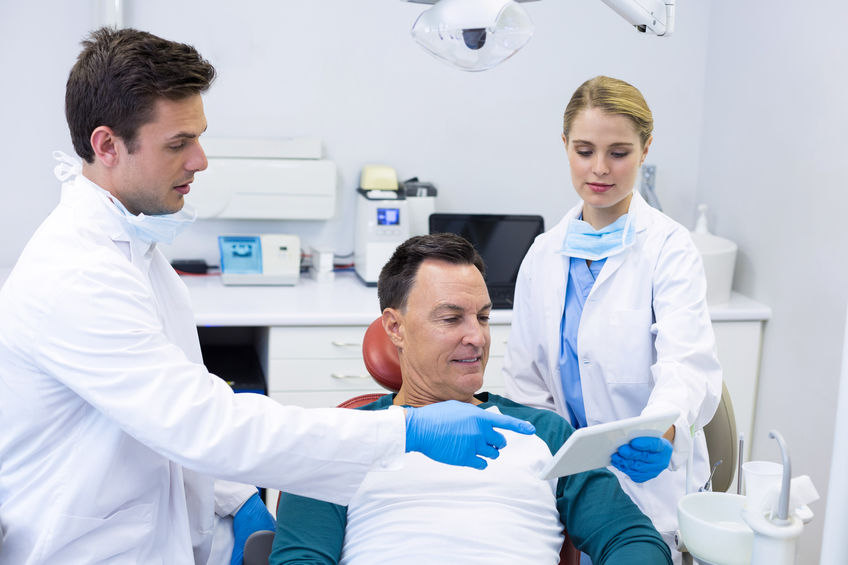
Male dentist assistant and patient

Dentistry has experienced many changes these past ten years. The economy is a lot different and the way we will deliver our treatment recommendations to our patients also needs to change today.

The dental hygienist has a big influence on how and when patients will accept treatment.

In addition, the entire dental team must rely on advanced communication skills to improve case acceptance. The dental hygienist plays a very important role in case acceptance for comprehensive care.

Let’s take this apart and study this system for the doctor/dental hygiene exam and how it can affect case acceptance. Doctor needs to write down how he/she wants this to be streamlined to create highly effective case acceptance. Role-play with your team using scripts and practice this system until you have it down perfectly.

 The Doctor/Dental Hygiene Exam

The doctor/dental hygiene exam is highly effective when there is a specific format for delivering the information: 1st from the hygienist to the patient and 2nd the delivery from hygienist to doctor while your patient is present in the treatment room.

Often times the doctor enters to complete a patient exam and it is rush-rush. Either the hygienist is running behind, maybe the hygienist has been waiting ten minutes for doctor to complete the exam and in addition, the patient may be stressed because they need to leave to return back to work, etc.

At Dental Practice Solutions we recommend a specific method for determining when doctor will complete an exam. The doctor should never wait until the end of a dental hygiene appointment to complete an exam.

When the doctor enters the treatment room, the computer monitor should show images of the teeth, showing calculus, plaque, BOP, fractured restorations, etc.

The dental hygienist also needs to have the most recent radiographs available for doctor to view when completing the exam.

Here is a scenario of how this exam process will be completed:

The dental hygienist needs to have written notes to herself/himself about what they discovered with the patient. Now the doctor and hygienist will have a specific flow to the exam conversation. (This is your roadmap)

Doctor only needs a quick “Hello, how are you Mr. XYZ?” For a patient of record there does not need to be a lot of conversation. Anything over 2 minutes is too long!

The hygienist can begin reporting to doctor with a quick personal update.

 Example:

Hygienist:“Dr. Goodtooth, Mr. Dundee’s son is getting married this summer!”

Doctor: “Congratulations! I remember when Matt was only six years old! How can it be that he is getting married?!”

Hygienist: “Dr. Goodtooth, today I reviewed Mr. XYZ’s health history and there are no changes. I took his blood pressure and it was 100/70. We completed an oral cancer screening with the ORALID®. That was negative. Mr. XYZ told me that he wants to have whiter teeth for his son’s wedding. We talked about completing those implants and before you complete those he wants to do the whitening of his teeth. I told Mr. XYZ that you would like to have the annual x-rays next time we see him in 6 months. His pocket depths were all within normal limits and there was no bleeding today. We talked about him using the Sonicare and he may buy one next time he is here.”

Doctor: Nods in agreement and says something like “Ok, or ah-huh.”

When the hygienist is finished with her/his verbal report doctor can begin to expound on the necessary treatment.

Before the patient leaves the treatment room the hygienist will schedule Mr. XYZ’s next hygiene appointment.

REPETITION IS KEY

Patient’s usually need to hear something new about three times before they are able to fully comprehend their treatment needs. Now they can attempt to make a decision to schedule and pay for treatment.

Imagine we are speaking Greek to them! They have no clue what these funny sounding words mean!

Do not attempt to discuss payment options or schedule the treatment until the patient has confirmed they understand the diagnosis.

Three Verbal Communication Opportunities

When the patient has a new condition that needs treatment it is helpful if you can talk about this three different times during this appointment. The 1st time is when the hygienist completes her or his assessments and discovers the need for treatment. At this point in time the hygienist will co-diagnose the area(s) of concern with the patient seated upright in the dental chair.

The 2nd time the patient will hear about the condition in their oral cavity is when the hygienist reports to the doctor.

The 3rd time with be at the front desk with the treatment coordinator.

STOP AND DO NOT PASS THE FRONT DESK!

Always have patients stop off at the front desk before they leave the dental office. Patient’s should always be escorted to the front desk and the dental hygienist or other auxiliary will report to the treatment coordinator or another auxiliary at the front desk, what was completed at today’s appointment and what will the next appointment be scheduled for. If the patient was scheduled in the back office treatment room, this needs to be reported when the auxiliary is speaking to the treatment coordinator at the front desk.

When patients are left to wander out of the office without a team member escorting them, appointments will many times go unscheduled and/or payment is often not received the day services are rendered.

COMMUNICATION SKILLS: REFINEMENT AND DOWN TO A SCIENCE

As a Dental Practice Management Consultant, I always recommend that you create scripts for all communication that routinely occurs. If you are talking to a new patient on the phone or maybe you are talking to a patient of record about a recent diagnosis, script out these various scenarios and role-play with your team. Role-play these various opportunities and create solutions to overcome patient objections and discover how to work in harmony as a team. Effective communication is key!

This should be an ongoing process. Learn how to understand the various ways your different patients communicate and learn how to respond to these various personality and communication styles.

LARGER COMPREHENSIVE TREATMENT PLANS

Not every patient will accept your treatment recommendations the 1st time a patient is informed of a diagnosis. Many larger cases, above $2,000.00 USD  may take three follow up attempts to finally have patient schedule for treatment.

This means that the dental hygienist plays an important role in follow up each time they see the patient.

CONCLUSION

There is a very systematic, scientific way to complete an effective doctor/dental hygiene exam.

This process really does need to be practiced until you have it down to a science.

Write scripts for everything that is said in your office between the team and patients. Always take time to role-play with the team. Practice until you make it perfect.

If you want to dig deeper into this topic Dental Practice Solutions has a one-of-a-kind 30 Day Dental Hygiene Profits Program which spends 3 Days of the 30 days on this topic of the doctor/hygiene exam. You can find more information about this program here: READ MORE

About Debbie

ME not too high jpeg

Debbie Seidel-Bittke, RDH, BS, is founder of Dental Practice Solutions and for over 20 years she has been committed to creating a dental hygiene department that works enthusiastically, creating a high performance teams, improving patients’ total health and consistent profits to the dental practice.

She is an author for journals such as Dentistry Today, HygieneTown and RDH. Debbie speaks internationally about systems and services in the dental hygiene department to create a team that works like a well-oiled machine,  improving the total health of patients’, utilizing the most recent science to prevent disease and consistently increase profits.

In 1984 she graduated from USC in Los Angeles in with a Bachelors Degree in Dental Hygiene. She is a former clinical assistant professor from USC. In 2000-2002 Debbie co-taught the practice management course for the dental students. Debbie is also a former dental hygiene program director for a school in Portland, Oregon where she wrote the accreditation, hired the instructors, purchased all the equipment, worked with project managers on the building of the school while managing a 2 million dollar budget.

Debbie works with dental practices throughout the world and is considered a leader in creating consistent profits to a dental practice through services and systems in the dental hygiene department.


Posted in Uncategorized

Return to Your Training Vault

Contact Info

  • 15508 W. Bell Road Suite 101 PMB 431, Surprise, AZ 85374
  • (623) 252-1941
  • admin@dentalpracticesolutions.com

Office Hours

  • Mon-Thu 8:00am - 5:00pm PST
  • Friday 8:00am - 2:00pm PST

Useful Links

  • Home
  • About
  • Sitemap
  • Terms of Use
  • Privacy Policy

Recent PR

  • PrestoSmile® and Dental Practice
  • Dental Practice Solutions - Debbie Bittke
  • Dental Practice Solutions - Debbie Bittke
  • Dentistry Leaders
Copyright 2026 Dental Practice Solutions

    Input this code: captcha

    captcha

    • Home
    • About
      ▲
      • About Us
      • Testimonials
      • Videos
    • Services
      ▲
      • Hire a Dental Hygienist
      • Dental Hygiene MAX Course
      • 6-Month Dental Hygiene Department Optimization
      • 12- Month Dental Hygiene Department Training
      • Dental Hygiene Department / Team Workshop
    • E-Learning
      ▲
      • Free Resources
        ▲
        • BOOST CASE ACCEPTANCE eBook
        • Treating the Gingivitis Patient
      • More Courses
        ▲
        • Oral Inflammation and Systemic Vitality
        • Properly Sequence Hygiene Appointments
        • Alzheimer’s Disease Prevention.
    • Webinar
      ▲
      • Current Webinar
      • Power Hour March 15 2024
    • Blog
      ▲
      • Podcasts
    • Contact Us

    Schedule your free coaching call here client login

    (888) 816-1511

    Introduction to Orientation Video Part 1