Dental Practice Solutions
Schedule My Opportunity Call Call us now (623) 252-1941 Client login
  • Home
  • About
    • About Us
    • Testimonials
    • Videos
  • Services
    • Hire a Dental Hygienist
    • Dental Hygiene MAX Course
    • 6-Month Dental Hygiene Department Optimization
    • 12- Month Dental Hygiene Department Training
    • Dental Hygiene Department / Team Workshop
  • E-Learning
    • Free Resources
      • BOOST CASE ACCEPTANCE eBook
      • Treating the Gingivitis Patient
    • More Courses
      • Oral Inflammation and Systemic Vitality
      • Properly Sequence Hygiene Appointments
      • Alzheimer’s Disease Prevention.
  • Webinar
    • Current Webinar
    • Power Hour March 15 2024
  • Blog
    • Podcasts
  • Contact Us

7 Tips to Survive and Thrive Today!

By: admin

June 18, 2013

Survive and Thrive

You most likely chose to be a dentist because it is supposed to give you a chance to live a great life! It should be able to give you a lot of freedom.

Maybe your goal was to work three or four days a week. I imagine that you probably expected to have a bank account with many zeroes at the end of the balance by now.

“Why is this not happening?!”

Many dentists today are asking this question. If you are one of these dentists asking this question, I want to let you know that you are not alone!

I also know without a doubt – — – There is HOPE! I promise you that there is a silver lining to the story of “Today’s Economic Crisis” that many of you are feeling.

During the depression there were more millionaires created than ever before and I know this is happening again – as I am writing this –  it is happening.

What is the best answer to this question?

The answer is not going to be something you may want to hear but the answer is this simple: 

  1. INVEST in YOURSELF 

Years ago, you invested in your education and it didn’t stop there. Investing in yourself is something you need to continue over your lifetime – -and I don’t mean only investing in the DOW JONES or NASDAQ. I mean investing in your dental business and creating systems that consistently bring profits.

Dentistry is a very fast moving industry. Technology changes, internet and how people search for a dentist have changed. The systems and services that create consistent multiple income streams for your dental practice have changed in just the last 5 years. Patients used to come to a hygiene appointment to have their teeth cleaned. Now patients can come to their dental office for preventive services that support total health.

I feel your pain and I know that you don’t want to spend another dime.

The answer is that if you don’t invest in a solution to your own economic decline, you will never leave this challenging situation you are in today.

There needs to be a CHANGE.

“Insanity: doing the same thing over and over again and expecting different results.”

Albert Einstein

For myself, I invest in coaches who support and guide me to stay in a position that will serve my clients at the highest level. This is how you will not only survive but THRIVE. This is what I know works best for those who want to be at the top of their game.

“INVEST IN ME” = Your Biggest ROI 

2. Hire a dental practice management consultant who is an expert in their niche. This should not and will not drain your bank account if you choose the correct one for you. Find an expert whose expertise is solving you specific needs. Now you will have your biggest ROI. This is the best way to invest in you.

3. Do you know that your dental hygiene department is the one area that can create multiple streams of income? This is the one area of your dental practice where you need to have up-to-date systems and services. There are some simple questions that your hygienist can ask that will drive your profits by $100,000.00 in the next year, services that create optimal health and profits.

About 99% of our clients have at least $100,000.00 of unscheduled treatment sitting in their patient charts. Do you know what to say to a patient who  did not want to schedule for necessary treatment? Do you know 1 simple question your hygienist can ask that will drive adjunctive and aesthetic services, that perhaps your patients never thought to ask you about?

4. There is a simple step-by-step strategy to bring them back to your office. Most recently we have an office report that 50 patients scheduled their hygiene appointment when they took step one of our Continuing C.A.R. E. System.

5. Implement an incentive program to inspire patients to come back to your office. Use this to bring in overdue patients and also create referrals for New Patients.

 6. Implement a smile evaluation. Ask your patients what is one thing they would like to change about their smile. There are so many different ways to ask this simple question but the bottom line is to ASK. 

7. ASK your patients who can’t commit to schedule treatment; “When is a good time to follow up with you?” Or better yet, they probably have unanswered questions and this is the really meaning behind their statement? ASK them to return for a short consultation and invite then to bring their spouse or the other decision maker with them.

ASK: Always Seek Knowledge.

  • Ask yourself “what can I do differently today to create a positive change?”
  • Ask your patients the various questions suggested above.

These are only a few suggestions so you can not only survive today’s economic decline but these are suggestions for you to THRIVE!

After all, that is why you do what you do – RIGHT?

Here is to your success!

 Debbie Oct 2012ABOUT DEBBIE SEIDEL-BITTKE, RDH, BS

Are you looking to improve profits in your dental hygiene department? Debbie has an innovative and successful way to consistently increase profits in your dental practice.

Many dentists today only need a 1 or 2 day workshop in-office to create the best solutions. Some offices find it valuable to participate in one of our online membership programs. This investment will be your highest ROI .

Check our our services section on the website to find one that meets your needs. Consider getting your team involved in our 12 week Case Acceptance Program. You won’t need to stop your day of work at the office or pay for a dental consultant to travel to your office. The program is at your fingertips 24/7  indefinitely.

Debbie writes for many of the major dental conferences in the world. She is recognized for the past 8 years as “One of Dentistry Today’s Top Consultants.”

Many of her clients span from not only the United States but Brazil, Australia, India and the UK, just to mention a few. She has unique and one-of-a-kind learning systems for offices all over the world to participate in as well as in-office workshops and dental hygiene consulting.

Posted in Uncategorized

1 Simple Tweak in What You Say Can Create More Dental Practice Profits Today

By: admin

June 10, 2013


Arrow up profits


With every year that passes, as a dental practice management consultant, I see more and more dentists enrolling in clinical aesthetic courses. When I return to their office I see the new technology they have spent thousands of dollars on this past year.

It is exciting to know that dentists all over the world are seeking out the latest dental technology and products to improve their patients smile.

Once you have completed your CE course, your next step (and also an important goal) needs to be a system to introduce these new services to your patients. How do you know if the service you just spent a few thousand dollars educating yourself to provide your patients is something they are willing to pay for?

Of course one simple answer can possibly be to ask your patients if they want this treatment for themselves.

My question to you is “Have you ever or do you consistently ask your patients what types of services they desire?” have you asked them “What does that mean for you if we can change the appearance of your smile?”

It is the summer and many of your patients probably want to look good for their son or daughters graduation, a wedding or reunion. They may be thinking that they can’t afford to change the way their smile looks. Your patients probably assume it is not possible for their smile to improve due to money, time or even how old they “think” they are.


If you never ask, the answer will always be a “NO.”


At Dental Practice Solutions, we educate your client offices to annually inquire about their patients smile. We call this a smile evaluation. It’s a simple, one page survey, given to the patient upon check in at the front desk. The patient completes these questions in about 60 seconds and then when the hygienist is reviewing the patient medical history she or he will smoothly transition into the smile evaluation. While the patient is seated in the treatment room, the hygienist reviews the patients answers and together, they look at the patients teeth in a mirror. This is not meant to be time consuming but can efficiently be completed with some simple training.

What I see NOT What I have Found

After the hygienist has reviewed the smile evaluation with their patient, they should tour the patient’s mouth with the intra-oral camera. This allows you to show the patient the following:

  • Decay, missing teeth, large amalgams, aged resins that are stained/chipped
  • Old bridges which are no longer aesthetically pleasing,
  • Cracked /or misaligned teeth
  • Poor home care (excessive plaque and YES – even green teeth!)
  • Heavy calculus and/or stain

When talking to patients about what you see, be sure not to say for example:

“Mrs. Dalton, I have found…” This seems to leave a negative feeling with patients who think “My dentist always finds something!”

Instead, when looking at the patients teeth and gums say words phrases like “do you see ____?”  or “Mrs. Dalton today we saw ________.”

Always keep the door to improving every patients smile. It works best for everyone if you don’t presume or prejudge a patient’s values or pocket book.

If you don’t ask “the answer will be NO” so keep the open door policy and begin to ask every patient “If there is one thing they could change about their smile what would that be?”

One Simple Tweak in What You Say

There are so many twists on this simple question and if you will take time to annually update each patients smile, it will go a long way to making patients leave feeling very happy about the services you have provided them and your will see an increase in your profits.

Continuing education courses can do a lot to support a successful dental practice. The important piece here is to have a goal to use this. Decide how you will begin to offer this new service to your patients and write the date on your calendar, when you will begin asking patients what they want to change about their smile.

Now you can reap the benefits of that expensive aesthetic course and new technology you just paid a lot of money for!  One small shift in what you say to patients can increase dental practice profits by thousands each year.

ABOUT DEBBIE AND DENTAL PRACTICE SOLUTIONS

Debbie Oct 2012

Are you looking to improve profits in your dental hygiene department? Debbie has an innovative and successful way to educate you and your team to create the small tweaks mentioned in this blog. Many dentists today request a 1 or 2 day workshop or find it valuable to participate in the online membership program offered by Dental Practice Solutions. This can mean your highest ROI for this year when you get everyone on the team to that next level of success. Check our her services section on the website to find one that meets your needs. Consider getting your team involved in her 12 week Case Acceptance Program. You won’t need to stop your day of work at the office or pay for a consultant to travel to your office. The program is at your fingertips 24/7  indefinitely.

Debbie writes for many of the major dental conferences in the world. She is recognized for the past 8 years as “One of Dentistry Today’s Top Consultants.”

Many of her clients span from not only the United States but Brazil, Australia, India and the UK, just to mention a few.


Posted in Uncategorized

7 Ways to Eliminate Short-notice Cancellations and No-show Appointments

By: admin

June 3, 2013

18736106_m (1)

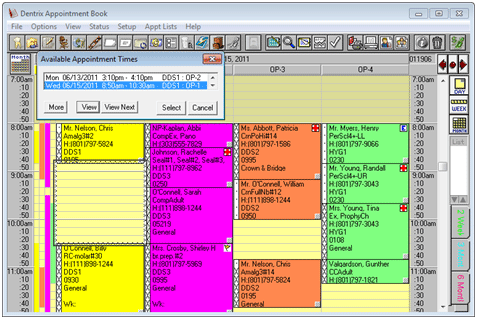
For the past 3 years dentists have been calling my office to ask “Debbie, how can I stop all these last minute cancellations?!” and “Debbie, how can I stop the bleeding of my hygiene schedule? Look at all these holes in the schedule!”

The calls from more dentists continue and I continue to create more and more solutions for the new callers and the offices that still feel stuck and have not implemented any of the suggestions.

I am sorry to say but listening to be give solutions is not going to stop the cancellations and the bleeding. There will always be emergency situations in your patient’s lives that cause them to call and cancel. The situation is that will never be able to completely eliminate cancellations. This is a fact of life. What you can do is eliminate the cancellations and no-shows that occur because your patients do not consider their dental appointment important.

Today, I write about strategies to consider and eliminate or at least decrease your last-minute and/or no-show appointments down to a very low number week.

1. Identify patients with a history of last minute cancellations and no-shows. You need to create a different strategy to work with these patients.

2. Do not call and confirm patients appointments and then ask them to call back to verify they received your message. This will only invite them to call you back and cancel their appointment.

3. Do not allow patients to call and leave an appointment cancellation on your voicemail or answering service. Your message needs to state that your office doesn’t not accept cancellation messages. The only way a patient can cancel an appointment is to speak to someone live in your office.

4. When a patient is known for cancelling appointments short notice and/or no-showing for their appointments do not allow them to reschedule an appointment within a 2 week period. Do not allow these patients to think that your time is not valuable and they can return to your office quickly. These patients may need to be on a “short-notice” call list.

5. When you do call a patient to confirm an appointment, say phrases such as “Susan is looking forward to seeing you tomorrow at 2pm for your preventive care appointment. Please take your Amoxicillin one hour prior to your appointment and we will see you then.” That is all. Stop saying things like “This is Dr. Jones’s office calling to confirm your cleaning tomorrow at 2pm. Can you please call me back to let me know you have received this message?”

6. Stay connected with your patients in between their dental appointments. This can be done through an office newsletter, text messages and social media. I suggest that every office have an office Fan page. Communicate at least once a day when you are working at the office. If you have a special running or contest post this on your fan page. Let patients know you have the fan page and give them a chance to “Like” your page while they are in your office. Many offices today have an iPad in the treatment rooms and/or reception area which can assist your patients with writing a review and “liking” your page while they are in your office.

7. WIIFM syndrome. It seems to be typical these days for people to be motivated to do something because there is something in it for them. Offices seem to have a decrease in short-notice cancellations and no-shows when they offer free whitening touch-ups to their hygiene patients. Patients are rewarded for continually showing up for their dental appointments. When patients do not cancel short-notice or no-show they qualify to receive 2 syringes of whitening for free. 1 syringe 2 times a year. Forever White™ is the same premium ingredients but for about 60% less money. The syringes are individually packaged and the size of each syringe is 25% larger than most whitening product syringes.

CONCLUSION

There are numerous ways you can reduce those short-notice cancellations and eliminate the constant no-shows. The most important thing you can do is to choose one of these 7 tips and implement at least 1 of these today. Meet with your team and set some goals to implement more of these suggestions. Monitor your success and remember to celebrate your successes.

Consider utilizing Forever White™ today. You will receive our eBook to Boosts Profits, all the team support to get your patients enrolled in this program and so much more, with your first order.

Debbie Oct 2012

Debbie Seidel- Bittke, RDH, BS is founder of Dental Practice Solutions. Debbie has immersed herself in the science, systems, services and methodologies that create success and profitability in a dental practice, beginning with increasing the bottom line in the dental hygiene department. She writes for numerous dental journals, speaks at dental conferences nationally and for seven years in a row, she has been known as one of Dentistry Today’s Top Consultants.

Posted in Uncategorized

Minimize Short-Notice Cancellations and No-Shows: Important Facts You Need to Know

By: admin

May 28, 2013

Shows open holes in schedule

What can you say about your schedule today? We are about half way through another year so if you have something you are not satisfied with let’s do something about this challenge. I promise you are not alone!

In a recent survey we took, the most common complaint from dental offices was about cancellations and no-shows. Most reported 2-3 openings in the hygiene schedule daily.

First let’s take a look through a critical eye and dig into this very common situation. Why do you think your patients cancel or no-show for their appointments? Why do hygiene schedules have so many openings? And what can you do about it now?

Have you assessed the reasons why your patients are cancelling short-notice? What are they not showing for their appointment? When you have a clear

Understanding of your patients’ behavior and when you know that you are communicating the benefits or your care, now you can develop an effective plan to reduce cancellations.

At a team meeting this month, review how many short-notice cancellations and no-shows occurred in the past 30 days. Write down the top three reasons patients call to cancel. Do you understand why they neglected to show for their appointment? These answers will shed some light on the problem you have at hand and now you can create working solutions.

Perhaps you have thought about charging or, maybe, you currently charge a cancellation/ no-show fee. I don’t recommend this. First of all, you can’t legally charge for a service that was not rendered. This will also not change the patients’ negative behavior.

There will be a lot of cancellations in the dental hygiene department when patients believe they are coming in for “just a cleaning” and they do not understand how important oral health is to their overall body wellness.

Set a goal of no more than a 5% cancellation rate.

Make sure that your patients understand the urgency of preventive care vs. the urgency of emergency after hour calls to resolve a tooth problem!

Your Appointment Change Policy

The most effective policy to stop the last minute cancellations and no-shows is to ask for 72 hours notice should your patient need to change the day and time of an appointment. I recommend that if patients need to change their dental appointment that they give you 72 hours notice. The reason I suggest this is to stop anyone from scrambling to fill a hole in your schedule last minute and if you don’t work on Fridays this means a patient can’t cancel after Thursday.

When you are out of the office the phone message needs to alert patients that your answering service/machine does not accept appointment changes and they are to call back during your business hours. State your business hours on the phone message.

If you are setting a new policy in place make sure that your patients read and sign acknowledgment of this at their dental visit to your office. You may want to have this posted in treatment rooms, on postcards sent to patients confirming their hygiene appointment and definitely post in the reception area. Include this in your financial policy especially what you charge for missed or last minute cancellations. Do attempt to charge for this fee if patients are not following your policy. I am not going to say that in a court of law you can legally collect on this but I believe patients need to have respect for your time and your business policies.

Always document no-shows and last minute cancellations as well as the reason they have cancelled or no-showed.

One proven method to stop last minute cancellations and no-shows is to use Forever White™. This is a patient incentive program utilizing whitening for your patients. Forever White™ is the same premium whitening product that many offices use today however, Dental Practice Solutions can offer this to dental offices at wholesale prices. There are no hidden monthly fees to order. If you are whitening patient’s teeth for the first time, the take-home trays and whitening gel cost to your office is less than $8.00. Typically patients pay a lot of money to whiten their teeth whether it is take home trays and/or laser whitening. If you can purchase tooth bleaching products for very little cost you can pass this savings over to your patients. When a patient comes in without short-notice cancellation or without failing to show for their appointment, twice a year, at their dental hygiene appointment, patients qualify for a free syringe to whiten their teeth. The cost-benefit ratio of giving a patient two syringes of gel, (1 syringe two times a year) vs. the cost of an open hole in the schedule is a WIN!

Most people work off that mentality of WIIFM?! (What’s in it for me?!)

If a patient understands they can get free touch-ups for whitening how likely are they to miss their dental appointment? Not likely. Isn’t that correct?

I have been in offices and heard the patients calling to cancel because they have a hair appointment. This means the patient never really did value their appointment.

How can you build value for optimal overall health and give patients something they really want? It takes effective and consistent communication about the important  benefits of optimal oral health that will create urgency with patients over time.

It is all in your hands. What will you do differently today?

Posted in Uncategorized

Check Your Dental Hygiene Department Pulse and Increase Your Profit Potential

By: admin

May 21, 2013

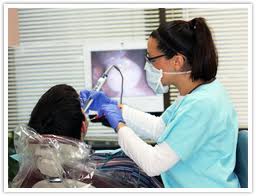
Dental RDH an intraoral camera

Is your dental hygiene department the second highest profit center of your dental practice? What do profitable hygiene departments have in place that will allow them to work like a well-oiled machine and be their most profitable? Why does one hygiene department create more treatment plan success from their dental hygiene department than many others? Do these hygiene departments see more patients to create these higher results? Do they perform more dental hygiene services? Do these auxiliaries work longer hours?

Strategic Systems

New patients are the lifeline to every successful dental practice. Without new patients, production will decline and the practice will not exist. Every dental practice has a normal attrition of patients. This is a fact of business. People move, pass away, or leave because you are not on their “insurance plan” and this can mean an annual loss of 10%. Just as your heart beats at least 60 beats per minute, you must have a continual flow of new patients walking in the front door to make up for those patients who are walking out the back door.

Patient retention (continuing care) is the heartbeat of the dental practice. Your active patient base consists of patients who value your care, accept your recommendations, and pay for treatment. These are the people who trust you and your team. They refer their families, friends, and colleagues to you. These are the are key players to the ongoing success of your business Most patients see the hygienist more than any other auxiliary of the dental team. This is what makes the hygienist carry and important role in building and maintaining the current active patient base.

Maintaining the Active Patient Base

Always preschedule 90 percent of your hygiene department patients. Patients are more likely to understand the importance of why they need to schedule their next hygiene appointment. When the hygienist schedules the patients for their next hygiene visit there is a continuation in the practioner/hygiene communication process. You most likely see a positive patient attitude and an increase in patient compliance occur when the hygienist is engaged in scheduling the patient next hygiene appointments. Ideally this should occur when the patient is still present in the hygiene treatment room.

Words do matter

The dialogue between the auxiliary and patient is extremely important. Here is an example of how the conversation may go:

Example: “Today I found a few areas of bleeding that were considered abnormal and doctor is observing and area where you have the beginning of decay. Our schedule is very tight because patients usually schedule before they leave their dental hygiene appointment. I know that you like to come in first thing in the morning on Thursdays so I recommend that we reserve your next appointment to assure that you can return on that day of the week and at that time in fact that is a very valuable and popular time for most of our patients. To make sure you have your next appointment on this day of the week and at this time, I want to schedule and reserve this time for you now. I can see you on Thursday, October 18th at 8am. Will this work for your schedule? ”

The dental hygienist is the oral health educator for every dental practice. It is the role of the dental hygienist to educate patients about the relationship between oral health and systemic health. Patient involvement and active participation create ownership and accountability and will ultimately reduce the cancellation and failure rates of the continuing care patients. The preventive care and supportive periodontal maintenance appointments have the highest cancellations and failed appointment rates of any service in the dental practice. If you have one hygienist working four days a week and each day you have one cancellation you this can lead to an annual loss as high as $150,000 in hygiene department profits and this does not account for the treatment normally diagnosed from the hygiene appointments.

For a hygiene department achieve success they should be scheduling 95 percent of their future dental hygiene appointments at the time of the patients current dental hygiene appointment. Always create monitors and track the scheduling ratio. Count the total number of patients seen in the hygiene department each month and divide this number by the number of appointments available for the month. The hygiene or scheduling coordinator should then report the current scheduling rate to the team at monthly team meetings. The scheduling coordinator needs to always report in the morning huddle the open times available on the hygiene schedule each day for the next week.

Many dental practices charge a fee for failed appointments, and the effect of doing this has been positive in raising patient awareness of the importance of the time set aside for their appointments.

Team approach

Everyone on the team should understand the words which are effective for a positive patient response. Courtesy confirmation calls, emails, text messages and written communications define the hygiene appointment (continuing care) with dialogues such as this:

“Hello Mr. Goodman, its Megan calling because Maria (Insert the name of the hygienist seeing the patient) and I are looking forward to seeing you tomorrow at 3 o’clock for your preventive care appointment. I see on the schedule that Maria will be doing your annual periodontal screening exam and Dr. Goodtooth mentioned to me that you were in tested in the new whitening product we are using. We’ll see you then. By doing this, patients are moved beyond the“just-a-cleaning-and-a-check-up” mentality. It is best not to discuss any type of cancellation policy because this is only a subconscious reminder that if something else comes up they can cancel and it sets up for failure for your continuing care systems’ success. Do not ask for calls back to the office to verify an appointment. Have the expectation that patients understand the importance of their dental service and desire to come to see the doctor and/or hygienist.

Accountability

Chart audit and patient activation must be ongoing systems that are frequently performed in the office. This is completed through daily reviews and computer reports. While everyone on the team plays an important role, one auxiliary (the hygiene or scheduling coordinator) is responsible and accountable for keeping the daily schedule full and productive. At team meetings, the scheduling coordinator reports and discusses the scheduling effectiveness rate. Everyone needs to be aware of what is working and what is not working so that problem-solving can take place.

Create a plan of action when there is a crack in the system. Ask for suggestions to overcome these challenges which may occur and when you are feeling like a hemorrhaging is occurring in your dental hygiene schedule you may want to consider the advise of a dental expert who is knowledgeable in overcoming these challenges, especially during these stressful economic times.

Scheduling effectively for today and the future

To achieve and assure a full and productive schedule (for all providers), the team should always prepare for the day by auditing patient records. The hygienist reviews patient records for incomplete dental treatment, updated X-rays, status exams, perio, update the medical history, etc. The hygienist needs to be prepared to discuss, demonstrate (with an intraoral camera), answer questions, and provide the facts and findings, risks and benefits, when the doctor enters the treatment room to provide the patient exam. Ideally, a brief meeting (the morning huddle) enables the entire team to communicate, delegate, and maximize the day. One of the most important topics reviewed at huddles with my consulting clients is having the clinical assistants audit their records and identify patients who are seeing the doctor that day that are overdue for hygiene care.

Picture Paint

When patients are in for the appointment with doctor and overdue or need a dental hygiene appointment ask them to stay for the dental hygiene appointment using words such as: “save you-time missing work another day, Save you time returning to the office, etc. Create statements that are certain to benefit the patient. The hygienist does the same if the doctor has an opening and the hygienist has a patient with undone dentistry.

PHILOPHYSHARE (PLAYING WITH PHILOSOPHY)

Finally, by working together, the doctor, hygienist and entire team, communicate and share a practice philosophy for the patients, the hygiene department, and the practice. Working with the dentist as a partner in oral/systemic health care, everyone on the team is committed to the vision of the practice, proudly recommends dental treatment, and refers family and friends to the doctor.

Facilitate change by regularly scheduling meetings with your hygiene team and as a whole team to support and reinforce initiatives and explore new ideas and opportunities for growth and development. Open pathways for communication will lead to mutual respect and admiration and will be reflected in increased profits, a harmonious dental team, and most importantly, healthier patients. It’s a win for all!

Posted in Uncategorized

4 Rules of Hiring the Right Dental Practice Management Consultant

By: admin

April 29, 2013

The majority of dentists have not studied business management in college. Our economic climate is a cold one today which means your business skills must be at a high level to be a successful business owner. The same systems and services that made a dental office successful ten years ago no longer work for business profitability.

Many challenges such as dental hygiene department strategies/systems, treatment presentation, time management and getting your patients to pay for treatment are some of the solutions we can bring to a dental practice.

Many challenges such as dental hygiene department strategies/systems, treatment presentation, time management and getting your patients to pay for treatment are some of the solutions we can bring to a dental practice.

The four rules to success:

How to know if a dental practice management consultant is the best one for you:          Doctor-and-Debbie-

1) Follow a path to success – When you hire a dental practice management consultant, you are going to have homework to do. It will not be a lot of time but there will be some initial work to close the gap between where you are today and where you should be tomorrow.  This is something you will greatly benefit from in the long run. When your consultant has the correct information, in the beginning, it is much easier to create a plan for the office to run smoothly and create the increase in profits.

2) Superior clinical skills will not take your practice to the next level –Many dentists have gone through special training to advance their clinical skills and they are now have amazing clinical skills. These dentists are also expecting to increase their profits after completing this extensive training. Usually the result of these training courses is that production remains the same.

These are the dentists who call a dental practice management consultant because they cannot understand why their clinical skills have not taken their practice profits into the stratosphere.

What I recommend is a complimentary check of your practice’ vital signs. This allows me to take a closer look at your systems and where the gap is in your practice potential.

I am not saying that having this advanced clinical training is a poor choice but it is not going to increase your profit potential if specific systems are not in place.

3) Practice-management systems must be strategically created – Many dentists go through programs with dental practice management consultants and gain nothing other than a depletion of funds in their bank account. It is important that you choose a dental practice management consultant who can implement proven strategic systems for your dental practice and one that has a track record of success for many years.

4) Your Dental Hygiene Department – is a big profit potential for every general dental office. In order for your dental hygiene department to be profitable you need to have a philosophy of care for disease intervention at the earliest stage and a formula to prevent systemic disease for your patients.

Communication skills are going to be a very important piece for transitioning your patients of record into the various services you offer. Your comprehensive clinical refinements must be merged into your treatment plans for case acceptance to increase.

When hiring a consultant to increase profits in your dental hygiene department your consultant must be able to lead your team to refine and merge your philosophy of practice, the clinical skills with your practice and business systems. This is what will create a profitable and very successful dental practice.

The Success Formula – is a very simple formula. Not only does it require clinical excellence and your practice management systems to be in place but there are a few other factors that will take you to a higher level. Having the right people on your team will make it much easier to get there. This combination of choosing the right consultant, having excellent clinical skills, a profitable dental hygiene department, effective communication and the right people on your team will mean you are closer to creating success and a profitable dental practice.

Posted in Uncategorized

Case Acceptance Life to Your Practice and Profits

By: admin

September 29, 2012

Through many years of surveying dental practices we have learned that 20-25% of your patients schedule their necessary treatment. We also know that if dental professionals are educated in effective communication and learn how to talk about value and benefits to patients, their case acceptance rate will jump to 70%.

One huge factor that will affect case acceptance is trust from your patients. Where does this trust begin? You guessed it! It begins before a patient even walks into your dental office. Right now, as you are reading this, millions of people are also on the internet. This is how most people will find a dentist in today’s world. That being said, people will find your office via your website.

Your Social Edge

Yes, you know that most people spend hours on the internet each day and most people find their dentist via their website. Now I need to ask you: “What does your website say about you?” I also want to ask “Do you show off photos of your beautiful dentistry and do you have photos of your employees with a bio of everyone who works in the office?” Do you offer Invisalign® or Six Month Smiles®? Show off your expertise on your website and begin the relationship here.

Yes! Get personal. Be real! Let people learn as much as possible before they even pick up the phone to make their first inquiry about your office. This is where you begin to build trust!

Mindset

Is your mindset” Insurance” or is it “Fee-for-service”? Is your practice philosophy all about what is best for your patient? Whether you answered yes or no, how can you educate your patients about insurance dictation and insurance provdership? The delivery mechanism in your office can’t be driven by what the insurance company will pay. 80% of all dental offices only offer patients “what their insurance will pay.”

What you say to your patient in approximately 4 minutes will build patients trust. This begins in the hygiene treatment room.

We are the experts. We know that without optimal oral health the overall body can’t be 100% healthy.

Try sitting your patient upright in the chair and communicate the true value of preventive care. Share the science and research when asked for this. Patients usually find a way to live a healthy and longer life. They will also pay for exactly what they want. Tell them they can have a beautiful smile, live longer and be healthier and the majority of people will find a way to pay for this! Who doesn’t want to look their best PLUS live a longer life when they are healthy!

Hygiene Tips

  1. Hire a hygienist!

    Many dentists today are trying to save their way to prosperity by doing the soft tissue management and preventive services themselves. Build your hygiene department so you can free up your time for restorative procedures and explain treatment plans with your patients to increase case acceptance.

    When the dentist is free to spend valuable time providing cosmetic and restorative dentistry, the hygienist can focus on patient retention and continuing care. This helps to stop chasing after patients to schedule their hygiene appointments when you pre-schedule at least 98% of all hygiene appointments.

  2. FMX every 5 yrs. (at least) This is one more profit Center for your practice and patients need it
    1. Schedule more time either in the hygiene appointment of with your assistant
    2. Schedule time for a comprehensive exam –allowing time to diagnose more dentistry
  3. Repeat the findings before the patient leave the treatment room
    1. Use the intraoral camera
    2. Bring patients up to YOUR Level

         i. Don’t dumb it down

         ii. Educate your patients to be at your level

         iii. Show them the bleeding gums and tell them “This can cause irreversible damage to your gum and the bone that supports them.”

            1. “Gum recession and these areas of abfractions, in your mouth here (Show them on their intraoral photos) can decay so we recommend that each night you use a sodium fluoride and each hygiene appointment I will brush on a fluoride varnish.”

         iv. Open new doors, avenues for cosmetic and restorative dentistry to be provided

    Conclusion

    • It’s time to give patients what they really need not only what their insurance will pay for!
    • Always educate your patients regarding your services, your hygiene preventive services and products available in your office to prevent disease
    • Deepen your relationships with your current patients of record.

    Every one of us has the ability to be a leader. Lead your patients in the right direction to complete the necessary treatment. They are worth knowing what is the very best for them!


    “Leadership is communicating to people their worth and potential so clearly that they come to see it in themselves. “

    Stephen Covey, the 8th habit

Posted in Business

6 Steps to Creating a Profitable Dental Hygiene Department

By: admin

June 14, 2012

For many years the dental hygiene department has been known as a loss leader. We live in a new era of dentistry. If you have specific systems in place you will add value to your patient services, increase case acceptance and increase your dental business profits.  Here is a 6 step process to streamline this process and increase your profits.

For many years the dental hygiene department has been thought of as a loss leader. Furthermore, many dental professionals believe they must see more patients each day and complete more procedures during a patient appointment to become more profitable. Perhaps, if you are a dental hygienist, when you hear the phrase, “Increase profits,” you cringe and think of working longer hours.

The good news: This doesn’t have to be the case for you! But why are some hygiene departments more profitable than others? We’ll tell you why and share the secrets to success in 6 steps. Times have changed, and the business of dental hygiene can mean profits for the entire dental team. When the correct systems are in place, a day in the dental office will feel less like a migraine and more like a mission accomplished

1. Understand the Importance of the Hygienist’s Role

Hygienists play a huge role in the growth of a dental practice today. In fact, the hygiene department should be the second-largest profit center in the dental practice. Think of the dental hygienist as an ambassador for the dental practice. Indeed, the hygienist is in a very unique position, spending a large majority of one-on-one time with patients in the chair. The hygienist is first in line to present the risks and benefits of preventive and aesthetic dental treatments. The dental hygienist can, thus, set the stage to help patients accept treatment plans, large and small.

Furthermore, when a hygienist sees the same patients multiple times a year, he or she has a chance to develop personal relationships with these patients — and this means building more trust. This added trust will, then, make patients more likely to listen to the hygienist’s treatment plan suggestions and more likely to ask the hygienist for help in their decision-making process.

Examples of where a hygienist can — and should — get involved with suggestions and decision-making include: • Choosing the best restorative options • Deciding upon various cosmetic/aesthetic procedures • Understanding preventive products, such as power toothbrushes and knowing which one is best for them • Choosing which mouth rinse to buy and what toothpaste is best suited for their oral condition.

2. Foster Daily Teamwork

All successful businesses begin with a collaborative team. Even the vocabulary the world’s most successful businesses use will describe their employees and show the companies’ high regard for teamwork. Wal-mart employees are known as associates. When you’re a guest at the Ritz Carlton, employees and guests are known as, “ladies and gentlemen, serving ladies and gentlemen.”

And there’s no reason your dental office can’t emanate (and profit from) these very same values. For starters, everyone should be on the same page. Each member of the dental team needs to be enthusiastic and well-versed in discussing the benefits of preventive and aesthetic dentistry. Also, the doctor and the auxiliaries must share a practice vision and philosophy for patient care. That’s where dental professionals can make a difference. Expert dental coaches can analyze your dental office’s highest potential and create a custom, step-by-step plan that capitalizes on your practice vision and brings you more success than you thought possible.

Meanwhile, start with a morning team huddle to get your team on the same page, and if you don’t already, plan monthly team meetings to provide a time for collaboration and exploration of new ideas and systematic processes. This is where the right hand learns what the left hand needs to do, so to speak. Then, your team will have the ability to be in complete harmony… which leads to higher profitability. Taking time during team meetings to set the backdrop for a seamless day at the office creates added value to the patient services — and the team doesn’t feel dead at the end of the day.

Let’s not forget the value of dental team-to-patient teamwork. When the dental team takes time to review its patient communication skills and the team understands how to communicate the science behind the art of dentistry, patients see the opportunity (and importance of) optimal health. This is when it becomes a winning situation for the patient and the dental practice. See a trend here? If you can build a relationship where the patient looks to the hygienist as a trusted advisor, patients are more willing to agree to an optimal plan of care — which means better health for them. And remember: happy patients refer other patients to your office. It’s a win-win situation.

3. Move Beyond the Prophy A critical item to discuss in your team meetings is changing your practice’s treatment approach paradigm. Many dental practices in this new era of preventive dentistry face challenges moving from the Prophy to treating the patient’s total health. Many dental hygienists today still feel pressure to complete the cleaning when, in fact, the most important service they can provide is education and a treatment plan to reverse the disease process.

Diagnosing and treating based on what insurance will cover or based on what the patient wants, instead of what the patient’s needs, helps neither your patient nor your practice.

So here’s another example that demonstrates the value of your dental hygiene department: When the hygienists regularly move beyond the Prophy, they add value to the patient’s services. Most patients see their dental hygienist more often than their physicians. And when you begin offering a variety of services, such as blood pressure screenings, oral cancer exams, fluoride treatments, xylitol products, periodontal exams, smile analyses, etc., you increase the value of your services — and your patients start to see amazing potential to improving their overall health just by visiting the dentist. Plus, many of these services incur a small fee, adding to the profits of the dental hygiene department.

Afraid you’ll scare your patients away if you go beyond the Prophy and present a treatment plan that’s in their best interest? You won’t, if you show patients you’re on their side. You can’t go wrong with stating the facts. Always present the scientific evidence to support your findings. Then, show patients their options, along with the risks and benefits of completing and not completing treatment. It is when you discuss the science and your expert knowledge of oral health that you add value to your services. The increase in profitability will come alongside when patients sit up, listen, and then take action to treat their disease.

4. Tap Into The Recare System Gold Mine

Remember that myth we busted at the beginning of this blog, that you don’t need to pack in extra patients each day to build profit? If you’re still wondering how this works, the answer is in your practice’s recare system — with your hygiene department at the helm.

Imagine the hygiene department as an energy cell and the recare systems the mitochondria of the dental practice. When a well-developed system is in place, your practice will experience increased profits. The key is in pre-scheduling. That is, before the patient leaves the hygiene room, the hygienist or hygiene assistant schedules the patient’s next appointment. The hygiene department has the best auxiliary to schedule the next appointment because they intimately understand the patient’s needs and desires for the next appointment and the necessary procedure to schedule. This is your ticket to success: You must have close to 95% of your hygiene patients leave with their next appointments already scheduled. And you should know the barriers and patient objections which may occur ahead of time so you can plan accordingly in your team meetings.

For example, many times patients will not know what they are doing in two weeks, and especially they may not know their schedule in 4 or 6 months. So, the hygienist and the hygiene team need a plan of action to communicate with patients who may object to scheduling a next hygiene appointment. Short on ideas? Try this: Take time during a team meeting to role play, and create a plan of action for various types of objections patients have toward scheduling a next appointment. Also, keep in mind that so many people these days carry smart phones and PDAs with their calendars, so a patient with a device like this can easily check his or her schedule and add to it instantly.

One dental practice our team of experts worked with originally had 75% of their hygiene patients leave the hygiene appointment without scheduling a next appointment. With help and guidance, the team has taken on a new attitude. Here is an example of a patient dialogue after the team changed the way it communicated and viewed the appointment schedule.

Kris (Hygiene Assistant): “Beth, I understand that you travel a lot, and I want to make certain that you return in three months for your regular maintenance appointment. Today, I found a few areas that are bleeding, and I am concerned that if you call us to schedule you next hygiene appointment, we won’t be able to accommodate your schedule. I want to suggest that you make your next hygiene appointment today so we can attempt to accommodate your busy travel schedule. If you find you can’t make this appointment, then you are welcome to call us a month before the appointment to reschedule. I know you prefer to come later in the day, and we have so many patients who want this time of day, that it is best for you to schedule this appointment today and only change if you find there is a conflict.”

Beth (Patient): “Mary, I understand what you are saying. I am a procrastinator, and I can see how waiting to make my next appointment can most likely create more problems in my mouth. I really do not like hearing my gums are bleeding, and I believe that I can rearrange any travel plans or change my work schedule so I don’t have to change this appointment. From what I heard today about my mouth, I really want to take better care of my teeth and gums. I never knew how important the gums are to my overall health.

Kris: “Beth, I am so happy that you understand how important your oral health is to your overall health. We can see you on Tuesday November 12th at 3:30pm. Will this time work for you?” Beth: “I’m looking at my calendar, and I don’t see any conflict with this date or time so let’s schedule it!” Notice how this type of communication between the patient and hygiene auxiliary allowed the patient to be in control. Beth felt involved in the process of scheduling her next appointment. Beth took responsibility for her health, and she was an active participant in the conversation.

This dental team also has changed to a blocked or tiered schedule which can better accommodate new patient appointments, alongside the preventive care appointments, periodontal maintenance appointments, and scaling and root planing appointments, etc. Not all patients are seen at the same interval of time, but the office can accommodate patients in a timely manner with this type of scheduling system.

5. Improve Cancellation Rates

Scheduling the recare appointment is only half the battle, though. The recare appointment is the most canceled and failed appointment on the dental schedule. And one cancellation per day in the hygiene department will lead to what is called a loss leader. This means a loss in the hygiene and doctor productivity. Many offices experience a cancellation and patient appointment failure rate of 25%. But this need not occur when you use the strategies we suggest. In fact, a realistic goal to set when following these suggestions is 95% or better in scheduling effectiveness.

Most important strategy: Have written guidelines for patients that explain what will occur when they cancel an appointment at the last minute or fail to be present for their scheduled appointment. Some practices post these in a visible place in the office, in addition to having new patients sign that they’ve read and understand the cancellation policies.

Just make sure you write your expectations using positive words. Check out our example below of guidelines written in a positive manner:

“We will always respect your time, and our team will make every effort to schedule appointments that accommodate the needs of all of our patients. In return, we ask that our patients make every effort to keep their reserved dental appointments. When a patient appointment is broken or an appointment is missed, it creates scheduling challenges for other patients as well as for our dental office.

Our dental office will charge a fee for cancellations and appointment failures without 72 hours notice. We understand that emergencies and personal situations do arise, so after a series of two failed or broken appointments outside of the 72 hour guideline, a charge will apply to your account before a next appointment is scheduled.”

Bottom line, when effective communication occurs between the patient and the dental team, a change in the patient’s attitude occurs, which translates into improved patient compliance. Consequently, the dental practice will see a reduction in cancellation and appointment failures.

6. Measure Your Success

Seeing the fruits of your labor is extremely important to continued success. Knowing exactly how much your numbers have improved each month can guide you to know where more potential remains. Not to mention, seeing your improvements is a huge morale booster — now you know that all your hard work is worth it!

Not sure how to track your progress? It is recommended that each month, the hygiene team or office administrator run and review (with doctor) a “Production Analysis Report”. This report will analyze all dental hygiene procedures each month to determine what percentage of production the appropriate hygiene department codes represent. And what better time to review this data, which tracks the hygiene department’s effectiveness, than during your monthly team meeting?

It’s exciting, actually. You’ll see that when you implement many of the assessments and procedures just described, you will experience at least a 30% increase in your hygiene department within the next six to nine months.

Services that may account for this increase in hygiene profits are fluoride treatments, (Utilizing the Evidence-based science from CAMBRA) sealants, antimicrobials, xylitol products, oral rinses, toothpastes, 5% sodium fluoride for at home use, and power toothbrushes.

Change Your Patient’s Paradigm, Too

A final word: The twenty-first century is a new era for dentistry, and particularly dental hygiene. Cleaning teeth is no longer the standard of care. In fact, we suggest removing this word from your dental practice terminology when talking with patients. Today’s dental teams must talk to their patients about prevention — and the dental hygiene appointment is actually a preventive care appointment.

If the patient has any level of disease, the time to treat is now! Take the classic example of a patient in the early stages of periodontal disease. Phase I of non-surgical periodontal treatment ends with the periodontal maintenance, which is a 4-6 week post-operative appointment to evaluate the disease state. The last appointment of Phase I non-surgical treatment is the first of regular periodontal maintenance appointments. The patient who does not have a healthy evaluation must return for more treatment in the Phase I level of treatment. In fact, this is the time where you may need to refer the patient to a periodontist.

If a patient is healthy at the final evaluation (The first periodontal maintenance appointment) then he or she will return consistently for the rest of his/her life every 3-4 months for periodontal maintenance. Periodically, a patient may have episodes where the disease state returns, and the hygienist will need to schedule the patient to return for scaling and root planing and even antimicrobial therapy. All that said, you must communicate with all periodontal patients that periodontal disease is episodic and the idea that “once a periodontal patient, always a periondontal patient.” If the patient has a hard time taking the information seriously, explain that his/her situation is the same as when a patient is diagnosed with high blood pressure or diabetes.(And various other disease conditions.) The physician will always monitor the disease state even when everything seems to be “status-quo”.

Most successful dental businesses have implemented these systems. No longer will you hear that the Dental Hygiene Department is a “loss leader.” Expectations of the dental professional may be high, but remember you don’t have to take this path of success alone. Begin with these few guidelines to get on the path to where you want to be. And remember, we have many experts available to guide you along the road to success so don’t ever feel like you have to walk the path to success alone. Dream big, and happy planning as you embrace this new era of dentistry!


Posted in News

Post navigation

  • Newer posts →

Return to Your Training Vault

Contact Info

  • 15508 W. Bell Road Suite 101 PMB 431, Surprise, AZ 85374
  • (623) 252-1941
  • admin@dentalpracticesolutions.com

Office Hours

  • Mon-Thu 8:00am - 5:00pm PST
  • Friday 8:00am - 2:00pm PST

Useful Links

  • Home
  • About
  • Sitemap
  • Terms of Use
  • Privacy Policy

Recent PR

  • PrestoSmile® and Dental Practice
  • Dental Practice Solutions - Debbie Bittke
  • Dental Practice Solutions - Debbie Bittke
  • Dentistry Leaders
Copyright 2026 Dental Practice Solutions

    Input this code: captcha

    captcha

    • Home
    • About
      ▲
      • About Us
      • Testimonials
      • Videos
    • Services
      ▲
      • Hire a Dental Hygienist
      • Dental Hygiene MAX Course
      • 6-Month Dental Hygiene Department Optimization
      • 12- Month Dental Hygiene Department Training
      • Dental Hygiene Department / Team Workshop
    • E-Learning
      ▲
      • Free Resources
        ▲
        • BOOST CASE ACCEPTANCE eBook
        • Treating the Gingivitis Patient
      • More Courses
        ▲
        • Oral Inflammation and Systemic Vitality
        • Properly Sequence Hygiene Appointments
        • Alzheimer’s Disease Prevention.
    • Webinar
      ▲
      • Current Webinar
      • Power Hour March 15 2024
    • Blog
      ▲
      • Podcasts
    • Contact Us

    Schedule your free coaching call here client login

    (888) 816-1511

    Introduction to Orientation Video Part 1