Dental Practice Solutions
Schedule My Opportunity Call Call us now (623) 252-1941 Client login
  • Home
  • About
    • About Us
    • Testimonials
    • Videos
  • Services
    • Hire a Dental Hygienist
    • Dental Hygiene MAX Course
    • 6-Month Dental Hygiene Department Optimization
    • 12- Month Dental Hygiene Department Training
    • Dental Hygiene Department / Team Workshop
  • E-Learning
    • Free Resources
      • BOOST CASE ACCEPTANCE eBook
      • Treating the Gingivitis Patient
    • More Courses
      • Oral Inflammation and Systemic Vitality
      • Properly Sequence Hygiene Appointments
      • Alzheimer’s Disease Prevention.
  • Webinar
    • Current Webinar
    • Power Hour March 15 2024
  • Blog
    • Podcasts
  • Contact Us

Maximizing Dental Practice Productivity: Work Smarter, Not Harder With A Dental Coach.

By: Debbie Seidel-Bittke, RDH, BS

February 18, 2024


In the ever-evolving landscape of dentistry, maintaining a high level of productivity is essential for the success of any dental practice. From managing patient appointments to optimizing workflow efficiency, the demands on dental professionals continue to grow. In such a dynamic environment, dental consultants play a pivotal role in helping practices navigate challenges and maximize productivity without necessarily working harder.

Understanding the Role of a Dental Coach – Consultant

A dental coach – consultant brings a wealth of knowledge and experience to your dental practice, offering strategic insights and actionable solutions tailored to the specific needs of each practice. Whether it’s streamlining administrative processes, enhancing patient experience, or improving team performance, or optimizing your dental hygiene department services and technologies, a dental coach-consultant acts as a trusted advisor, guiding dental practice owners to achieve their goals.

Optimize Workflow Efficiency

One of the primary ways a dental coach – consultant boosts productivity is by optimizing workflow efficiency. By conducting a comprehensive assessment of the practice’s operations, including scheduling protocols, scheduling strategies, hygiene department services, reactivating hygiene patients, and sequencing specific hygiene appointments for best reimbursement, and time management strategies, dental coaches – consultants identify areas for improvement and implement strategies to streamline processes for the best productivity.

For instance, implementing digital scheduling systems and appointment reminders can help reduce no-shows and last-minute cancellations, ensuring optimal utilization of valuable chair time. Moreover, an effective dental coach – consultant will gather data, create a strategic plan and then be able to monitor the effectiveness of the expectations during the coaching process.

Enhancing Patient Experience

In today’s competitive market, the patient experience plays a crucial role in attracting and retaining patients. Dental consultants understand the importance of delivering exceptional service at every touchpoint, from the initial inquiry to post-treatment follow-up. Dental coaches- consultants help dental practices create a welcoming and patient-centric environment.
This not only fosters patient loyalty but also generates positive word-of-mouth referrals, ultimately driving practice growth.

Empowering Team Performance

Behind every successful dental practice is a team of dedicated and motivated team members. A dental coach – consultant recognizes the importance of investing in team development and empowerment to drive productivity and morale. Through targeted training programs-workshops, and mentorship opportunities, coaches- consultants help team members enhance their skills, boost confidence, and foster a culture of continuous improvement.

By aligning team goals with practice objectives, coaches – consultants inspire collaboration and accountability, laying the foundation for dental practice productivity and sustained success.

Optimized Hygiene Patient Technology and Systems

An optimized hygiene department with strategic systems allows for improved patient care, higher patient satisfaction with hygienists who enjoy their day treating patients and take pride in being a dental professional.

Dental coaches – consultants leverage their expertise to develop tailored strategies and systems that resonate with the vision of the dental practice owner-doctor and the entire team; specifically dental hygienists.

Happy team members, happy dental practice owners, yield happy patients. Happy patients create more. new patient referrals.

Conclusion

In conclusion, a dental coach-consultant serves as a catalyst for productivity and growth within dental practices, offering strategic guidance and innovative solutions to overcome challenges and seize opportunities.

By optimizing workflow efficiency, enhancing the patient experience, empowering team performance, and implementing effective systems and up-to-date technology, dental coaches-consultants help practices thrive in an increasingly competitive landscape.

In essence, working smarter, not harder, is the mantra of the modern dental consultant, as they empower practices to achieve their full potential and deliver exceptional care to their patients. By embracing the insights and recommendations of a dental consultant, practices can position themselves for long-term success and make a lasting impact in the communities they serve.

Check out our workshops and how you can more easily streamline your dental hygiene department and enjoy your day as a dental professional with harmony.

Book a quick call and discover how to STOP working so hard!

Posted in Dental Coaching Consulting, Dental Hygiene Department, Time Management

The Big Challenge Dentists Face with their Dental Hygiene Department

By: Debbie Seidel-Bittke, RDH, BS

July 19, 2023

Challenges dentists have and how to overcome them.

Dental hygiene plays a crucial role in maintaining oral health and preventing various dental diseases. Dentists understand the importance of a well-functioning dental hygiene department, as it serves as the foundation for delivering quality dental care to patients. 

However, amidst the daily demands of running a dental practice, dentists face a significant challenge in optimizing the efficiency and productivity of their dental hygiene department. 

In this blog, we will explore this challenge and discuss potential solutions to overcome it.

The Challenge:

One of the major challenges that dentists encounter in managing their dental hygiene department is maintaining a balance between patient care and operational efficiency. Dental hygienists are responsible for performing a range of preventive and therapeutic procedures, including dental cleanings, fluoride treatments, and patient education. 

However, the time-consuming nature of these procedures can lead to scheduling conflicts, prolonged patient wait times, and decreased overall productivity.

Furthermore, dentists often find it challenging to align the workload of their dental hygienists with the number of patients needing dental hygiene services.

*If you are up-to-date with treating oral inflammation, you will need to expand your number of appointments for hygiene patients. How can you fit in more appointments in a day? Hygienists are not plentiful these days and efficiency becomes imperative to meet the needs of treating the high number of gingivitis and perio patients.

Variations in patient flow, cancellations, and no-shows can disrupt the workflow and result in underutilization or overburdening of hygienists’ schedules. This can hinder optimal patient care and compromise the financial stability of your dental practice.

Solutions:

To address the challenges faced by dentists in their dental hygiene department, several strategies can be implemented:

  • Efficient Appointment Scheduling: Implementing an efficient appointment scheduling system can help optimize the utilization of dental hygienists’ time. By analyzing patient data and historical patterns, dentists can better anticipate demand and allocate appropriate time slots for dental hygiene procedures. Implementing electronic reminders and confirmations can also reduce no-shows and last-minute cancellations.
    • Ask us  how to simplify analyzing important data and how your team can have an important role in driving the productivity of your dental practice.
    • What you measure, matters, and what matters creates your future success.
    • Your team should look at the numbers just like they view the dashboard in their car before they arrive at the office each day!
  • The Celebrity Smiles Club, a patient rewards, loyalty program will reduce those costly last-minute cancellations. Ask us more about this in the link below or schedule a coffee chat below.
  • Delegating Tasks: Dentists can delegate certain tasks to dental assistants, allowing dental hygienists to focus on their core responsibilities. 

For example: a dental hygiene assistant can seat patients, perform preliminary patient screenings, take radiographs, set up and breakdown treatment rooms, sterilize instruments and set-up the hygiene trays with instruments, etc. 

By delegating these tasks, dental hygienists can maximize their time spent on direct patient care.

  • Technology Integration: The integration of advanced technologies within the dental hygiene department can significantly enhance efficiency.
    • For example: Empower hygienists to use various digital imaging systems; digital scanners, to streamline the process of capturing and introducing abnormalities, potential treatment plans and diagnoses that will be made during the hygiene-patient- doctor exam.  
      • Help patients see what is happening in the mouth. Bring them into a partnership early in the hygiene appointment.
      • Help the doctor with educating the patient and helping them own their disease before the doctor exam begins.

The hygienist has the ability to take annual digital scans and/or an intra-oral video of the patients mouth. Hygienists’ will give the patient a tour of their mouth and show them what is happening in their mouth. 

All data collection and patient communication about potential oral abnormalities should be introduced to each patient by the dental hygienist, and always prior to the hygiene-patient-doctor exam. This saves time with the doctor exam and builds trust with the patient.

The hygienist has a great opportunity to help patients “own their disease.” Patients who see what is happening in their mouth vs. being “told” what they need are 75% more likely to schedule and pay for your care.

“People buy what they want, not what they need.”

  • Continuing Education and Training: Encourage ongoing professional development and training for dental hygienists. This is vital to stay updated on the latest advancements in dental hygiene techniques.

Note: There are a lot of new advancements and technologies which will enhance patient care and dental hygiene appointment efficiency. Dentists must support their hygienists to attend workshops, conferences, and online courses so they stay at the forefront of their field.

  • Performance Monitoring and Feedback: Regular 360 performance evaluations and feedback sessions can help identify areas for improvement within the dental hygiene department. Dentists should provide constructive feedback, recognize achievements, and set realistic goals to motivate their hygienists and enhance their performance.

Allow the employees to offer their feedback and suggestions for improvement. 360 degree employee evaluations allow employees to be heard. Empower each employee to become a leader in a specific area of the dental practice.

Conclusion:

The dental hygiene department is a critical component of a dental practice. Optimizing the hygiene department efficiency and productivity is an ongoing challenge for dentists.

By implementing efficient appointment scheduling, delegating tasks, integrating technology, investing in continuing education, and providing performance feedback, dentists can overcome many of their challenges and ensure the highest quality of patient care while maintaining a thriving practice. 

Dentists do not need to manage but when they delegate they now inspect, what they expect of their employees. Many employees report that they don’t understand what the dentist expects from them.

Finding the right balance between patient care and operational efficiency in the dental hygiene department is an ongoing journey, but one that is essential for the long-term success and growth of a dental practice.

Dentists and dental hygienists should not feel as if they live on an island. Dental Practice Solutions has various solutions to optimize your hygiene department, streamline systems and grow your dental practice.

Consider a quick coffee chat and discover how you can quickly achieve your next level of success.

Click and schedule here.

Or feel free to contact us here and discover how to upgrade your hygiene department and empower your team.

* Reference. Percent of Adults with Oral Inflammation: https://bit.ly/47percentgumdisease Accessed July 19, 2023.

Posted in Dental Hygiene Coaching, Dental Hygiene Department, Dental Hygiene Department Services, Dental Hygiene Services, Dental Hygiene Training, Hygiene Appointment Reactivation

Transition Now – Dentist Retirement Planning

By: admin

June 25, 2019

I retired from private practice four years ago.  I had a successful 40+ year run doing general restorative and cosmetic dentistry.  I had associates, and I worked as a solo practitioner. In the end, a couple of young entrepreneurs bought my practice and I worked as an associate for four years before stepping away from the chair.

This blog is about transitioning your practice now. It’s about retirement planning.

Retirement from dentistry, done right, is not just the act of stepping away from clinical dentistry but many things need to be considered first.

There are many things that need to be considered before retiring and transitioning from your dental practice.

1.  Can I get full value at the sale?

2.  Can I even sell the practice?

3.  Do I have adequate funds to be able to live well for the next 20-30 years?

4.  What will I do in retirement?

Can I get full value at the time of the sale?

This is also tied to the question, do you have enough saved to retire?  I worked with consultants about ten years before I sold to analyze my situation.  I discovered I needed to increase the value of the practice by increasing the production and collections in the practice.  Most sales are based on one of several evaluations, but mostly a three- year average of your collections. What that meant for me was the need to get another consultant to help me improve my systems, train my staff to be more productive, and save a large portion of my increases.

Values and production have changed in the ten years since I did this, but back then the magic number was to get production/collections above one million dollars.  I am sure the ideal number is higher than that now.

The proposition is that you have to create an asset that someone finds valuable.  To get top dollar, you must create something that is something of value, but also something the buyer sees as having growth potential.  This sometimes means improving the physical plant or doing cosmetic things to increase value. The biggest thing you have to do is increase the total collections.

Can I even sell the practice?

I bought the records of a practice for $5000 when the aging doctor decided to retire.  Unfortunately, he had ridden the practice down to next to nothing. His physical plant was old and the equipment was ancient.

I have seen several doctors just walk away from their practice.  For that reason, I intentionally positioned myself to sell at the peak of production and I made my office attractive and functional.  Some small rural areas may have the same problem as this dentist I bought out because it is hard to find doctors who want to live in the area.

You can discuss what you have with a broker or a dental consultant that helps with transitions to see if you have a problem practice you want to sell.

Do you have adequate funds to be able to live well for the next 20-30 years?

We are living longer.  My financial planner told me we have to plan to survive until age 93.  The good news is that we are enjoying a longer life.

The bad news is that we need more money and other assets to support us for more years.  This is something I did not have the skill to project, so I found another expert to help me plan.

Hopefully you will have a paid-for home and other cash producing assets in addition to your retirement funds to help.

You also have to figure what your standard of living is and how much it will cost you to have a lasting income.   The answer to this is to start early, defer as much gratification as you possibly can, so that you can survive your extra years in comfort.

My reality was that I did not have enough money and I wasn’t on the correct financial trajectory at first, but with planning and execution, I finally made it.  At the rate I am going, I should spend my last dollar at age 93.

What will I do in retirement?

Some people are lucky enough to feel good just laying back, resting, playing golf every day and generally just taking it easy.  Unfortunately, I was not wired that way. I wanted to do something that fulfilled my need to create a legacy and create more income to do extra things around the house or for my family.

I work part-time in a FQHC clinic, teach, coach and consult, along with lecturing and writing.  I call that being “REPURPOSED”, not retired.  That is me.

What about YOU?

As long as you have a transition plan that makes you feel good and cares for whatever your needs are, go for it.

We all will retire or die first.  The sad news is that our bodies cannot continue to do the hard job of dentistry forever.  Plan, Save, Enjoy!

If I can help you in your Retirement planning, contact me at: drblack@dentalpracticesolutions.com or Schedule a call here

ABOUT THE AUTHOR

David Black, DDS, FICD, FACD

DAVID BLACK, DDS, FICD, FACD

Dr. Black is an associate coach/dental consultant for Dental Practice Solutions. He is “The go-to-expert for all dentists who are thinking about transitioning into retirement or buying their 1st dental practice.

Dr. Black owned his own dental practice for over 30 yrs. There he developed an understanding of the critical importance in development of the owner-doctor’s leadership abilities, in addition to having great clinical skills. Once he built a high-level of productivity in his dental practice, he was able to sell to a group practice; and the rest of his career

Posted in Blog, Transitions

RETIREMENT DONE RIGHT: YOUR RETIREMENT PLAN

By: admin

May 30, 2019


I retired from private practice four years ago.  I had a successful 40+ year run doing general restorative and cosmetic dentistry.  The dental practice had dentist-associates, while I worked as a solo practitioner.

In the end, a couple of young entrepreneurs, new grad dentists, bought my dental practice and I worked as an associate for four years before stepping away from the chair.


Retirment, done right.

It is not just the act of stepping away from clinical dentistry. There are many things that need to be considered before leaving your dental practice.

  1. Can I get full value at the sale?
  2. Can I even sell the practice?
  3. Do I have adequate funds to be able to live well for the next 20-30 years?
  4. What will I do in retirement?

Let’s continue this discussion of retirement done right and your retirement plan.

Can I get full value at the time of the sale?

This is also tied to the question, do you have enough saved to retire?  I worked with practice management consultants about ten years before I sold to analyze my situation.  I discovered I needed to increase the value of the practice by increasing the production and collections in the practice.

Most dental practice sales are based on one of several evaluations, but mostly a three- year average of your collections.  What that meant for me was the need to get another practice management consultant to help me improve my systems, train my staff to be more productive, and save a large portion of my increases.

Values and production have changed in the ten years since I did this, but back then the magic number was to get production/collections above one million dollars.  I am sure the ideal number is higher than that now. The proposition is that you have to create an asset that someone finds valuable.

To get top dollar, you must create something that is something of value, but also something the buyer sees as having growth potential.  This sometimes means improving the physical plant or doing cosmetic things to increase value. The biggest thing you have to do is increase the total collections.

Can I even sell the dental practice?

I bought the records of a practice for $5000 when the aging doctor decided to retire.  Unfortunately, he had ridden the practice down to next to nothing. His physical plant was old and the equipment was ancient.

I have seen several doctors just walk away from their dental practice.  For that reason, I intentionally positioned myself to sell at the peak of production and I made my office attractive and functional.  

Some small rural areas may have the same problem as this dentist I bought out because it is hard to find doctors who want to live in the area.  You can discuss what you have with a broker or a consultant that helps with transitions to see if you have a problem practice you want to sell.


Do you have adequate funds to be able to live well for the next 20-30 years?

We are living longer.  My financial planner told me we have to plan to survive until age 93.  The good news is that we are enjoying a longer life.

The bad news is that we need more money and other assets to support us for more years.  This is something I did not have the skill to project, so I found another dental expert to help me plan.  Hopefully you will have a paid-for home and other cash producing assets in addition to your retirement funds to help.  

You also have to figure what your standard of living is and how much it will cost you to have a lasting income.   The answer to this is to start early, defer as much gratification as you possibly can, so that you can survive your extra years in comfort.  

My reality was that I did not have enough and I wasn’t on the correct financial trajectory at first, but with planning and execution, I finally made it.  At the rate I am going, I should spend my last dollar at age 93.

What will I do when I retire?

Some people are lucky enough to feel good just laying back, resting, playing golf every day and generally just taking it easy.  

Unfortunately, I was not wired that way.  I wanted to do something that fulfilled my need to create a legacy and create more income to do extra things around the house or for my family.  

I work part-time in an FQHC clinic, teach, coach and consult, along with lecturing and writing.  I call that being “REPURPOSED”, not retired. That is me.

What about YOU?  As long as you have a plan that makes you feel good and cares for whatever your needs are, go for it.

All of us will retire or die first.  The sad news is that our bodies cannot continue to do the hard work of dentistry forever.  

Plan, Save, Enjoy!  


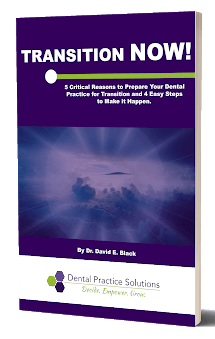
If I can help you in your Retirement planning, contact me at www.https://dentalpracticesolutions.com and grab my e-book, “Transition Now!”


ABOUT DAVID BLACK, DDS,FICD, FACD

Dr. Black is currently an associate dental coach and consultant, for Dental Practice Solutions, one of the leading consulting firms for nearly twenty years. As a seasoned dental practitioner, Dr. Black adds to the proven dental hygiene profitability coaching that Dental Practice Solutions is well-known for providing, to dental practices around the world.

Dr. Black’s expertise as an EQ and DISC trainer, makes him the best person to help more patients to say “YES!” to your patient care, as well as to enjoy working together as a team and loving what you do for your patients!

You can contact him for a FREE Coffee Chat HERE.


Posted in Uncategorized

WHY START YOUR DENTAL PRACTICE TRANSITION TO RETIREMENT….. “NOW!”

By: admin

April 16, 2019

The final transition each of us as a dentist and dental practice owner, if we are lucky enough to have a long and successful career, is the sale of our dental practice and retirement.  

As a dental practice owner what most of us do not realize is that each transition we go through influences our final transition.  Each experience we have in life creates at least part of our next experience, so that how we start ultimately influences how we finish our career.


I write and speak about the transitions dentists experience in their career as a dentist; starting with associateship, to ownership and finally,  retirement. I have experienced all of these phases and I have also helped dentists through each of these phases.

In today’s blog I share what I have learned and how I can help you TRANSITION NOW!

Keep reading glean knowledge from someone who has gone before you, learn from my mistakes and take away valuable information to create success in your life now.

An example of that is one of my “investments” thirty years ago.  A friend convinced me that we should invest in a bookstore to help start a Christian radio station with part of our profits.  Sounded great, but how wise is it for two doctors to try to run a bookstore?

It took us almost one year to bankrupt the store, and left me with a large, unsecured debt at the same time my daughter started college.  I worked 6 days each week, for about one year, to pay off this debt. Consider what I could have done with that income, if I applied it to my retirement, and saved it with interest for thirty years.


WHY START YOUR DENTAL PRACTICE TRANSITION TO RETIREMENT….. NOW!

  1. Any improvements to your systems and method of practicing dentistry will increase your enjoyment and ability to be profitable.  
    • This change will help you save more for many years and net your retirement a higher return.
  2. Planning your dental practice transition requires you to analyze what your situation is now, exactly what assets you have, and what you will need before you can make each successive transition.  
    • You must know where the finish line is before you start the race.
  3. Your final practice transition ultimately involves the sale of your dental practice.  
    • You must create something that a buyer wants to buy.  
    • This often takes many years and many developmental steps.  
  4. The sooner you start planning, the more likely you will be successful.
    • Building equity is something that takes time, so start now.


Unfortunately, I started later in my career.  I funded everything but my retirement: nice homes, great vacations, nice cars and private secondary school and colleges for my two daughters.  We also had beautiful weddings for them, but somehow my retirement fund was repeatedly deferred. I funded everything but my career. I did have money to buy nice homes, take great vacations, buy nice cars and I even paid for private secondary schools and colleges for my two daughters. But finding money for  retirement?! That is another story!

Luckily, in the nick of time, I attended a retirement planning seminar that showed me how bad my finances were.  I also learned how to formulate a plan to fully fund my retirement in the next ten years. It was hard work, but from that experience I had the Revelation about my financial situation, followed by finding the Road to implementation of my plan.  After blood, sweat and tears I finally ended up with the Result that allowed me to retire.

I would love to coach you through your Transition from the start of your practice to your Retirement party.  

To give you a snapshot of my journey and what is required for you to complete your journey go to our website: www.https://dentalpracticesolutions.com and the link to my e-book Here.


ABOUT Dr. David Black, DDS, FICD, FACD

Associate Coach & Consultant Certified DISC & EQ Trainer

Dr. Black owned his own dental practice for over 30 yrs. There he developed an understanding of the critical importance in development of the owner-doctor’s leadership abilities, in addition to having great clinical skills. Once he built a high-level of productivity in his dental practice, he was able to sell to a group practice; and the rest of his career as a dental practice owner is history.

In 2015, Dr. Black decided to share his knowledge to help other dentists duplicate his level of success, so he became a leadership coach and practice management consultant. His niche is treatment planning and case presentation.

Dr. Black is currently an associate coach and consultant, for Dental Practice Solutions, one of the leading consulting firms for nearly twenty years. As a seasoned practitioner, Dr. Black adds to the proven hygiene profitability coaching that Dental Practice Solutions is well-known for providing, to dental practices around the world.

Dr. Black’s expertise as an EQ and DISC trainer, makes him the best person to help more patients to say “YES!” to your patient care, as well as to enjoy working together as a team and loving what you do for your patients!

Schedule a FREE Profit Boosting Session Here today.

Posted in Transitions

How Do You Improve Your Game of Dentistry?

By: admin

April 9, 2019

Do you have a favorite sport or hobby?

I have always enjoyed playing tennis and in high school I played on the tennis team.

If you are like me, then mediocrity is not an option and being “just” average at what you enjoy is a non-negotiable.

As a high school student and tennis player, it was very important to me, that I was one of THE BEST players and I did everything in my power to do just that!

In high school, I hired a coach, Manni Papparani. I got a part-time job to pay for a coach so I could be the best!

Each week my tennis coach helped me refine my skills as a tennis player. Back in the late 70’s video was not real popular but my tennis coach would record videos of my swing and my serve.


My tennis coach was a professional and definitely on the leading edge,

I had a minimum-wage job part-time, and yet, I paid to be the best on the tennis team!

Rafael Nadal is one of the best tennis players in today’s world of tennis.

Why would Rafael Nadal hire a coach?

He is one of the worlds best tennis players in the world afterall?!

Does this even make sense?!


Why hire a coach when you are at the top of your game?!


Rafael is at his peak. He knows what it takes to be a winner and yet, he hires a coach. He hired his uncle, Toni Nadal.

To some, this may sound like a waste of Rafael’s time and money but to those of us who think being at the top of our game; hiring a coach is a non-negotiable.

Rafael Nadal has always had a coach. This is a very important part of what makes him the best.


Do you intend to be your best?


Dental school gave you a great start to become a clinician but if you intend to be a successful dental practice owner, you must be at your best to play this game called “Dentistry.”

How do you consistently improve your game of dentistry?


How Do You Improve Your Game of Dentistry?


Let’s look at Rafael Nadal’s Coach.


Toni Nadal as an example of a great coach:


  • Toni Nadal has worked as a tennis coach and has been a manager for a tennis club for many years.
  • He went before Rafael as an expert/professional tennis player.
  • He has a trainer’s degree and taught at the tennis club.


This example demonstrates an expert who has been “in the trenches,” they have educated themself to know what it takes to be great!

“Your success is outside your comfort zone?”


What are the Qualities of a Great Coach?


Again, let’s look at Rafael’s uncle and personal coach as an example:


  1. Discomfort.


Coach Toni is known for putting pressure on Rafael as he progressed forward in his career.

Most people don’t want to feel pressure. It’s human nature to not want to step outside our comfort zone.

Coach Nadal brought Rafael to the point of crying numerous times; but did this create success or failure?

The answer is an obvious NO.

Getting to the point of tears was part of Nadal’s journey. It’s part of what made him so tough.

Look at anyone who has accomplished great success.

Did they stay in their comfort zone or did they get out of their comfort zone?

They got out of their comfort zone? Right?!


  1. Respect.


Respect for equipment. This means taking care of the office dental equipment. Nadal believed that throwing a tennis racket showed a lack of respect towards people who could not afford the same equipment and the sport itself.


  1. Responsibility.


In the dental office this means you take responsibility for your actions. You show up on time to work. You have a sense of pride and ownership. This goes right alongside of respect.

Toni Nadal as a coach, trained Rafael on poor tennis courts with old tennis balls to show that it was not the equipment that would decide if he won or lost. He believed that losing was a fact of competing in sports and that the only one responsible for winning or losing was the player.

As a team member and even as the owner of your dental practice, how are you responsible for your success or loss of productivity?


  1. Authoritative.


Coach Nadal had an authoritarian attitude with the players that he coached. Toni Nadal wanted his opinions to be important to players he was coaching rather than it just being advice.

As the owner and leader of your team, you must have the authority to make the best decisions, you must be looked as an authority in your patients eyes as well as your employees.

Look to an authority who can guide you doctor, someone who will take you to your next level of success.


Why Hire a Dental Practice Management Coach?


In dental school dentists learn all about teeth, but very little about bookkeeping, cash‑flow, accounting, traditional & online marketing, hiring/terminating employees and so much more.

Dentists who try to do everything alone usually find it impossible to grow to a level of sustainability for the lifetime of their dental career. These are the dentists who can’t survive an economic decline.

Business experts, dental coaches, practice management consultants will help a dentist and their dental practice work more efficiently and accomplish more in less time and with less effort.

Hiring a dental coach, practice management consultant, will support the systems (or lack of) to optimize your dental practice productivity.

Asking for support from specialists will help you achieve more personal fulfillment and reduce your chances of the proverbial “burn-out.”


It’s Time to Take Action!


No matter where you are in the life of your dental career, you will benefit from hiring an expert practice management coach/consultant.

Without the support of a dental practice expert, you will work harder, you will work longer hours, you will not be as effective: as a leader, a husband and/or parent. If you want to enjoy your life more, you need to have a coach, and expert to support you in many different ways.

Most dentists want to have consistent growth and you need consistent growth in any business.

The best dental coach / consultant, will help you work smarter, not so hard. They will guide you to be the best leader of your dental practice. Your leadership skills will need constant refinement. This is just how successful businesses operate.

Never let your P & L, your budget, your production dollars today, stop you from hiring an expert.

The best expert for your dental practice will support you to optimize your systems and create a harmonious team. In return your level of productivity will receive annual dividends.

Hiring a dental expert should bring you continuous dividends.

Your part is to “show up.” When you take action, if you show up, you are a winner with a high ROI…..for the life of your dental practice.

When you take action now you can participate in our Dental Practice University (DPU) with up-to-date systems for you and the entire team. This also includes 16 AGD CE Credits when you are enrolled over the next year.

DPU has video trainings for everyone on the team, it includes scripts and forms to customize and use immediately. You can try out DPU now for ONLY $9.99.

ENROLL HERE TODAY!


ABOUT DEBBIE SEDIEL-BITTKE, RDH, BS

Debbie Seidel-Bittke, RDH, BS is founder and CEO of Dental Practice Solutions. Debbie is also a former dental hygiene program director. Her expertise is optimizing the hygiene department by taking a total team approach; including the doctor as the leader.


Schedule a FREE Profit Boosting Session Here today.

Posted in Practice Management Consulting

Without A Strong Foundation The House Will Fall

By: admin

March 5, 2019

The young associate dentist evaluates a new patient.

This patient is a 50-year-old woman, who is a type II diabetic, and taking medications for both diabetes and high blood pressure.  She is missing her lower right first molar (#30) and has several old amalgam fillings that are breaking down plus, they all have recurrent decay.

The woman has periodontal probing’s measuring 4-6 mm’s in depths. The periodontal infection is localized to the posterior quadrants and includes a 6 mm distal pocket depth on #31.  All of the periodontal pockets have BOP.

Excited, the young doctor immediately discusses and schedules a three-unit bridge to replace the missing #30, with abutments on #29 and #31.

WHAT IS WRONG WITH THIS PICTURE?

To use the analogy of building a house, this young doctor placed the roof before he poured the foundation.  I can still remember from many years ago, when I was in dental school, they gave us a sequence that we were told to never violate.  Oral surgery, endo, perio, restorative, and finally; prosthetics.

When we presented our dental treatment plans to our instructors, we always had to follow this same sequence.

FOUNDATION- FLOOR- WALLS -ROOF

The Foundation refers to removal of infection and any non-restorable teeth.  If there are teeth that cannot be saved, get them out of the mouth first!  Stop pain and take care of any abscesses.  Either treat teeth with endodontics or extract them.  This is important to eliminate systemic infection because we know that infection in the mouth causes infection in the does body.

There is one exception to this rule: you must address the patient’s primary need first, IF, it does not seriously violate the rest of the sequence.  An example could be, a missing filling in a front tooth, and the patient was self-conscious about the esthetic problem.

The Floor can be built.  The floor is built on the foundation and is similar in function.  Our next step is to control or eliminate any periodontal infection so the patient will have a strong foundation that will not become progressively worse after we build our fine restorations.

This is the rule that the young dentist in the above story broke.  He constructed a bridge before he had cured the periodontal problems his patient had.  I can’t imagine trying to locate where the margin on the abutments will be with the pocketing present, the over extension into a sick periodontal pocket, and trying to have a dry field when trying to cement the bridge.  This treatment can include debridement, scaling and root planning, any grafts and surgery that may be needed, and maintenance to be sure our house will be strong and healthy.

The Walls can now be placed on a healthy, strong foundation and the floor.  The Walls can be compared to doing the necessary removal of decay and broken fillings present in the patients mouth.  This will make smoother margins and will often uncover decay that may be present. Now we must go back to our foundation. If there is a pulp exposure this requires treating the nerve before going any further.  When a tooth needs a crown later in the process, sometimes a core filling will be needed to make sure the tooth is strong and will retain the crown.

The Roof comes next.  This can include a number of procedures, including the bridge our young doctor immediately decided was the most important project; the shiny thing, the high priced project he wanted to get completed in the first sequence of the treatment plan.  Unfortunately, this sequence of treatment is the case too often.  We hear of all the total restorative make-overs, the implant retained prosthesis that are done in one day, and also the twelve veneer cases that are done on the second visit in some offices. My prayer is that when you place the roof on your cases, you have made sure the foundation, the floor and the walls are all solid, so that the roof won’t collapse, a few years after you have placed that last nail to hold the shingles in place.


FOUNDATION, FLOOR, WALLS, ROOF.  Make sure you follow the correct treatment sequence and work through each needed step to insure your patient’s dental house will be strong and last for many years to come.

About Dr. David Black, DDS, FICD, FACD

Dr. Black is currently an associate coach and consultant, for Dental Practice Solutions, one of the leading consulting firms for nearly twenty years. As a seasoned practitioner, Dr. Black adds to the proven hygiene profitability coaching that Dental Practice Solutions is well-known for providing, to dental practices around the world.

Dr. Black’s expertise as an EQ and DISC trainer, makes him the best person to help more patients to say “YES!” to your patient care, as well as to enjoy working together as a team and loving what you do for your patients!

To schedule a No-Cost Profit Boosting Session Contact Dr. Black Here

Posted in Blog

Dental Coach | Are Dental Professionals Aliens?

By: admin

July 26, 2018


Written by: Debbie Seidel-Bittke, RDH, BS,

CEO, Dental Practice Solutions


Do your dental patients see you as an alien?

Do we alienate our patients by the words we use when we speak to them about treatment needs?

In this blog I will discuss a simplified way to evaluate patients for gum disease.

Are you probing your dental patients or are you probing aliens?

Doesn’t it really depend upon how we talk to our patients?

Do your dental patients consider the dental team like a bunch of aliens?

Here is an answer: We probe aliens not our patients.

Dental professionals use a ruler to measure between the gums and teeth.

All jokes, puns and play with words aside, we must break through the language barrier and bring the “dental talk,” our words down to a place where our patients really understand what we are talking about.

We need to bring them “into the loop,” so to speak. Let’s help our patients imagine what is happening in their mouth. Let’s help them engage in the decision-making process about what they need. This is one important step to case acceptance and getting patients to return indefinitely.

Case acceptance improves when you use words that help them understand what they need. Your descriptive words will make or break the opportunity for your patients to schedule, pay and return indefinitely to your office.

Patients may tell you they understand what the word periodontal means but if you were to do a case study, you will discover patients are more likely to schedule and pay for treatment when you speak their language.


What words do your patients understand?

  1. Say measure not probe
  2. Say see not found
  3. Say bleeding not BOP
  4. Say gum disease not periodontal disease
  5. Say gum treatment not SRP or scaling and root planing
  6. Say preventive care not recall
  7. Say gum maintenance not periodontal maintenance
  8. Say oral abnormality not oral cancer
  9. Say hole in your tooth not decay
  10. Say change of appointment not cancellation

Our goal is to have patients change (in a timely manner, 48 days prior) not forever cancel future appointments. Contracts are canceled, and appointments are changed.


How do you get patients to own their disease?

Once you have communicated with your patient what you will be completing at today’s appointment and you have explained that you will check for oral abnormalities, show the patients your periodontal “ruler” and explain that you will measure the space between their tooth and gums.

Explain what the numbers you read on the ruler mean. It will sound something like this:

“Jodie, today we will check for oral abnormalities. I will shine this light (if using fluorescent light) and check for any abnormalities on your tongue, cheek, floor of your mouth and throat, etc. After this, I will use this ruler (show your periodontal probe so they understand what your ruler is) and check for inflammation, infection or bleeding in your gums. You will hear me call our numbers one through three and this means you have healthy gums. If you hear me call out a four, this means there is inflammation and if you hear me say a five or higher this means you have infection in your gums. Not to worry if you hear me call out a four or higher because if there is inflammation or infection, you and I will create a plan, so you have healthy gums in the future. Once I am finished calling out these numbers, I will ask you, what is the highest and what is the lowest number I called out?”


Patient Takes Ownership of Their Disease

In most situations, when the hygienist is calling out these numbers and when the patient has been told they need to listen for these number because they need to say what was the lowest and what was the highest number they heard, it creates ownership if there is inflammation and/or infection.

Most hygienists who do use this communication technique when completing a comprehensive periodontal exam (CPE) have patients who are immediately engaged in conversation about what they just heard. It really does save a lot of time explaining what is going on in your patients mouth when you educate them about what you are doing and what you want them to listen for.

It also helps to have visual aids available. If your patients do have bleeding gums, do your best to take pictures (intra-oral) of the area where there is bleeding. Same thing when you see a lot of calculus, supra-gingival. Take pictures and your patients will more easily understand what is happening in their mouth.

When patients can see what is happening and when you can break the conversation down into words they are most likely to understand, it becomes much easier for patients to want what they need.

If you have never tried this technique for communication, I invited you to try this because I am certain you will notice more patients schedule and pay for treatment. They will continue returning to your office for routine preventive care, when they take ownership of their disease.

Do you want more training to boost your patient care? What is your case acceptance? The standard is 85% of your patients scheduling for treatment after you have presented a plan for them. If you are not aware of your case acceptance percentage and/or if you want to see this percentage increase schedule a no-cost Case Acceptance Profit Session with Debbie HERE. You can also schedule 30 minutes by emailing or calling our office: Email: admin@dentalpracticesolutions.com or call: 949-351-8741.


Do you want more training for your office? Plan to join us in Portland Oregon on September 21st for a live CE Event called: Dentistry: Get a Grip on Your Practice and Grow Your Business

Click here for more information about this all- day live event.

ABOUT DEBBIE SEIDEL-BITTKE, RDH, BS

ABOUT THE AUTHOR


Debbie Seidel-Bittke, RDH, BS is a dental consultant, coach, speaker and author. She is also CEO of Dental Practice Solutions. Debbie is a world-class leader in creating profitable hygiene departments. She is well-known as a former clinical assistant professor at USC in Los Angeles and a former hygiene department program director. Dentistry Today recognizes Debbie as a Leader in Dental Consulting. She can be reached at (888) 816-1511. Send an e-mail to info@dentalpracticesolutions.com or go to her website: https://dentalpracticesolutions.com.

TIME IS RUNNING OUT!


Do you feel like your dental practice runs your life? Do you wish that you did not have to concern yourself with running the business of dentistry? Do you want to not worry about the marketing, deal with payroll, worry about open holes in your schedule and a bank account that does not grow?

I feel your pain and I have created an all-day live CE Event in Portland, Oregon. Plan to join Debbie Seidel-Bittke, RDH, BS, CEO of Dental Practice Solutions, along with Doug Fettig of Aldrich Advisors.

We have planned a life-changing event so you don’t need to worry about your dental business but you can focus on your clinical dentistry.

Plan to bring your team so they can learn and begin implementing what they learn. This will leave you feeling like you have a new lease on life!

You get 6 AGD Credits, breakfast, lunch, snacks, coffee, tea, soft-drinks plus we will give away prizes all throughout the day: valued at $50-$1,500. You will walk away with your customized blueprint.

More information and Register Now. Early-bird Pricing Expires August 21, 2018.

Posted in Blog

Dental Consulting | Are You Setting the Right Goals?

By: admin

July 5, 2018

Oregon Dental Coach

No matter how effective you are at vision casting, dreams require hard work and strategic planning to become a reality. Highly successful business owners know the benefits of setting realistic and measurable goals. Rethink the way you are setting goals for your business. Your ambitious plans will be successful only if you have a road map to reach them. By mastering the art of setting incremental, measurable goals, you’ll be able to more effectively to reach them. For more tips on managing your practice, contact our firm today.


Plan out the steps, not just the big picture.

Start small by establishing smaller goals on a quarterly, monthly, or even daily basis. It can be easy to let ambition take over and lose track of the work required to reach your ultimate objective. Setting smaller, incremental goals provides the opportunity for you to celebrate the small victories along the journey and reassess early if something isn’t working.


Measure your success.

How will you know if you achieved your goal if you cannot measure it? Goals should have a measurable standard. Perhaps you want to see 5 more new patients each month or to increase the number of referrals by 50%. Set specific goals that are easy to track. This will help you to definitively know whether or not you’ve reached them and, if not, have a tangible metric of how much you still need to accomplish.


Make your goals visible.

The more visible your goals are, the greater pressure you’ll feel to meet them. Make sure everyone in your practice is aware of what you’re trying to achieve. This will not only ensure that they’re actively helping you reach your goals, but will also provide a source of accountability to hold you to your word. Putting up visual reminders can also be a simple way to accomplish a similar effect. The more you’re reminded of your goal, the more likely you are to work towards it.


Real growth doesn’t happen passively. In order to take your practice to the next level, you need to set goals to help you get there. Whether these goals are financial, patient-oriented, or focused on personal development, we’re here to help. Contact us today to learn more!

Dental Practice Solutions
(888) 816-1511

Posted in Blog

Master Your Success Game Plan: Your Team and Your Dental Coach Included

By: admin

April 20, 2017

For the last 14 months I have had the great pleasure to work with the team at Evolve Dental healing; the office of Dr. Rachel Hall.

Dr. Rachel Hall hired Dental Practice Solutions to create systems for her hygiene department.

We had a few hurdles in the beginning because in order to soar, it is important to have the right team players on board. It took a lot of time to find the right fit to lead the hygiene department at Evolve Dental Healing.

They say “Timing is everything” and finally one month ago a new graduate applied for the position and the rest is history!

Starting 2017, Dr. Rachel decided to “Go Big!” The downside, so “I” thought, (lol) was that her year did not begin until January 11th. Dr. Rachel took an extended holiday. One would think that it is not good to begin the year in their business a week into a new year.

But……………not Dr. Rachel! Remember, I mentioned her goal for 2017, was to “Go Big!”This is exactly what happened once the year at Evolve Dental Healing began on January 11, 2017. Doesn’t matter that the office lost about 8 days in January 2017.

Let me share with you how they have mastered their success game plan. You can learn from this situation and master your own success game plan.

Here are a few steps to include in your success game plan:

The Number 1 Fact here is: MINDSET.

Dr. Rachel put her mind in success mode.

Number 2: She created a 90 Day Success Game Plan.

Let me explain that we outlined 6 goals for the practice to achieve and not only doctor but with her team by her side they accomplished these goals in 45 days NOT 90!

Number 3. Team Work

Rachel Hall Commitments

Number 4. Collaboration

You must collaborate with colleagues, study clubs and experts. AKA: A Dental Practice Management Consultant.

Two weeks ago I spent three days with the team continuing with their success plan. On day three I not only worked with the entire team to commit to the next level but in the afternoon I had time to work hands-on with the new graduate-hygienist.

Working hands-on with Elise, the new grad hygienist, proved extremely helpful to her and the future success of the practice.

The diagram below shows you were they are as of April 1, 2017.

I just spoke to Elise and the front office team before writing this. I was told that they had to add two extra days of hygiene this month because Elise and doctor are diagnosing a lot of perio therapy. I was told that 100% of the patients in the last two weeks have accepted treatment for perio therapy.

Below is a chart showing you where they were in 2016 and where they are as of April 1, 2017.

Areas of Improvement Beginning of Consultation Process: 2016    April 1,     2017
Perio Percentage 8% 50%
Days of hygiene 4/week Added 2 days/month
Hygiene Openings 2 daily April 2017 No Openings
New Patients Average 17 Average 27
Office Production Average $93,870 Average $125,252

I feel blessed  to work with this awesome team! I feel honored to do the kind of work I get to do in fact, because I love what I do so much, it is not a J O B but such a pleasure! It’s truly a pleasure to do what I get to do! And…I never have to work a day in my life because I enjoy this so much.

Do you have a success game plan? Do You?! 

Contact our office to schedule a time to discuss your dental success game plan: mail://vanessa@dentalpracticesolutions.com or call: 949-351-8741.

Posted in Blog

Return to Your Training Vault

Contact Info

  • 15508 W. Bell Road Suite 101 PMB 431, Surprise, AZ 85374
  • (623) 252-1941
  • admin@dentalpracticesolutions.com

Office Hours

  • Mon-Thu 8:00am - 5:00pm PST
  • Friday 8:00am - 2:00pm PST

Useful Links

  • Home
  • About
  • Sitemap
  • Terms of Use
  • Privacy Policy

Recent PR

  • PrestoSmile® and Dental Practice
  • Dental Practice Solutions - Debbie Bittke
  • Dental Practice Solutions - Debbie Bittke
  • Dentistry Leaders
Copyright 2026 Dental Practice Solutions

    Input this code: captcha

    captcha

    • Home
    • About
      ▲
      • About Us
      • Testimonials
      • Videos
    • Services
      ▲
      • Hire a Dental Hygienist
      • Dental Hygiene MAX Course
      • 6-Month Dental Hygiene Department Optimization
      • 12- Month Dental Hygiene Department Training
      • Dental Hygiene Department / Team Workshop
    • E-Learning
      ▲
      • Free Resources
        ▲
        • BOOST CASE ACCEPTANCE eBook
        • Treating the Gingivitis Patient
      • More Courses
        ▲
        • Oral Inflammation and Systemic Vitality
        • Properly Sequence Hygiene Appointments
        • Alzheimer’s Disease Prevention.
    • Webinar
      ▲
      • Current Webinar
      • Power Hour March 15 2024
    • Blog
      ▲
      • Podcasts
    • Contact Us

    Schedule your free coaching call here client login

    (888) 816-1511

    Introduction to Orientation Video Part 1