Dental Practice Solutions
Schedule My Opportunity Call Call us now (623) 252-1941 Client login
  • Home
  • About
    • About Us
    • Testimonials
    • Videos
  • Services
    • Hire a Dental Hygienist
    • Dental Hygiene MAX Course
    • 6-Month Dental Hygiene Department Optimization
    • 12- Month Dental Hygiene Department Training
    • Dental Hygiene Department / Team Workshop
  • E-Learning
    • Free Resources
      • BOOST CASE ACCEPTANCE eBook
      • Treating the Gingivitis Patient
    • More Courses
      • Oral Inflammation and Systemic Vitality
      • Properly Sequence Hygiene Appointments
      • Alzheimer’s Disease Prevention.
  • Webinar
    • Current Webinar
    • Power Hour March 15 2024
  • Blog
    • Podcasts
  • Contact Us

Case Acceptance: Reason to Return

By: admin

March 22, 2017

Case Acceptance

Case Acceptance

CLICK LINK TO WATCH VIDEO

What factors help you decide to buy a certain car?

What criteria helped you decide to buy your last washer and dryer?

And why do you buy your groceries where you do?

Think about this and when you last provided a diagnosis for dental implants or even something as simple as tooth whitening?

How did you present treatment diagnosed to your patient?

Did you tell your patient how cool it is that you can easily screw in the implant or did you explain about the high-tech NASA Technology and these Implants are made of titanium and should last the rest of your life if cared for properly?
Did you tell them the implants are inexpensive?

I highly doubt it!

Your patients are making their decision on the expected result and how this will benefit them.

So, they are not buying a washing machine based on how well it is designed but how well it works to clean their clothes, how it functions and it is possibly all that plus the cost to buy it.

Your patients reason to pay, schedule and return for treatment and routine appointments is the same as why the shop at a specific grocery store and why they decided to buy their car, etc.

Here are some tips to Keep Your Schedule Full:

  1. Create a partnership with your patient
    • Help your patient to own their oral condition
    • Show your patients what you see
  • Show your patients what their oral condition is
  • Show your patient what their condition can look like when they choose your care
  • Show them any treatment you have completed in their mouth

“Remember when you had that open space and food was getting trapped there? Look how beautiful it is now? And you don’t have that terrible feeling of food stuck between your teeth anymore, do you? We can do the same thing in your mouth over here.”

  1. We suggest to our clients (Dentists and their team) that if a treatment plan is X dollars or more (Typically $2,000) the patient will return for a special consultation with the office treatment coordinator.
  • This is a separate appointment with someone in your office who can review the value and benefits of why the patient needs to schedule this appointment and keep in mind what is specifically valuable to the patient
    • This is someone on your team who is comfortable talking about dental treatment. They are
    • Someone who is not afraid to talk about how much something costs – ex: comfortable talking about money
  1. Always remember to show-off your beautiful dentistry
  • Take before and after photos
    • Place these photos on the walls of your office
    • Place a photo album of your patients before and after photos on a coffee table in your reception area
    • Be sure your team is comfortable bragging—complimenting doctors amazing clinical skills and the patients’ outcome!
    • Create Your Own “Wall-of-Fame!”

When working with our clients and inside our member-site called “Hygiene Empowerment, we teach you more about Case Acceptance and how you can keep your back door closed!

One of Dentistry Today's top dental consultants

Debbie Seidel- Bittke, RDH, BS Dental Hygiene Consultant

ABOUT DEBBIE SEIDEL-BITTKE

Debbie Seidel-Bittke, RDH, BS is an international dental consultant, coach, speaker and author. She is also CEO of Dental Hygiene Solutions, powered by Dental Practice Solutions. Debbie is a world-class leader in creating highly profitable hygiene departments. She is a well-known former clinical assistant professor at USC in Los Angeles and a former hygiene department program director. Dentistry Today recognizes Debbie as a Leader in Dental Consulting for the past 12 yrs.

Posted in Business, Case Acceptance, Dental

Case Acceptance R2R

By: admin

[youtube http://www.youtube.com/watch?v=6aRy5tdAszY&w=560&h=315]

Posted in Video

Case Acceptance: Reason to Return

By: admin

[youtube http://www.youtube.com/watch?v=6aRy5tdAszY?rel=0&controls=0&showinfo=0&w=560&h=315]

What factors help you decide to buy a certain car?

What criteria helped you decide to buy your last washer and dryer?

And why do you buy your groceries where you do?

Think about this and when you last provided a diagnosis for dental implants or even something as simple as tooth whitening?

How did you present treatment diagnosed to your patient?

Did you tell your patient how cool it is that you can easily screw in the implant or did you explain about the high-tech NASA Technology and these Implants are made of titanium and should last the rest of your life if cared for properly?
Did you tell them the implants are inexpensive?

I highly doubt it!

Your patients are making their decision on the expected result and how this will benefit them.

So, they are not buying a washing machine based on how well it is designed but how well it works to clean their clothes, how it functions and it is possibly all that plus the cost to buy it.

Your patients reason to pay, schedule and return for treatment and routine appointments is the same as why the shop at a specific grocery store and why they decided to buy their car, etc.

Here are some tips to Keep Your Schedule Full:

  1. Create a partnership with your patient
    • Help your patient to own their oral condition
    • Show your patients what you see
  • Show your patients what their oral condition is
  • Show your patient what their condition can look like when they choose your care
  • Show them any treatment you have completed in their mouth

“Remember when you had that open space and food was getting trapped there? Look how beautiful it is now? And you don’t have that terrible feeling of food stuck between your teeth anymore, do you? We can do the same thing in your mouth over here.”

  1. We suggest to our clients (Dentists and their team) that if a treatment plan is X dollars or more (Typically $2,000) the patient will return for a special consultation with the office treatment coordinator.
  • This is a separate appointment with someone in your office who can review the value and benefits of why the patient needs to schedule this appointment and keep in mind what is specifically valuable to the patient
    • This is someone on your team who is comfortable talking about dental treatment. They are
    • Someone who is not afraid to talk about how much something costs – ex: comfortable talking about money
  1. Always remember to show-off your beautiful dentistry
  • Take before and after photos
    • Place these photos on the walls of your office
    • Place a photo album of your patients before and after photos on a coffee table in your reception area
    • Be sure your team is comfortable bragging—complimenting doctors amazing clinical skills and the patients’ outcome!
    • Create Your Own “Wall-of-Fame!”

When working with our clients and inside our member-site called “Hygiene Empowerment, we teach you more about Case Acceptance and how you can keep your back door closed!

Posted in Blog

Get Your Dental Patients to Say “Yes” to Your Care

By: admin

November 3, 2016

how-you-you-get-pts-to-say-yes


CLICK THIS LINK TO WATCH VIDEO

Do you wonder how you can get more patients to say “YES” to your care?

In this week’s blog I share three tips to get more patients to say “Yes” to your care. There are more but I will share three today.

TIPS TO GET DENTAL PATIENTS TO SAY “YES”

  • Build rapport

This begins with new patients when they first call your office.

For routine patients it begins with the first 2 minutes that you have them in your office.

What exactly does rapport building mean?

Wikipedia defines rapport as:

“A close and harmonious relationship in which the people or groups concerned understand each other’s feelings or ideas and communicate well.”

In context of rapport with your dental patient this can mean taking time to understand what is important to them. For example: time, anxiety about the dental office or money.

  • Find a unique connection.

This means that you discover something important to your patient in their life. It can be a new grandchild or maybe they are graduating from college. Really take some time (it should take about 2 minutes to find out what this is) to inquire about your patient; asking them about their life. It can be something as simple as what they did over the weekend.

It is possible that you like a dress they are wearing, a purse they carry or their hairstyle.

The point I am making is to acknowledge something important that you believe will be important to your patient. What brings harmony to a stressful situation?

(I say “stressful” because the dental office for many can be exactly this!)

  • My third tip today is to create a partnership with your patient.

Say things like; “Mrs. Jones let’s look together. Let me show you what I see.”

Actually take a mirror and when possible an intraoral camera, to show patients what you see in their mouth. Let them be part of the decision making process.

When you follow just these three tips you will be more likely to hear more dental patients say “YES” to your care.

Let me know how it goes in your office when you use these three tips. I would love to hear from you!

Dental Hygiene Consultant

Dental Hygiene Consultant

Debbie Seidel-Bittke, RDH, BS is a dental consultant, coach, speaker and author. She is also CEO of Dental Hygiene Solutions, powered by Dental Practice Solutions. Debbie is a world-class leader in creating profitable hygiene departments. She is a well-known as a former clinical assistant professor at USC in Los Angeles and a former hygiene department program director. Dentistry Today recognizes Debbie as a Leader in Dental Consulting. She can be reached at (888) 816-1511. Send an e-mail to info@dentalpracticesolutions.com or go to her website: https://dentalpracticesolutions.com

Check out the Free 3-Part Hygiene Department Training: http://www.dentalhygiene.solutions


Posted in Dental

Your Doctor/Hygiene Exam Science Project

By: admin

July 16, 2013

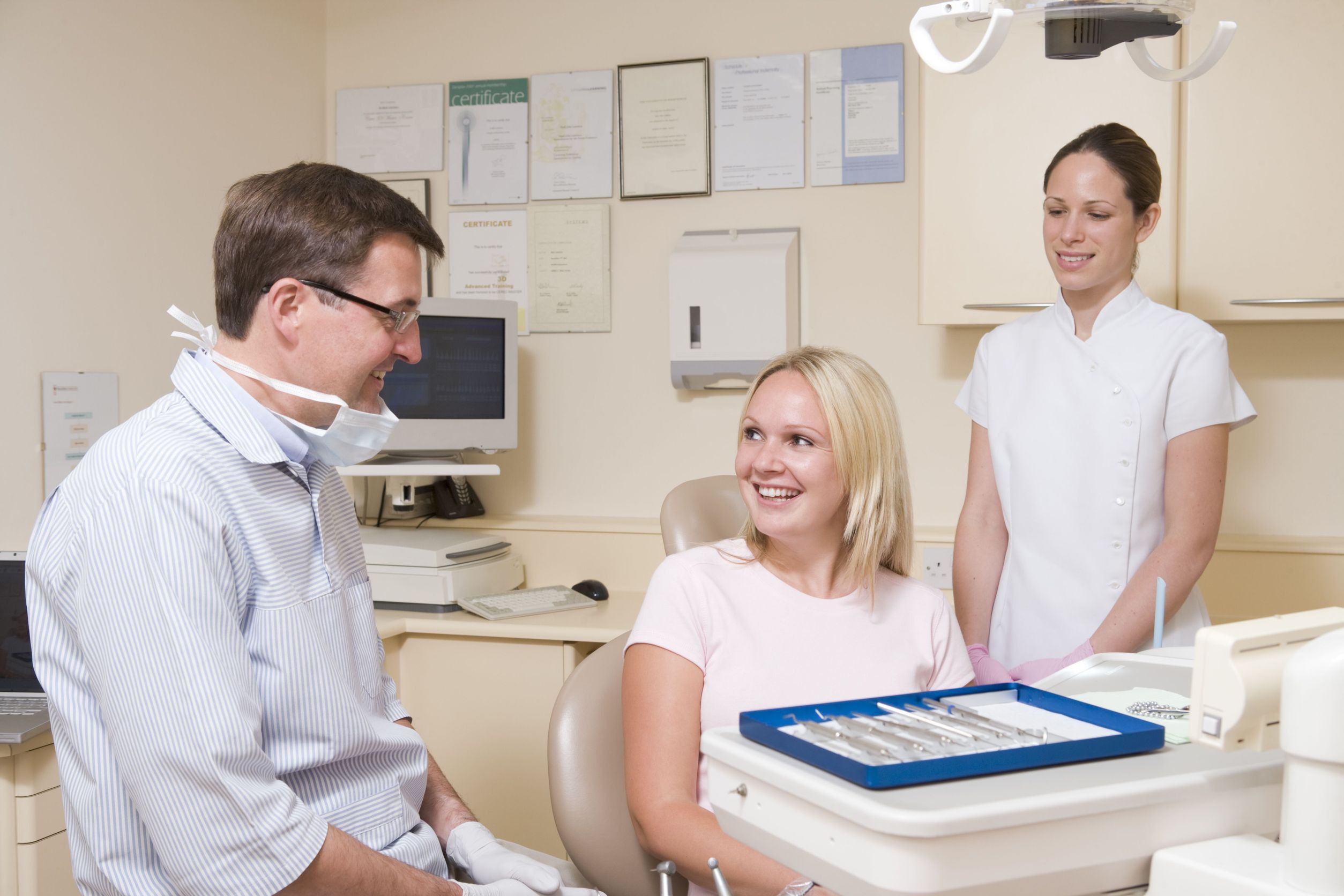
Male dentist assistant and patient

Dentistry has experienced many changes these past ten years. The economy is a lot different and the way we will deliver our treatment recommendations to our patients also needs to change today.

The dental hygienist has a big influence on how and when patients will accept treatment.

In addition, the entire dental team must rely on advanced communication skills to improve case acceptance. The dental hygienist plays a very important role in case acceptance for comprehensive care.

Let’s take this apart and study this system for the doctor/dental hygiene exam and how it can affect case acceptance. Doctor needs to write down how he/she wants this to be streamlined to create highly effective case acceptance. Role-play with your team using scripts and practice this system until you have it down perfectly.

 The Doctor/Dental Hygiene Exam

The doctor/dental hygiene exam is highly effective when there is a specific format for delivering the information: 1st from the hygienist to the patient and 2nd the delivery from hygienist to doctor while your patient is present in the treatment room.

Often times the doctor enters to complete a patient exam and it is rush-rush. Either the hygienist is running behind, maybe the hygienist has been waiting ten minutes for doctor to complete the exam and in addition, the patient may be stressed because they need to leave to return back to work, etc.

At Dental Practice Solutions we recommend a specific method for determining when doctor will complete an exam. The doctor should never wait until the end of a dental hygiene appointment to complete an exam.

When the doctor enters the treatment room, the computer monitor should show images of the teeth, showing calculus, plaque, BOP, fractured restorations, etc.

The dental hygienist also needs to have the most recent radiographs available for doctor to view when completing the exam.

Here is a scenario of how this exam process will be completed:

The dental hygienist needs to have written notes to herself/himself about what they discovered with the patient. Now the doctor and hygienist will have a specific flow to the exam conversation. (This is your roadmap)

Doctor only needs a quick “Hello, how are you Mr. XYZ?” For a patient of record there does not need to be a lot of conversation. Anything over 2 minutes is too long!

The hygienist can begin reporting to doctor with a quick personal update.

 Example:

Hygienist:“Dr. Goodtooth, Mr. Dundee’s son is getting married this summer!”

Doctor: “Congratulations! I remember when Matt was only six years old! How can it be that he is getting married?!”

Hygienist: “Dr. Goodtooth, today I reviewed Mr. XYZ’s health history and there are no changes. I took his blood pressure and it was 100/70. We completed an oral cancer screening with the ORALID®. That was negative. Mr. XYZ told me that he wants to have whiter teeth for his son’s wedding. We talked about completing those implants and before you complete those he wants to do the whitening of his teeth. I told Mr. XYZ that you would like to have the annual x-rays next time we see him in 6 months. His pocket depths were all within normal limits and there was no bleeding today. We talked about him using the Sonicare and he may buy one next time he is here.”

Doctor: Nods in agreement and says something like “Ok, or ah-huh.”

When the hygienist is finished with her/his verbal report doctor can begin to expound on the necessary treatment.

Before the patient leaves the treatment room the hygienist will schedule Mr. XYZ’s next hygiene appointment.

REPETITION IS KEY

Patient’s usually need to hear something new about three times before they are able to fully comprehend their treatment needs. Now they can attempt to make a decision to schedule and pay for treatment.

Imagine we are speaking Greek to them! They have no clue what these funny sounding words mean!

Do not attempt to discuss payment options or schedule the treatment until the patient has confirmed they understand the diagnosis.

Three Verbal Communication Opportunities

When the patient has a new condition that needs treatment it is helpful if you can talk about this three different times during this appointment. The 1st time is when the hygienist completes her or his assessments and discovers the need for treatment. At this point in time the hygienist will co-diagnose the area(s) of concern with the patient seated upright in the dental chair.

The 2nd time the patient will hear about the condition in their oral cavity is when the hygienist reports to the doctor.

The 3rd time with be at the front desk with the treatment coordinator.

STOP AND DO NOT PASS THE FRONT DESK!

Always have patients stop off at the front desk before they leave the dental office. Patient’s should always be escorted to the front desk and the dental hygienist or other auxiliary will report to the treatment coordinator or another auxiliary at the front desk, what was completed at today’s appointment and what will the next appointment be scheduled for. If the patient was scheduled in the back office treatment room, this needs to be reported when the auxiliary is speaking to the treatment coordinator at the front desk.

When patients are left to wander out of the office without a team member escorting them, appointments will many times go unscheduled and/or payment is often not received the day services are rendered.

COMMUNICATION SKILLS: REFINEMENT AND DOWN TO A SCIENCE

As a Dental Practice Management Consultant, I always recommend that you create scripts for all communication that routinely occurs. If you are talking to a new patient on the phone or maybe you are talking to a patient of record about a recent diagnosis, script out these various scenarios and role-play with your team. Role-play these various opportunities and create solutions to overcome patient objections and discover how to work in harmony as a team. Effective communication is key!

This should be an ongoing process. Learn how to understand the various ways your different patients communicate and learn how to respond to these various personality and communication styles.

LARGER COMPREHENSIVE TREATMENT PLANS

Not every patient will accept your treatment recommendations the 1st time a patient is informed of a diagnosis. Many larger cases, above $2,000.00 USD  may take three follow up attempts to finally have patient schedule for treatment.

This means that the dental hygienist plays an important role in follow up each time they see the patient.

CONCLUSION

There is a very systematic, scientific way to complete an effective doctor/dental hygiene exam.

This process really does need to be practiced until you have it down to a science.

Write scripts for everything that is said in your office between the team and patients. Always take time to role-play with the team. Practice until you make it perfect.

If you want to dig deeper into this topic Dental Practice Solutions has a one-of-a-kind 30 Day Dental Hygiene Profits Program which spends 3 Days of the 30 days on this topic of the doctor/hygiene exam. You can find more information about this program here: READ MORE

About Debbie

ME not too high jpeg

Debbie Seidel-Bittke, RDH, BS, is founder of Dental Practice Solutions and for over 20 years she has been committed to creating a dental hygiene department that works enthusiastically, creating a high performance teams, improving patients’ total health and consistent profits to the dental practice.

She is an author for journals such as Dentistry Today, HygieneTown and RDH. Debbie speaks internationally about systems and services in the dental hygiene department to create a team that works like a well-oiled machine,  improving the total health of patients’, utilizing the most recent science to prevent disease and consistently increase profits.

In 1984 she graduated from USC in Los Angeles in with a Bachelors Degree in Dental Hygiene. She is a former clinical assistant professor from USC. In 2000-2002 Debbie co-taught the practice management course for the dental students. Debbie is also a former dental hygiene program director for a school in Portland, Oregon where she wrote the accreditation, hired the instructors, purchased all the equipment, worked with project managers on the building of the school while managing a 2 million dollar budget.

Debbie works with dental practices throughout the world and is considered a leader in creating consistent profits to a dental practice through services and systems in the dental hygiene department.


Posted in Uncategorized

Check Your Dental Hygiene Department Pulse and Increase Your Profit Potential

By: admin

May 21, 2013

Dental RDH an intraoral camera

Is your dental hygiene department the second highest profit center of your dental practice? What do profitable hygiene departments have in place that will allow them to work like a well-oiled machine and be their most profitable? Why does one hygiene department create more treatment plan success from their dental hygiene department than many others? Do these hygiene departments see more patients to create these higher results? Do they perform more dental hygiene services? Do these auxiliaries work longer hours?

Strategic Systems

New patients are the lifeline to every successful dental practice. Without new patients, production will decline and the practice will not exist. Every dental practice has a normal attrition of patients. This is a fact of business. People move, pass away, or leave because you are not on their “insurance plan” and this can mean an annual loss of 10%. Just as your heart beats at least 60 beats per minute, you must have a continual flow of new patients walking in the front door to make up for those patients who are walking out the back door.

Patient retention (continuing care) is the heartbeat of the dental practice. Your active patient base consists of patients who value your care, accept your recommendations, and pay for treatment. These are the people who trust you and your team. They refer their families, friends, and colleagues to you. These are the are key players to the ongoing success of your business Most patients see the hygienist more than any other auxiliary of the dental team. This is what makes the hygienist carry and important role in building and maintaining the current active patient base.

Maintaining the Active Patient Base

Always preschedule 90 percent of your hygiene department patients. Patients are more likely to understand the importance of why they need to schedule their next hygiene appointment. When the hygienist schedules the patients for their next hygiene visit there is a continuation in the practioner/hygiene communication process. You most likely see a positive patient attitude and an increase in patient compliance occur when the hygienist is engaged in scheduling the patient next hygiene appointments. Ideally this should occur when the patient is still present in the hygiene treatment room.

Words do matter

The dialogue between the auxiliary and patient is extremely important. Here is an example of how the conversation may go:

Example: “Today I found a few areas of bleeding that were considered abnormal and doctor is observing and area where you have the beginning of decay. Our schedule is very tight because patients usually schedule before they leave their dental hygiene appointment. I know that you like to come in first thing in the morning on Thursdays so I recommend that we reserve your next appointment to assure that you can return on that day of the week and at that time in fact that is a very valuable and popular time for most of our patients. To make sure you have your next appointment on this day of the week and at this time, I want to schedule and reserve this time for you now. I can see you on Thursday, October 18th at 8am. Will this work for your schedule? ”

The dental hygienist is the oral health educator for every dental practice. It is the role of the dental hygienist to educate patients about the relationship between oral health and systemic health. Patient involvement and active participation create ownership and accountability and will ultimately reduce the cancellation and failure rates of the continuing care patients. The preventive care and supportive periodontal maintenance appointments have the highest cancellations and failed appointment rates of any service in the dental practice. If you have one hygienist working four days a week and each day you have one cancellation you this can lead to an annual loss as high as $150,000 in hygiene department profits and this does not account for the treatment normally diagnosed from the hygiene appointments.

For a hygiene department achieve success they should be scheduling 95 percent of their future dental hygiene appointments at the time of the patients current dental hygiene appointment. Always create monitors and track the scheduling ratio. Count the total number of patients seen in the hygiene department each month and divide this number by the number of appointments available for the month. The hygiene or scheduling coordinator should then report the current scheduling rate to the team at monthly team meetings. The scheduling coordinator needs to always report in the morning huddle the open times available on the hygiene schedule each day for the next week.

Many dental practices charge a fee for failed appointments, and the effect of doing this has been positive in raising patient awareness of the importance of the time set aside for their appointments.

Team approach

Everyone on the team should understand the words which are effective for a positive patient response. Courtesy confirmation calls, emails, text messages and written communications define the hygiene appointment (continuing care) with dialogues such as this:

“Hello Mr. Goodman, its Megan calling because Maria (Insert the name of the hygienist seeing the patient) and I are looking forward to seeing you tomorrow at 3 o’clock for your preventive care appointment. I see on the schedule that Maria will be doing your annual periodontal screening exam and Dr. Goodtooth mentioned to me that you were in tested in the new whitening product we are using. We’ll see you then. By doing this, patients are moved beyond the“just-a-cleaning-and-a-check-up” mentality. It is best not to discuss any type of cancellation policy because this is only a subconscious reminder that if something else comes up they can cancel and it sets up for failure for your continuing care systems’ success. Do not ask for calls back to the office to verify an appointment. Have the expectation that patients understand the importance of their dental service and desire to come to see the doctor and/or hygienist.

Accountability

Chart audit and patient activation must be ongoing systems that are frequently performed in the office. This is completed through daily reviews and computer reports. While everyone on the team plays an important role, one auxiliary (the hygiene or scheduling coordinator) is responsible and accountable for keeping the daily schedule full and productive. At team meetings, the scheduling coordinator reports and discusses the scheduling effectiveness rate. Everyone needs to be aware of what is working and what is not working so that problem-solving can take place.

Create a plan of action when there is a crack in the system. Ask for suggestions to overcome these challenges which may occur and when you are feeling like a hemorrhaging is occurring in your dental hygiene schedule you may want to consider the advise of a dental expert who is knowledgeable in overcoming these challenges, especially during these stressful economic times.

Scheduling effectively for today and the future

To achieve and assure a full and productive schedule (for all providers), the team should always prepare for the day by auditing patient records. The hygienist reviews patient records for incomplete dental treatment, updated X-rays, status exams, perio, update the medical history, etc. The hygienist needs to be prepared to discuss, demonstrate (with an intraoral camera), answer questions, and provide the facts and findings, risks and benefits, when the doctor enters the treatment room to provide the patient exam. Ideally, a brief meeting (the morning huddle) enables the entire team to communicate, delegate, and maximize the day. One of the most important topics reviewed at huddles with my consulting clients is having the clinical assistants audit their records and identify patients who are seeing the doctor that day that are overdue for hygiene care.

Picture Paint

When patients are in for the appointment with doctor and overdue or need a dental hygiene appointment ask them to stay for the dental hygiene appointment using words such as: “save you-time missing work another day, Save you time returning to the office, etc. Create statements that are certain to benefit the patient. The hygienist does the same if the doctor has an opening and the hygienist has a patient with undone dentistry.

PHILOPHYSHARE (PLAYING WITH PHILOSOPHY)

Finally, by working together, the doctor, hygienist and entire team, communicate and share a practice philosophy for the patients, the hygiene department, and the practice. Working with the dentist as a partner in oral/systemic health care, everyone on the team is committed to the vision of the practice, proudly recommends dental treatment, and refers family and friends to the doctor.

Facilitate change by regularly scheduling meetings with your hygiene team and as a whole team to support and reinforce initiatives and explore new ideas and opportunities for growth and development. Open pathways for communication will lead to mutual respect and admiration and will be reflected in increased profits, a harmonious dental team, and most importantly, healthier patients. It’s a win for all!

Posted in Uncategorized

Your Comprehensive Treatment Plan Part II: “Get Them to Say YES!”

By: admin

October 13, 2012

In part I of Your Comprehensive Treatment Plan we discussed the necessary fact that you need to build trust in your patients and understand their needs. It is also very important to understand their personality style before presenting treatment.

Case presentation is complex and involves numerous steps to get patients to say “YES”. These steps are:

  1. Coordination of the New Patient exam
  2. Communication to their patient of their needs
  3. Present the big picture
  4. Offer flexible financing

Continue reading “Your Comprehensive Treatment Plan Part II: “Get Them to Say YES!”” »

Posted in Business

Your Comprehensive Treatment Plan: Patient Case Acceptance

By: admin

October 6, 2012

Every dental practice wants their patients to accept comprehensive treatment. Research states that at most, 25% of patients in a dental practice accept their treatment plan, and schedule an appointment.

What are some of the factors that will affect their decision? How can you change your current treatment plan case acceptance to be at 70% or higher?

Many factors play into your patients decision to accept and schedule treatment in your office. One of the most important factors that will get your patients to say “Yes” to case acceptance and schedule the appointment(s) is trust.

When patients feel good about your office, when the know they can entrust the care of their health to your dental office, it is because they trust you and now they are more likely to schedule for necessary treatment. You will find these are the patients who return for their appointments year after year, they are the people who trust you and the entire team. Your patients want to know and feel, deep inside, that you really care about them! How can you show a new patient that you really care about them and not just their pocket book?

Once patients trust you, they feel a sense of commitment and they are the patients who return for their appointments, no matter what is happening in their economy. These are also the patients most likely to make payment in full.

“It’s Complicated”

Case acceptance is a complex issue and requires a team approach. All decision making involves the understanding of human behavior.

Let’s break down case acceptance into 4 steps:

1. Developing a foundation for trust to occur

2. Understand your patients’ needs and their personality type

3. Effective communication

•           Be able to explain the why, what, how, etc.

4. Offer flexible financial arrangements

This month we will only discuss steps 1 and 2.


Step 1: Developing a Foundation for Trust to Occur

The first step to have patients accept your diagnosed/recommended treatment, and returning indefinitely for their appointments, is to gain trust. Trust is instinctive.

If patients have not established a trusting relationship they are not going to accept comprehensive treatment and they are less likely to become a long-term patient.

Building trust starts before patients even walk through the door of your office.  As you are reading this right now, millions of people are on the internet and hundreds of thousands are on the internet now, searching for a dentist.

When a patient lands on your website their mind begins the trust building factor. It continues when they first call your office and then as a patient in your office, your words and the manner in with you say your words build their ultimate trust or distrust.

The Important Trust Building Factors

When someone visits your website for the first time, they will want to easily find the information they came looking for. This may be a list of the services you provide, special programs you offer, insurance accepted, how they can schedule an appointment. Can a patient request an appointment through your website? Do you have photos of your beautiful cosmetic dentistry? Do you have photos of your team and a bio that talks about employee interests and their areas of expertise?

When a potential patient calls your office, will the person who answers your phone be friendly? Will they say their name? Imagine the first phone call as a phone call with your future spouse. If you don’t like the first conversation what are the chances you will be calling back to schedule a date?

People instinctively look for a specific comfort level when they are interacting with someone on the phone. The first person to speak with a caller must be courteous and reassuring. Understand the exact language and tone of the caller and mirror this during the phone conversations. This will put the caller at ease. Be able to give an answer to their questions whether it be financial or insurance driven.

How complicated is it to make an appointment in your office? Are people calling immediately put on hold? Can people visting your website make a request to schedule an appointment?

Many issues are important to discuss before a patient comes to your office but try to make the first call simple, succinct and one that is helpful to the patient. Try to not ask too many questions over the phone so you don’t complicate the process

What occurs during the patient’s first treatment appointment?

The first appointment when the patient is in your treatment room is when they will assess your “chair side manner,” your concern for their comfort, and how gentle you are during treatment.

Trust requires that the dentist and team keep their word. If the patient was quoted a fee, this fee can not change unless there is a change in the treatment plan and at this point, you will need to stop the procedure and explain the change. (The what and why, etc.) If your new patients and/or patients of record, expect to see a particular dentist or auxiliary, (RDH, etc.) they must be appointed with this dentist or auxiliary. If you tell a patient you will call them back within the hour, or the next day, they must receive this phone call.

Each time a patient visits your office for a scheduled appointment, they gain further confidence in your dental practice.

Step 2: Patient Priorities and Personality

The second step is to understand your patients’ needs, their priorities and their financial situation. To understand this means that you perceive what goes on inside their thought process. It will be helpful if you can identify the various personality traits of each individual patient and communicate effectively using these tools to help you understand the who, what and how, (etc.) they “see life”, through their own pair of glasses.

Depending upon the level of care and expense of the patients treatment plan, you may want to bring the patient back for a separate appointment to privately discuss in a consultant room or a private area. Always discuss treatment plans with patients, in a confidential area and without anyone feeling rushed or being interrupted.

A persons behavior patterns affect how they make a decision. Learning to understand these various personality types can result in positive communication, which results in building trust with the patient, retaining patients long-term and increased profits in your practice.

There are many different personality tests to evaluate personalities, how to respond and interact with each type. For this blog we will refer to the Meyers-Briggs Type Indicator® (MBTI) personality inventory. (http://www.personalitypathways.com/type_inventory.html) The MBTI uses factors such as introversion/extroversion, sensing/intuition, thinking/feeling, and judgment/perception to identify the various personality types. Every dental office needs a simple system that enables you to effectively communicate with your patients, as much as possible, to predict patient behaviors. The system that you choose to use must take into account not only patient behavior but also priorities and financial considerations.

The MBTI categorizes personalities into various types as mentioned above. You can take your own personality test and share with the entire team. It can make for a great team meeting and is a great resource to building a successful team. Here is where you can begin practicing how to get to know other people’s personality type and understand how they make decisions. Try it out within your team now! http://www.personalitypathways.com

When you can easily identify your patient’s personality type and learn how to communicate within their comfort level, you will turn objections into opportunities and create a huge TRUST factor with your patients! This is also a great way to build teamwork within your office! Try using this within the team.

At this point it is important to understand that having a specific methodology for case presentation is critical for your success and the best outcome of your patient(s).

When the entire team understands the process of getting your patients to “YES” for comprehensive treatment, you will begin building trust before a patient ever steps foot inside your office.

If your efforts are a desire to be helpful, reassuring, caring and understanding of your various patient personalities, and their mind-set. If you can eliminate their fears as well, your rate of success for comprehensive care will soar and your profits will take a LEAP– UP! Getting to “Yes” requires a commitment from the entire team which will benefit everyone!

Next week Part 2 will continue with this topic.

Do you want more of this? Be sure to check back in the next 30 days for the release of our 12 week program dedicated to CO-munnication to Increase Comprehensive Treatment.

Sign up for our weekly newsletter to be the 1st to know when this is released!

Posted in Business

Case Acceptance Life to Your Practice and Profits

By: admin

September 29, 2012

Through many years of surveying dental practices we have learned that 20-25% of your patients schedule their necessary treatment. We also know that if dental professionals are educated in effective communication and learn how to talk about value and benefits to patients, their case acceptance rate will jump to 70%.

One huge factor that will affect case acceptance is trust from your patients. Where does this trust begin? You guessed it! It begins before a patient even walks into your dental office. Right now, as you are reading this, millions of people are also on the internet. This is how most people will find a dentist in today’s world. That being said, people will find your office via your website.

Your Social Edge

Yes, you know that most people spend hours on the internet each day and most people find their dentist via their website. Now I need to ask you: “What does your website say about you?” I also want to ask “Do you show off photos of your beautiful dentistry and do you have photos of your employees with a bio of everyone who works in the office?” Do you offer Invisalign® or Six Month Smiles®? Show off your expertise on your website and begin the relationship here.

Yes! Get personal. Be real! Let people learn as much as possible before they even pick up the phone to make their first inquiry about your office. This is where you begin to build trust!

Mindset

Is your mindset” Insurance” or is it “Fee-for-service”? Is your practice philosophy all about what is best for your patient? Whether you answered yes or no, how can you educate your patients about insurance dictation and insurance provdership? The delivery mechanism in your office can’t be driven by what the insurance company will pay. 80% of all dental offices only offer patients “what their insurance will pay.”

What you say to your patient in approximately 4 minutes will build patients trust. This begins in the hygiene treatment room.

We are the experts. We know that without optimal oral health the overall body can’t be 100% healthy.

Try sitting your patient upright in the chair and communicate the true value of preventive care. Share the science and research when asked for this. Patients usually find a way to live a healthy and longer life. They will also pay for exactly what they want. Tell them they can have a beautiful smile, live longer and be healthier and the majority of people will find a way to pay for this! Who doesn’t want to look their best PLUS live a longer life when they are healthy!

Hygiene Tips

  1. Hire a hygienist!

    Many dentists today are trying to save their way to prosperity by doing the soft tissue management and preventive services themselves. Build your hygiene department so you can free up your time for restorative procedures and explain treatment plans with your patients to increase case acceptance.

    When the dentist is free to spend valuable time providing cosmetic and restorative dentistry, the hygienist can focus on patient retention and continuing care. This helps to stop chasing after patients to schedule their hygiene appointments when you pre-schedule at least 98% of all hygiene appointments.

  2. FMX every 5 yrs. (at least) This is one more profit Center for your practice and patients need it
    1. Schedule more time either in the hygiene appointment of with your assistant
    2. Schedule time for a comprehensive exam –allowing time to diagnose more dentistry
  3. Repeat the findings before the patient leave the treatment room
    1. Use the intraoral camera
    2. Bring patients up to YOUR Level

         i. Don’t dumb it down

         ii. Educate your patients to be at your level

         iii. Show them the bleeding gums and tell them “This can cause irreversible damage to your gum and the bone that supports them.”

            1. “Gum recession and these areas of abfractions, in your mouth here (Show them on their intraoral photos) can decay so we recommend that each night you use a sodium fluoride and each hygiene appointment I will brush on a fluoride varnish.”

         iv. Open new doors, avenues for cosmetic and restorative dentistry to be provided

    Conclusion

    • It’s time to give patients what they really need not only what their insurance will pay for!
    • Always educate your patients regarding your services, your hygiene preventive services and products available in your office to prevent disease
    • Deepen your relationships with your current patients of record.

    Every one of us has the ability to be a leader. Lead your patients in the right direction to complete the necessary treatment. They are worth knowing what is the very best for them!


    “Leadership is communicating to people their worth and potential so clearly that they come to see it in themselves. “

    Stephen Covey, the 8th habit

Posted in Business

Post navigation

  • Newer posts →

Return to Your Training Vault

Contact Info

  • 15508 W. Bell Road Suite 101 PMB 431, Surprise, AZ 85374
  • (623) 252-1941
  • admin@dentalpracticesolutions.com

Office Hours

  • Mon-Thu 8:00am - 5:00pm PST
  • Friday 8:00am - 2:00pm PST

Useful Links

  • Home
  • About
  • Sitemap
  • Terms of Use
  • Privacy Policy

Recent PR

  • PrestoSmile® and Dental Practice
  • Dental Practice Solutions - Debbie Bittke
  • Dental Practice Solutions - Debbie Bittke
  • Dentistry Leaders
Copyright 2026 Dental Practice Solutions

    Input this code: captcha

    captcha

    • Home
    • About
      ▲
      • About Us
      • Testimonials
      • Videos
    • Services
      ▲
      • Hire a Dental Hygienist
      • Dental Hygiene MAX Course
      • 6-Month Dental Hygiene Department Optimization
      • 12- Month Dental Hygiene Department Training
      • Dental Hygiene Department / Team Workshop
    • E-Learning
      ▲
      • Free Resources
        ▲
        • BOOST CASE ACCEPTANCE eBook
        • Treating the Gingivitis Patient
      • More Courses
        ▲
        • Oral Inflammation and Systemic Vitality
        • Properly Sequence Hygiene Appointments
        • Alzheimer’s Disease Prevention.
    • Webinar
      ▲
      • Current Webinar
      • Power Hour March 15 2024
    • Blog
      ▲
      • Podcasts
    • Contact Us

    Schedule your free coaching call here client login

    (888) 816-1511

    Introduction to Orientation Video Part 1