Dental Practice Solutions
Schedule My Opportunity Call Call us now (623) 252-1941 Client login
  • Home
  • About
    • About Us
    • Testimonials
    • Videos
  • Services
    • Hire a Dental Hygienist
    • Dental Hygiene MAX Course
    • 6-Month Dental Hygiene Department Optimization
    • 12- Month Dental Hygiene Department Training
    • Dental Hygiene Department / Team Workshop
  • E-Learning
    • Free Resources
    • BOOST CASE ACCEPTANCE eBook
    • Treating the Gingivitis Patient
  • Webinars
    • Oral Inflammation and Systemic Vitality
    • Properly Sequence Hygiene Appointments
    • Alzheimer’s Disease Prevention.
    • The Mouth-Brain Connection
  • Blog
    • Podcasts
  • Contact Us

Are You Serious About Creating Dental Practice Success in 2014?

By: admin

December 2, 2013

20384140_sIt is happening quickly, and today, as the year is winding down, there are two very conflicting mindsets present within each of us. These can destroy your chances of making any significant improvements in 2014. Are you serious about creating success for your dental practice in 2014? If you answered “Yes”, then it is urgent that you read on and get the success plan started, right now!

THE TWO CONFLICTING MINDSETS

The first mindset I want to mention is the “Holiday Mindset” and, I know as a dental practice management consultant, I see this every year. This is especially present now as we all anticipate taking time off work to celebrate. We begin to get lazy, eat more than normal, possibly some of us sleep more than normal, you are watching more TV – football, etc, and really – just over-indulging in every possible way that we can all get away with. This is hardly a regimen to prepare for success in the New Year.

The 2nd mindset we have is what I call the “New Year Mindset.” This is where we begin to feel optimistic about next year. Most of us think to ourselves something along the lines of, “I’m ready to make this my best year ever!” or “This is the year that I’m finally going to ________!”  And some of you are saying “I’ll do that in January!” 

These are the type of good intentions that most of us begin each New Year with, so why do so few people make significant improvements in the areas of their life and business that really matter most?

THE CHALLENGE

If anyone was preparing for their best performance in anything—whether it is an athlete preparing for the Olympics or if we are preparing to create the most extraordinary  – profitable year we could ever imagine (in 2014)—we wouldn’t do it by engaging in habits like overeating, oversleeping, flying by the seat of our pants, glaze over all those openings in your daily schedule, leave incomplete treatment in the patient charts, allow overdue balances to continue, forget to follow up with those overdue hygiene patients, etc.  You know what I am talking about here.Female Runner

And yet, this Pre-New Year Syndrome is what precedes the New Year. In fact, the New Year is a holiday, so nearly everyone hits January 1st with what I call a “Holiday Hangover”— armed with an arsenal of bad habits that we have all developed in December. This is why, despite “good intentions,” most people don’t get the start they want to when the New Year does arrive. And how do you ever recover from your holiday hangover? This is what results in yet another year of disappointment, regret, and unfulfilled potential.

So what does that mean for your future dental practice success? What do you need to do NOW to set yourself and your dental practice up for success in 2014?

THE BEST TIME TO CREATE YOUR DENTAL PRACTICE SUCCESS PLAN

If you are serious about making 2014 your best year ever, it doesn’t start January 1st, it starts TODAY. It starts right now, with the decisions you make, about how you’re going to finish off the remainder of THIS year. In other words, if you want to make 2014 your best year ever, you have to make this December your best MONTH ever.

For example, if you have a goal of running a marathon next year, don’t wait until January 1st to go out and run for the first time. You need to hit the road today. At least go run a mile tomorrow morning, and build up to 5 miles by the end of the January 2014. As a dental professional set goals to finish strong and make December the best month you have ever had! I urge you to see December as the most important month of your life—as your opportunity to become the person you need to be to create the 2014 your want, by developing the mindset, habits, and the discipline that will set you up for extraordinary success in 2014.

For over 600 dental professionals, the process of planning, preparing, and ultimately creating their best year ever in 2014 started in November when I shared my webinar with a Success Blueprint for your dental hygiene department. Many of you registered and attended my webinar on November 13 to set your sails in the right direction for 2014. You can register next week for your Treatment Planning Webinar that will occur on December 17th at 5pm Pacific. This webinar is going to be called: “3 Steps To Effective Treatment Planning In The Hygiene Room”

When you register there will be a complimentary hygiene department training video available.

Don’t want to wait until next week to register? For many of you who take today’s article seriously, you won’t want to wait and I tell you that it costs you nothing to pick up the phone or click on this link now and schedule a time to chat about your 2014. Let’s create a plan for your success and I mean success like you have never seen before!

HOW DO YOU CREATE DENTAL PRACTICE SUCCESS FOR 2014 TODAY?

It begins right now. Dental Practice Management Consultants have the expert knowledge and offer the best support before 2014 arrives. Hit the ground running! We invite you to SCHEDULE YOUR STRATEGY CALL NOW. JUST CLICK HERE  or call: 888-816-1511 to schedule your session. This is how your success in 2014 will begin today!

It will cost you millions if you don’t have a plan!

Please feel free to comment below and let us know what your success plan looks like.

Happy Holidays!

P.S. If you’d like to find out about coaching/consulting with our team for 2014, you can get a  a no-cost strategy call now: CLICK ON YOUR SUCCESS CALL HERE 

 ABOUT DEBBIE

ME not too high jpegDebbie Seidel-Bittke, RDH, BS, is founder of Dental Practice Solutions. She is one of Dentistry Today’s Top Consultants for the past eight years. She also has a background in academia, as a former assistant professor at the University of Southern California in Los Angeles, California. She also wrote the acreditation for a new dental hygiene program in Portland, Oregon and served as their first program director for the dental hygiene school.

Debbie works with clients all over the world. She has other expert advisors who work with her. Susan Ketterer is an expert consultant who assists dental practices with the business side and back office assistants in a dental office. Debbie is the go-to expert for improving your dental hygiene department efficiencies and consistently increasing profits. She has a 30 Day Dental Hygiene Program that is no cost and guides a dental practice to implement dental hygiene department services and systems to take the practice to that next level of success.

Posted in Uncategorized

A Story of Thanksgiving

By: admin

November 25, 2013

CORNACOPIA

I wanted to share a story of Thanksgiving which I found quite touching. Living in Portland, Oregon, it is not atypical to see people standing on the streets with signs asking for food, money or even alcohol, but the story I am about to write is a bit different from any of these!

A blind boy stood in front of a building in downtown Portland, Oregon with a hat at the bottom of his feet. He held a sign that said “I am blind, please help.”

I only saw a few coins in his hat.

Next I saw a middle aged woman walk by. She took a couple of one dollar bills from her purse and dropped them into the hat. This woman then took the boys sign, turned it around, and wrote a few words. This woman gave the sign back to the boy with the new words on it.

Surprising as it may sound, the boys hat began to fill up! Many more people began to fill the boy’s hat with coins, dollar bills and bigger bills!

Later that day the middle aged woman came walking back and inquired how the boy was doing.

The boy who couldn’t see the woman did however, recognize her gait and asked “Were you the lady who changed my sign this morning? What did you write on my sign?”

The woman told the boy, “I only wrote the truth. I wrote what you said but in a different way.” I wrote: “Today is a beautiful day but I cannot see it.”

Both signs told people that the boy was blind. The first sign very simply said that the boy was blind. The second sign told people that they were so lucky that they were not blind. Should we be surprised that the second sign was more effective?

The Moral of This Story

Be thankful for what you have. Be creative. Be innovative. Think differently and positively. When life gives you 100 reasons to cry, show life that you have 1000 reasons to smile. Face your past without regret. Handle your present with confidence. Prepare for the future without fear. Keep the faith and drop the fear.

The most beautiful thing is to see a person smiling. And even more beautiful, is knowing that you are the reason behind it!

As dental professionals we are in the business of making people smile. I hope that if you are thinking this has not been a good year for your dental business (MANY of you have told me this is how you feel this year and even the past three years!), that you will plan to create your own economy!

As Dental Practice Management Consultants we are here to create a success plan for your dental practice. What are you thankful for this year?

I am so thankful that I have a great life and part of what makes it so great is the chance to serve all of you!

I am so thankful to all of you!

Happy Thanksgiving!


Posted in Uncategorized

CDT Code Changes For 2014: Take a Proactive Stand on The Success of Your Dental Practice

By: admin

November 19, 2013

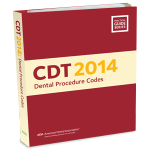
CDT 2014

The end of the year is almost upon us and with that we need to look at ending this year and preparing for the new!

The dental field has many things you need to know about to get ready for the New Year. A big change in 2014 will be the new CDT code updates. The ADA is giving us some time to digest and prepare for the 2014 CDT additions and changes.

In 2014 we will have 58 changes to the Current Dental CDT Codes.  Dental Practice Solutions works hard to keep dental offices informed of changes within dentistry.  We realize that you need to keep focused on providing excellent care for your patients. Thank you for relying us to keep you up to date and informed.  There will be 29 new codes, 18 revised codes, 4 deleted codes, and 7 changes to subcategories of the CDT code set.

You must take a proactive stand on the success of your dental practice. Read about the CDT Code changes for 2014!

HIPAA

HIPAA recognizes the CDT as the standard for reporting dental claims and the ADA is responsible to maintain the CDT codes.  Changes to codes are determined by insurance carriers on how and what is being processed so remember to submit all procedures and codes that are provided, even if you know you will not be paid this year; it may be next year!  Who ever thought sealants, implants, adult fluoride, oral cancer screenings or night guards would eventually be a covered benefit for our patients?

RECOMMENDATIONS BY DENTAL PRACTICE SOLUTIONS

Dental Practice Solutions recommends having one team member be “in charge “of and completely understand the CDT codes. This team member is ultimately responsible for learning the CDT codes, updating tyour dental software with the changes, and for training all team members.

We suggest training all dental team members on the correct dental terminology because this is your menu of services that you offer. A good analogy would be a waitress arriving at a table not knowing the menu and then placing a wrong order into the kitchen and the kitchen producing the wrong meal for the table.  Most offices do not realize they can be selling the side of mash potatoes with the steak a la carte, they assume the steak just comes with the meal.  A perfect example of this is separating the implant attachment from the implant fee.

Previously, dental offices combined implant attachments with the implant fee because insurance companies never paid for implants. Now more insurance companies are paying for this valuable service you provide your patients. The CDT has previously updated this code to accommodate these changes.

Have someone in your office to be accountable and on alert of these changes. This will mean extra income for your practice doing the same dentistry you have been doing but now you will get paid for it!  “Making more money, for the same effort?” Yes, that is what we are saying!

New Codes

  1. D0393 Treatment simulation using 3D image volume
  2. D0394 Digital subtraction of two or more images or image volumes of the same modality
  3. D0395 Fusion of two or more 3D image volumes of one or more modalitiesd0601 Caries risk assessment and documentation, with a finding of low risk
  4. D0601 Caries risk assessment and documentation, with a finding of low risk
  5. D0602 Caries risk assessment and documentation, with a finding of moderate risk
  6. D0603 Caries risk assessment and documentation, with a finding of high risk
  7. D1999 Unspecified preventive procedure, by report
  8. D2921 reattachment of tooth fragment, incisal edge, or cusp
  9. D2941 Interim therapeutic restoration-primary dentition
  10. D2949 Restorative foundation for an indirect restoration
  11. D3355 Pulpal regeneration-initial visit
  12. D3356 Pulpal regeneration-Interim medication replacement
  13. D3357 Pulpal regeneration-completion of treatment
  14. D3427 Periradicular surgery without apicoectomy
  15. D3428 Bone graft in conjunction with periradicular surgery- per tooth, single site
  16. D3429 Bone graft in conjunction with periradicular surgery-each additional contiguous tooth in the same surgical site
  17. D3431 Biologic material to aid in soft and osseous tissue regeneration in conjunction with periradicular surgery
  18. D3432 Guided tissue regeneration, resorbable barrier, per site, in conjunction with periradicular surgery
  19. D4921 Gingival irrigation- per quadrant
  20. D5863 Overdenture-complete maxillary
  21. D5865 Overdenture-complete mandibular
  22. D5864 Overdenture –partial maxillary
  23. D5866 Overdenture-partial mandibular
  24. D5994 periodontal medicament carrier with peripheral seal-laboratory processed
  25. D6011 Second stage implant surgery
  26. D6013 Surgical placement of mini implant
  27. D6052 Semi-precision attachment abutment
  28. D8694 Repair of fixed retainers, includes reattachment
  29. D9985 Sales tax

New sub categories

  1. Post processing of image or images sets
  2. Pulpal regeneration
  3. Carriers

a)     Radiation carrier (D5983)

b)     Fluoride gel carrier (D5986)

c)      Vesiculobullous disease medicament carrier (D5991)

d)     Periodontal medicament carrier with peripheral seal –laboratory processed (D5994)

Deleted Codes

  1. D0363 Cone beam- three dimensional image reconstruction using existing data, includes multiple images
  2. D3354 Pulpal regeneration-(completion of regenerative treatment in an immature permanent tooth with a necrotic pulp); does not include final restoration.
  3. D5860 Overdenture-complete, by report
  4. 5861 Overdenture-partial, by report

The CDT 2014 is now available to purchase on the ADA website http://www.ada.org we recommend supplementing by also purchasing Dental Coding Made Simple: Resource Guide and Training Manual, 2013-2014.  This resource guide is revised every two years, sections include 151 common questions/answers; more than 25 coding exercises; an illustrated implant section; and a continuing education exam with five CE credits.  We also suggest you look at this website for additional information: www.practicebooster.com . The 2014 edit of Coding with Confidence is now available and a great resource for you office!

Keep your office up to date on the CDT codes to maximize patient coverage to have higher acceptance rate of treatment, have better speed and accuracy of dental claims submitted to have faster payment of dental claims and utilize front office staff to engage more dentistry in your schedule and not be resubmitting or following up on poorly submitted claims.

A well-trained dental team is a happier and more productive team! Are you proactive with the health of your practice? Make resolutions to be preventative with your offices’ health. Train and be prepared for the New Year.

Dental Practice Solutions is available for office team training and practice health assessments to move you forward in the New Year. Call today to for a 15-minute assessment to a healthier economic and mental well being for you and your staff members.  The economy is up to you not our nation or what anyone else may be telling you!

Older photoABOUT SUSAN KETTERER

Susan Ketterer is an expert advisor to Dental Practice Solutions. Susan brings a wealth of business and back office auxilary experience, with over 20 years of “in-the-trences” experience. Susan is asked by numerous dentists each week how to assist with front and back office efficiencies. Do you ever wonder how to get paid by those insurance companies a lot quicker? Do you want your phones answered at the highest level of customer service? Do you struggle with lab efficiencies from getting lab cases returned efficiently to sending office referrals? What systems do you wish to have improved? Susan is your GO TO person for working smoothly during your day at the office! Call our office or email Susan to discover how you can get to your NEXT LEVEL!

Contact Susan:  support@dentalpracticesolutions.com or call for a complimentary practice evaluation: 888-816-1511

Posted in Uncategorized

Telling Your Dental Hygiene Patient The News: Does It Need to Be Bad News?

By: admin

November 12, 2013

Doc enters to do exam

A few months ago I decided that I would go back to work in a dental office near my home in Portland, Oregon. I would only be there as a temporary hygienist for the day.

I was really looking forward to providing optimal oral healthcare to patients again! I have always enjoying providing patient care but even more I enjoy sharing my knowledge as a consultant.

The office doesn’t have a morning team huddle and I needed to talk to the dentist about the office protocol for treatment of peridontal patients. I asked the doctor about how he wanted me to tell a dental hygiene patient that a patient on my schedule had periodontal disease. From the chart notes,  I could see this was never been communicated to the patient.

When you tell your dental hygiene patient the news (Their perio diagnosis): Does it really need to be bad news?

PERIO PATIENTS: WHAT DO YOU TELL THEM?

I was extremely concerned about this one patient.  He was 56 years old and I saw he had no perio charting completed in the past three years. He was scheduled for a prophy appointment only. As I looked at his latest perio chart I saw chart notes with 5 and 6mm pockets generalized. Nothing else was documented. Looking at his radiographs (No FMX), I could detect that this patient probably had mobility on various teeth. Last perio charting and x-rays were about three years ago.

I asked doctor “How would you like me to approach this situation?” You can probably understand that I was a bit confused, at best, because looking at this patient chart, I was about to see a patient with definite perio problems and the scheduled told me it would be a prophy patient.

When I asked doctor about his plan for this patient with the perio disease, he told me “Just do the prophy!” Doctor said “This man has been coming here for years and he will never do anything so just clean his teeth and let me tell him about the periodontal disease!”

I add the exclamation marks to let you know that is how he responded to me about this patient.

Well, the patient came in, end of the day, and I did only clean his teeth. I did my very best and yes, those teeth were mobile. Many of the posterior teeth had mobility of 1.

Doctor came at the end of the appointment to do an exam. No x-rays were taken (doctor didn’t want me to do those!). Remember, I was instructed to “only” clean his teeth as my schedule said to do. The doctor said nothing about periodontal disease  during the patient exam, but told him “It all looks good, (Insert Patient’s Name Here).”

The patient left my treatment room at precisely 5pm and as I cleaned up my room I could hear doctor talking to the patient. They were making plans to play a game of golf together. Sounded like something they do often.

WHAT IS A DENTISTS ETHICAL/LEGAL OBLIGATION?

Well, it’s been months later, and I am now with enough nerve to tell you about this incidence. I don’t want to come across like I am bashing another dentist and I don’t like to write negative stories on the internet.

And yes, I already decided I didn’t every want to go back there again AND I have yet to do another day in a dental office as the temp hygienist!

My question that I would like to ask this dentist is “Will Patient X be really angry when his tooth falls out on the golf course with you or will he be angry if you now decide to tell him that he has periodontal disease?! Which is worse?!

We do have an ethical and legal obligation to tell our patients the truth. There is so much science and research to back the health benefits of treating periodontal disease. AND treating periodontal disease in the early stages vs. wait and watch has many benefits – Financial and health to the patient.

SOLVE THE DISEASE PROBLEM

Here is how I believe a patient with periodontal disease needs to be treated: It begins with each and every patient at about thirteen years of age. You will begin at this age, completing a full mouth periodontal screening. You can look up on the AAP website to see all that is involved in this screening because it is more than just those six probing numbers.

STEPS TO INVOLVE YOUR DENTAL HYGIENE PATIENT

Step 1 Call out the Numbers and Have another Auxiliary Record These Numbers

The periodontal screening needs to be completed and documented once a year. This is the standard of care. If a patient has a periodontal pocket that is not within normal range you must recheck that pocket before you pick up your curette. Re-evaluate pockets before you scale is key here. Too many reasons so write about here so email or write in the comments below if you want more 411 on why probing comes before scaling.

Tell you patients that you will be taking some measurements of their teeth and gums and that you will call out some numbers. Tell them that 1-3 are good numbers and 4 means the start of disease. Anything above a 4 means disease.

Step 2 Include Your Patient in This Exam Process

Ask your patient to remember the lowest number and the highest number you call out. At the end of your screening, ask the patient to tell you the lowest and highest numbers. This really helps to bring the patient into active participation with their oral health – or lack of health.

When another auxiliary is there to document the numbers, this entire process should take approximately ten minutes.

Step 3 Use Intraoral Photos

If you see bleeding, suppuration, and heavy supra, etc., now is a great time to take photos with the intra oral camera.

Step 4 Initial Treatment Planning Process

You should be at approximately fifteen to twenty minutes into the hygiene appointment at this point.  Sit your patient upright in the chair. You will sit eye-to-eye and knee-to-knee, while you explain what you see in their mouth. Computer monitor in front of you both, will show the perio chart, x-rays and any photos you have taken.

I mention the word see because I have had patients say they don’t like the dental office because we always find something. I believe that when you say the word see the patient can also be looking with you and see what you see.

This is now your time to review the periodontal probings, bleeding points, furcations, etc., with your patient and show them what you see and the photos you took with the intra oral camera. Use brochures or posters, etc., to explain the treatment process and future preventive recommendations, etc.

This may take about ten minutes but you still have time left for the doctor exam and some treatment which also needs to include home care and post-op instructions. At Dental Practice Solutions, we educate our dental client team in a specific way for doctor to arrive in a timely manner, to complete the exam.

There is a strategy in place so doctor’s assistants understand when to direct doctor into the hygiene treatment room for the exam.

Step 5: Communication with Your Patients

It is important that you understand how to communicate with each individual patient. We use the DISC Profile and Meyer Briggs with clients. This can help us to understand the various personality types of your patients. You should know which patients want a lot of the details and the others who want you to get right to the point.

Always be sure to educate your patients about the oral health and systemic health link. If your patient has a risk factor that contributes to periodontal disease, emphasize the benefits of preventive care and treating their disease to keep their other risk factors under control. Some patients may need to read the science so be prepared with where they can read about this for themselves.

Step 6 Doctor Hygiene Exam Process

It is important to have a specific system so that when doctor begins the patient exam, the hygienist knows his or her role in communicating what was discovered during the hygiene appointment.

Practice this with the doctor, hygienist(s) and entire team at a monthly team meeting.

Step 7 Patient Dismissal

Usually the hygienist will dismiss the patient. This means walking them to the front desk, explaining future treatment, and necessary appointments. Repeating this a third time (1st time is with hygienist and patient. 2nd time is with hygienist and doctor during the exam.), can really be helpful when a patient is hearing about periodontal disease for the first time. Imagine that you are speaking Greek! These words may be new to a patient so the first or second time they hear these words, they may make no sense to them.

It is possible that your patient may need to speak to the financial coordinator or someone about the financial aspects. Be sure you do this in a private room and not a patient treatment room.

CONCLUSION

When you have a system for delivering information to your patients: good or bad, do you really think you are a BAD PERSON?

Treating periodontal disease is always going to improve your patient’s health. We must tell our patients the truth. If you create a system and do what is best for your patient, I do not believe that your patients will think you are doing something that is bad for them.

Involve your patient in their diagnosis. Remember, you will have the patient listen and participate with their perio screening exam, and they will look at the numbers, their teeth photos, etc., with you.

Optimal oral health means a longer life. Do you know a patient that doesn’t want to live a longer healthier life?

Neither do I!

How would you have handled that situation that I was in when I was the temp hygienist?

Do you agree with this recommendation for patient discovery?

What is the system in your office for diagnosing a perio patient fir the first time? What if this perio diagnosis is a long time patient of record? Do you handle this differently than a new patient?

Let me know in the comments below.

ABOUT DEBBIE

ME not too high jpeg

Debbie Seidel-Bittke, RDH, BS, is founder of Dental Practice Solutions. She is one of Dentistry Today’s Top Consultants for the past eight years. She also has a background in academia, as a former assistant professor at the University of Southern California in Los Angeles, California. She also wrote the acreditation for a new dental hygiene program in Portland, Oregon and served as their first program director for the dental hygiene school.

Debbie works with clients all over the world. She has other expert advisors who work with her. Susan Ketterer is an expert consultant who assists dental practices with the business side and back office assistants in a dental office. Debbie is the go-to expert for improving your dental hygiene department efficiencies and consistently increasing profits. She has a 30 Day Dental Hygiene Program that is no cost and guides a dental practice to implement dental hygiene department services and systems to take the practice to that next level of success. Check out her webinar on the dental hygiene department and treatment of the perio patient. This will be held on Wednesday November 13, 2013 at 5pm Pacific.
Posted in Uncategorized

Best Reasons to Pre-Schedule Dental Hygiene Appointments

By: admin

November 5, 2013

Schedule-Your-Appointment-SidebarThere is one system often overlooked in your dental practice and this is your dental hygiene preventive care system (also referred to as “continuing care” system). This system is most successful when the office doesn’t need to call patients to come in for a missed or overdue dental hygiene appointment.

If dental patients are the “heart” of your practice, then dental hygiene preventive care appointments are the “lifeline.” At least 80% of the dental diagnoses in your practice should be coming from dental hygiene continuing care appointments. When patients leave the hygiene appointment without pre-scheduling their future dental hygiene appointment, this dramatically decreases your practice profitability by at least 50%.

Many years ago it was the standard to have a patient complete a postcard at the end of their hygiene appointment and the office would mail these to the patient. The patient would then call the office to schedule their dental hygiene appointment.

This system has not proven to be successful and for many reasons. Read below for reasons WHY you need to Pre-Schedule Dental Hygiene Appointments

Top Reasons to Pre-Schedule Dental Hygiene Appointments

  1. Adult patients should/need to take responsibility for their appointments scheduled.
  2. With millions of people using android and iphones, they are able to easily mark their calendars and set reminders for appointments scheduled
  3. Adults can be responsible for their own appointments. No need for the office to “remind” them
  4. When you have a large and successful dental practice, if patients only call to schedule an appointment at the time they are due, when they do call, it is highly likely that the specific time a patient need to be seen, most likely won’t be available. Patients can’t be left to think they can schedule an appointment last minute or even two weeks before they want to see their hygienist. Create urgency!
  5. Patients may request a certain hygienist who works on specific days of the week.                                                                                                                                                                                                                                                                                                    a. Patients who pre-schedule will know they can see their favorite hygienist and should want to secure that date months in advance                                                                                                                                                                                                    b. People work well knowing they can count on a specific day and time for their dental appointments
  6. Pre-Scheduling patient dental hygiene appointments allows for a predictable schedule in your dental office.
  7. People today, prefer to not have to make unnecessary calls.                                                                                                                                                                                                                                                                                                                                                   a. Plan to use a service such as Solution Reach which allows you to email text or have someone else contact your patients (And contact them during hours that you may not have available for calling on the phone.)
  8. The front office auxiliaries can spend less time answering phones and scheduling appointments

The question that does prevent a patient from pre-scheduling their dental hygiene appointment, months in advance, is when a patient says “I don’t know what I will be doing in six (or even three) months from now.”

A simple answer to this statement can be “Now you know what you are doing in six (or whatever the date of the next appointment is) months!”

Smile when you say this. Usually patients will smile back and most ‘get it’.  Now let the patient know they will be spending that day and time with you. It really does work to use this method. Have fun with it!

Who is the best team member to schedule hygiene appointments?

The answer to this question is of course, the dental hygienist who is seeing this patient.

If your hygienist’s feel they do not have time to schedule a patients next hygiene appointment, then they need to understand the why and the value this adds to the patients dental hygiene appointment.

The hygienist, who just treated the patient, knows that patients balance point. When I speak of balance point, I am referring to the interval of time a patient can go between a prophylaxis or periodontal maintenance and remain healthy. If a patient comes in for a periodontal maintenance appointment at a four month interval but now they need to transition (maybe only temporarily) into three months, the hygienist knows exactly how to explain this change in their maintenance intervals. If you are not certain of this protocol you may want to contact our office and at the very least read about this at the website for the AmericanAcademy of Periodontology: www.perio.org

Today world of dentistry integrates computers in the treatment room and makes scheduling a patient’s next dental hygiene appointment an easy task to implement.

If you would like to know how to time this process please refer to our blog article “Using Down to a Science Doctor Hygiene Exams. There is a photo at the top of this blog which outlines where the scheduling needs to take place during the hygiene appointment.

If your hygienist is still waiting for the doctor to arrive and complete patient exams, this is a great time to schedule the patients’ next appointment. btw: Dental Practice Solutions does not advocate waiting for doctor exams until the end of the hygiene appointment.

  • Do you have open holes in your hygiene schedule?
  • Do you have patients missing dental hygiene appointments this year?

Don’t delay in calling and/or sending a letter to let patients know the importance oral health plays in their overall health.

Dental Practice Solutions has a Continuing Care System and ebook that explains how to easily bring in overdue patients. Many offices report that after they send the first of our overdue patient letters, approximately fifty patients will call within thirty days of receiving their letter to schedule their hygiene appointment.

This is a great time of the year to send out those letters to overdue patients. Many people will lose their benefits on December 31st and some will no longer have dental benefits when they change their insurance benefits due to the new healthcare reform. Don’t delay bringing in those overdue hygiene patients.

  • Do you pre-schedule at east 98% of all hygiene patient appointments?
  • Who is scheduling these appointments in your office?

If you like this information please share with your colleagues. We also invite you to use the comment section to answer the above questions about your office situation.

About Debbie

ME not too high jpeg

Debbie Seidel-Bittke, RDH, BS, is founder and CEO of Dental Practice Solutions. Dental Practice Solutions is the largest business for laser-focused hygiene department systems. Dental Practice Solutions has clients worldwide and a unique learning style for offices to implement systems from anywhere in the world. Debbie and her team are results oriented which is what makes their clients experience superior results!

Debbie has been in the world of academia for over twenty years. First as an assistant clinical professor at the University of Southern California in Los Angeles. She also taught the senior dental students at USC the practice management course. Most recently, in 2008, she wrote the accreditation and started a dental hygiene program in Portland, Oregon.

Debbie has been named one of Dentistry Today’s TOP Dental Consultants for eight years in a row! She founded Dental Practice Solutions in 2000 and has helped thousands of dental professionals capture passion for their profession, embrace MORE than just cleaning teeth and added millions of dollars to dental practices throughout the world!

You will find that Debbie has a no non-sense style which keeps team’s in-check and yet held accountable. Contact her for a no-fee assessment to find the hidden potential in your dental practice: 503-970-1122 or toll-free: 888-816-1511 Email: support@dentalpracticesolutions.com


Posted in Uncategorized

10 Ways Your Systems Will Increase Your Dental Practice Profits

By: admin

October 22, 2013

Gears

What grade would you give your business systems? What grade would you give your business systems?

A “C” is a passing grade but an “A” will take you a lot further in your practice sustainability.

Employees come and go and many dental practice owners tell me that they “fly by the seat of their pants.”

Do you know what the pay day looks like when all your systems are running efficiently?

As a dental practice management consultant I notice most dental practices we assess do not have effective systems. Many offices have no systems in place at all.

This article will discuss 10 ways your dental practice systems will increase your profits.

Make no mistake; good systems will increase the profits in your dental practice, as well as your personal take-home dollars!

Systems Increase Production and Lower Your Costs

Below is a list of ten ways that having effective business systems will provide a direct and measurable return on the investment of your time, effort, and financial resources.

  1. Effective systems generate more new and returning patients
  2. Good systems will elevate your customer satisfaction and loyalty (Happy patients refer friends and family and most of them will refuse to see any other dentist!)
  3. Effective systems improve employee efficiencies in the office
  4. Well-designed systems increase efficiency, productivity, as well as improve customer service
  5. High-quality systems minimize patient complaints
  6. Effective systems accelerate the turnover of accounts receivable (Faster collections, and accelerated cash flow decrease costs).
  7. Good systems reduce the number of employees required to get the work done (fewer employees reduce your labor costs).
  8. Systems enable your employees to perform above what you may think is their status-quo (employees will perform higher-level tasks, which can also lower your employee salaries).
  9. Effective systems require less supervision and management oversight
  10. Grade “A” systems mean you are more likely to have a sustainable dental practice. (Recession proof!)

Don’t Be a Skeptic!

It makes perfect sense to learn or update the art and science of your business systems. If you wish you have a sustainable dental practice I can tell you that you must spent time to develop effective business systems and processes.  If you would like to get to that “Next Level” in your dental practice think about and look at your business systems. STOP blaming your lack of productivity on the economy.

Take a look at your business systems or possibly the lack of many systems you should have in place today. This can be the one missing link to increase your dental practice profits. It is one way to improve your satisfaction daily at your office.

Do not wait another day! Pick one area in your dental practice that is giving you the most pain and create a system in this area that shines—a system that pleases your patients, you and the entire team.

At Dental Practice Solutions we assess hundreds of dental offices each year and the one reason for inefficiency in the dental office that we discover is “no systems are in place.”

The cost of not having effective systems is hundreds of thousands of dollars over the next year. This costs you millions of dollars over the life-time of your practice. Wouldn’t you rather have that money in your bank account?

When was the last time you reviewed your systems? Let us know how often you update and/or review your systems.

Please let us know about the systems in your dental office below. What is lacking? How are they working today?

ABOUT DEBBIE

ME not too high jpeg

Debbie Seidel-Bittke, RDH, BS, is founder and CEO of Dental Practice Solutions. Dental Practice Solutions is the largest business for laser-focused hygiene department systems. Dental Practice Solutions has clients worldwide and a unique learning style for offices to implement systems from anywhere in the world. Debbie and her team are results oriented which is what makes their clients experience superior results!

Debbie has been in the world of academia for over twenty years. First as an assistant clinical professor at the University of Southern California in Los Angeles. She also taught the senior dental students at USC the practice management course. Most recently, in 2008, she wrote the accreditation and started a dental hygiene program in Portland, Oregon.

You will find that Debbie has a no non-sense style which keeps teams in-check and held accountable. Contact her for a no-fee assessment to find the hidden potential in your dental practice: 503-970-1122 or toll-free: 888-816-1511 Email: support@dentalpracticesolutions.com

Posted in Uncategorized

HIPAA Training: What Your Dental Practice Needs to Know

By: admin

October 15, 2013

As Dental Practice Management Consultants we do our best to keep your dental office current on relevant topics to help your practice run smoother, more efficient, within the rules and regulations to help prevent violations that can compromise your practice. We also want your dental practice to provide the highest value to your patients while consistently increasing your dental practice profits.

Our topic for this week is an update on  HIPAA training and what your dental practice needs to know. The above video provides that latest update on HIPAA. This information had an implementation date of September 23, 2013. Our office is still receiving calls on what the newest regulations are and what a dental office needs to do. The above video provides a short presentation on the highlights.  Our office has the latest – updated HIPAA form. Please contact us directly if you still need the latest form which is suggested on the short video. Pleaseview the presentation to learn the lastest HIPAA Training and what your dental practice needs to know.  Have a happy successful day!

Some of the recent violations are:

■ A MarionCounty jury Friday awarded a woman $1.44 million after finding Walgreens and a pharmacist violated her privacy when the pharmacist looked up and shared the woman’s prescription history.

The lawsuit filed in Marion Superior Court spun out of a tangled relationship between the pharmacist, her husband and the man’s ex-girlfriend. The verdict and seven-figure award came at the conclusion of a four-day jury trial.

May 23, 2013 IdahoStateUniversity will pay $400,000 to the U.S. Department of Health Human Services to settle alleged violations of the HIPAA Security Rule. The settlement comes after ISU’s Pocatello Family Medicine Clinic disabled server firewall protections for a period of at least 10 months, resulting in the breach of electronic protected health information for 17,500 patients. 

August 14 2013

Under a settlement with the U.S. Department of Health and Human Services (HHS), Affinity Health Plan, Inc. will settle potential violations of the Health Insurance Portability and Accountability Act of 1996 (HIPAA) Privacy and Security Rules for $1,215,780.  Affinity Health Plan is a not-for-profit managed care plan serving the New York metropolitan area.

This settlement illustrates an important reminder about equipment designed to retain electronic information: Make sure that all personal information is wiped from hardware before it’s recycled, thrown away or sent back to a leasing agent,” said OCR Director Leon Rodriguez.  “HIPAA covered entities are required to undertake a careful risk analysis to understand the threats and vulnerabilities to individuals’ data, and have appropriate safeguards in place to protect this information.”
■ Physicians should check apps’ privacy protections before suggesting them to patients. A new report says most apps — especially free ones — don’t offer much privacy.

 Posted Aug. 5, 2013

Physicians might think twice about advising patients to use some mobile health and fitness apps. A July report indicates that many of those apps compromise patients’ privacy. Just recommending apps may put doctors at risk for violations of the Health Insurance Portability and Accountability Act.

State attorneys general are now able to bring actions for damages on behalf of their state residents and enjoin further violations of HIPAA. ttps://www.ada.org/news/5807.aspx

On Feb. 22, HHS announced it had imposed a civil monetary penalty of $4.3 million on Cignet Health of Prince George’s County, Md., for violating the HIPAA Privacy Rule. Of the $4.3 million, $1.3 million was because Cignet violated 41 patients’ rights by denying them access to their medical records when requested and $3 million was for the company’s failure to cooperate with the OCR investigation, according to the HHS announcement.

A password-protected laptop computer containing protected health information was stolen from the personal residence of Nihal Saran, M.D.  The laptop contained the information of about 2,300 individuals.

 ABOUT THE AUTHOR

Older photo

Susan brings decades of hands-on dental experience to the Dental Practice Solutions team.

She is passionate about dentistry and enjoys helping the dental team experience a smooth and productive day.
This is done by supporting the team with effective communication skills to increase high-end treatment and case acceptance.

This can also include some or all of the following:
Efficiency with OSHA, HIPAA, basic assisting skills, standards for mastering quality anterior (etc.) bridge temporaries,
systems for ordering supplies, lab management and fabrication,treatment plan presentation,
coorination, enhancing the new patient experience, streamline scheduling systems, improving work flow, improving business operations,
general computer/software skills, (SoftDent, DENTRIX, etc.) necessary reporting for consistent and maximum profitability, developing job
descriptions based on your practicegoals, front office -back office-patient communication = closing this gap, referral follow-up, insurance fee
assessments, setting up e-claims/e-attachments, and going paerless.

Susan is very personable, very knowledgeable, confident as well as empathetic. She is your voice and advocate to share knowledge with your team.
Susan will bring you and your team to that next level!

Dentists are known to contact Susan, just out of the blue, asking if she can work for them. How can Susan help your dental practice get where you want to be?
Give us a call or contact her by email to meet her. Discover what she can do to take you and your team to that NEXT LEVEL: 888-816-1511 or EMAIL SUSAN at: support@dentalpracticesolutions.com

Posted in Uncategorized

The Healthcare Reform: 5 Things You Should Do to Keep Profits in Your Practice

By: admin

October 9, 2013

HealthCareReformGraphic

As a Dental Practice Management Consultant my job is to research and analyze systems and various areas of practice profitability.

Recently, I wrote about the Healthcare Reform (aka: Obama Care) and what that may mean for your dental practice. The National Dental Association recently reported that pediatric patient numbers may be increased for dental offices.

On October 1, 2013, the new reform began and I want to update you on what we know to be true at this time. Of course, since this is all new, expect more changes to occur.

Read on for information about the healthcare reform and 5 Things you should do to keep profits in your practice.


The New Healthcare Reform now requires that everyone who resides in the USA have health insurance. What does that mean for parents and their children?

If you have children, you must buy or sign up for your children to be covered by the Healthcare Plan now available in the United States. It was originally thought that parents would need to purchase oral care for their children and thus, pediatric dental patient numbers would increase.

This didn’t not take place. What did take place is that the final documentation states that all children must have healthcare and optic coverage. The document neglected to make oral care madatory.

If you are in a specific population and made over $45,000.00 last year, you may not be happy when you see the rates at which your healthcare will cost you. AND imagine for many people this insurance plan will not cover oral care. That will be an additional cost.

I know for my husband and I we plan to pay just under $1,000.00 each month for our health insurance under this new Healthcare Reform! OUCH! This of course does not include dental insurance.

What we do is maybe not the norm for most Americans but I believe that we can, if we begin to talk to our patients, create this paradigm shift.

What is that shift?

The shift begins with your mindset that without optimal oral health other systemic health problems will occur. This also means that for those who believe this statement will have a higher level of self care and also believe that routine preventive oral care is important.

We need to be the messengers of this important information. It will not happen overnight if you are only now giving your patients this important message.

BTW: My husband and I have never paid for dental insurance because of course, being married to a hygienist means this message of routine preventive oral care is high priority and we have our own bank account for oral care!

Do you believe that people buy what they want? I believe this is true! If you can educate your patients about their oral health and how this is very important to support total health, will they sit up and listen? Will they take your advice seriously?!

Maybe not all of your patients will change their thoughts about routine preventive oral care but if you can continue to deliver this message over a period of time they will get the message.

How can you deliver this message consistently?

I will list a few tips that are sure to make a change in many of your patients today:

  1. Create a patient reactivation system that sends a message to your patients that they need to return for preventive care to support not only their oral health but that this is what creates insurance for a longer health status
    1. Send a letter to patients who you can’t reach with a phone call to schedule their overdue hygiene appointment. Provide information about the science of the oral and systemic link
    2. Do you know of any patients who choose NOT to live a longer healthy life? NO! I have not either!
  1. The oral/systemic link message needs to begin now – -today while all patients are in your office. Let them know how much you really care about their total health!
  1. Use visuals: Brochures in your reception area, in the treatment rooms, (To explain when they are in your char) take photographs of their mouth, use the intra-oral camera
  1. Send text messages, newsletters and post on your social media accounts information that relates to patients oral and systemic health
  1. Offer incentives for patients who do return for routine care in your office and do not cancel without appropriate notification

These are only a few ideas that come to mind to keep your patients returning to your dental office for your care. The best thing you can be doing today is COMMUNICATE with your patients.

Most people today are very confused about this new Healthcare System that all of use are instructed to “buy into”. What do people do when they feel confused?

NOTHING! Usually a confused mind is paralyzed so I recommend that you reach out and speak to your patients: while they are in your office, if you have electronic communication, use this to create valuable information to keep your patients coming back to your office.

Let them know how much you care and they are sure to care about returning to your office sooner than later!

Posted in Uncategorized

Periodontal Therapy: 5 Steps to Get Patients to Say “YES”

By: admin

September 24, 2013

    • Preventive CareEverywhere I go, whether it is working with a dental team in-office or speaking at a dental conference, the question always comes up: “How can we tell our patients that they have periodontal disease?” Dentists are asking “Debbie, how can we hear more patients say “YES” to our treatment plan?” How will you get your dental hygiene patients to easily say “YES” to periodontal therapy?

Last week I addressed a statement from a long time patient of a dentist who attended my conference. When doctor informed the patient that she needed to schedule for scaling and root planing, this woman was insistent that she would wait for the New Healthcare Reform to pay for her treatment. (“Obama Care” would pay for this)

Today I will cover 5 steps to bring your patients into a partnership with you so they can be positive part of this discovery process and then active treatment – Phase I Therapy.

This article will provide steps for patients to say “YES” to accepting periodontal therapy.

If you want to simplify your treatment planning process, increase case acceptance and hear your patients to say “YES” to your care, this information is a must read.

1. Communication with your patient

Does not matter if this is a new patient or a patient of record, but before you begin your periodontal screening exam, inform your patient what you will be doing. Your conversation will sound something like this:

Hygienist: (Patient is seated upright in the dental chair. Hygienist and patient are knee to knee and eye to eye) “Mr. Goodman, I am going to do a periodontal screening exam. This is where I will take this tool which is like a rule. I will slip it between your tooth and gums. The purpose is to check the health of your tooth, gums and bone. You may hear me say things like bleeding, furcation, mobility, recession and I will call out numbers. The numbers you want to hear are 1-3. If you hear my call out a 4 that means you have the start of a gum problem. Anything higher than 4 tells us that you have periodontal disease. I will explain all of this more once we are complete with this exam. Healthy gums don’t bleed so again if you hear me say bleeding then you will know this is not a sign of health gums. I want you to listen to the numbers and remember the lowest number I call out and then the highest number you hear me call out. I will ask you at the end of my exam. Here is a mirror for you to watch and you can see if there is bleeding – where this is located.”

2. Once the periodontal exam is completed you will bring you patient to the upright position (Hygienist and patient are knee to knee and eye to eye) Your conversation will sound something like this:

Hygienist: “Mr. Goodman, what is the lowest and highest number you heard me call out?”

Mr. Goodman: “I heard you call out a lot of 3’s but I also heard a few 6’s.”

Hygienist: “Did you see any bleeding or anything unusual?”

Mr. Goodman: “Yes, I heard you say bleeding a lot.”

Hygienist: “That is correct but the good news is that since we have not seen you in 2 years, you have returned at a time that we can treat your disease and there is a good possibility that with treatment now we can reverse this disease process. As you know I didn’t call out any of those other words such as mobility or furcation which are signs of more advanced disease. I believe that we can treat the disease with only 2 appointments of what we call scaling and root planing. Have you heard of this before or do you know anyone who has had this treatment?”

At this point you will begin to answer any questions your patient may have.

3. Use visual aids to explain what is happening in your patients’ mouth.

  • This is a great time to take intra-oral photos of heavy plaque, calculus, bleeding and anything else that is not normal. Have this up on your monitor to show the patient and ready for doctor to see during his/her exam.
  • Print out the periodontal exam and highlight areas of concern with a yellow highlighter. I like to draw a map of the mouth which means I will write on their printed exam, the upper lower, and left, right of their mouth.                                                – This keeps you patient engaged in their mouth and many patients will use this to make sure they spend extra time in these areas when they brush and floss at home.

4. The hygienist needs to explain about the cyclic-episodic process of periodontal disease and patients need to understand what their responsibility is for maintaining optimal oral and total health.

  • Explain to your patient homecare recommendations. Do they need to use a power toothbrush? What will you recommend for interproximal cleaning if your patient refuses to floss?
  • Explain about the 4-6 week (Re-evaluation) 1st periodontal maintenance.
  • Tell them why this is so important and why this doesn’t mean they may need to have periodontal therapy in the future.
  • Stress routine hygiene visits to prevent future permanent and irreversible loss of their teeth, gums and bone.

5. The trial close

  • Now you are ready for a trial close. This will sound something like this:

Hygienist: “Mr. Goodman, do you have any more questions?” If you patient has more questions this is a great time to address them if doctor has not been in to complete the exam. If you patient does not have any further questions you will ask:

“Are you ready to schedule for the scaling and root planing?”

By the time you have asked about scheduling treatment, you should have answered your patients’ questions. If your patient has objections, these are usually because their questions have not been answered.

If your patient has financial questions you will respond with something like this:

Hygienist: “Mary, our financial coordinator will discuss your payment options and if you have insurance, she will explain how the therapy is covered.”

Do you have patients who still have outstanding treatment for periodontal therapy? Please write your comments and questions or patient challenges to accepting treatment in the comments section below.

As healthcare providers we really need to work together as a team to conquer this disease process. There is so much research and science to support WHY we should always treat disease sooner than later. A healthier mouth means your patients will live a longer “health” status.

 ABOUT DEBBIE

ME not too high jpeg

Debbie Seidel-Bittke, RDH, BS is founder of Dental Practice Solutions, and has successfully designed efficient dental hygiene departments that result in high performance dental teams for over 13 years. Her focus is providing optimal patient health while consistently increasing profits for the dental practice.

Debbie is an accomplished author who also speaks internationally about her signature systems and services for the dental hygiene department. She utilizes the most recent science and research to prevent disease while increasing the teams’ enthusiasm and guiding the dental team to consistently increase profits. She is known as one of Dentistry Today’s TOP consultants. Her eagle eye observations, years of research and development as well as her customized programs are what make her known as one of the best!

Debbie has a more extensive article in Dentistry Today September 2013 Issue on Page 102: http://dentistrytoday.com/articles/hygiene-today

Debbie works with dental practices throughout the world implementing her signature dental hygiene systems as well as customized solutions for efficiency in your front and back office. She can be reached at: www.https://dentalpracticesolutions.com, support@dentalpracticesolutions.com or call: 888-816-1511.

Posted in Uncategorized

Dental Patients Refusing Treatment Leads To Patient Pain and Lost Dollars To The Practice

By: admin

September 12, 2013

obama-ObamaCare-Time

When I spoke at a dental meeting the other night a dentist shared that his patient refused treatment for scaling and root planing.  Their reasoning was that they were going to wait for Obama Care to pay for it.

I have also heard from many other offices that patients are refusing to accept their treatment plans.

It is our responsibility to educate our patients about WHY treatment is necessary and to have treatment now.

There are systems and programs to help you and your staff deal with these issues.

Here are a few steps to keep your patients coming back:

  • Train your team to overcome patient objections to returning for treatment (Refer to: DPS Case Acceptance Program: Get to “YES” and Increase Profits! as well as our 30 Day DH Profits Program -Days 23 & 24)
  • Provide your patients with access to flexible financing options if cost is the issue (Refer to our 30 Day DH Profits Program)
  • Educate your patients to understand the value of treatment (sooner than later. No more waiting for later to treat) Refer to our 30 Day DH Profits Program
  • You and the team need to understand what Obama Care means for your dental practice and how patient care will be affected (Dental patients will still have a need for dental insurance after January 1, 2014)
  1.    There are several programs available to you from us to understand what this means for your dental practice: online consultations, phone conference calls, on-site visits, etc

From the important financial side, here is the reality for your dental practice:

If you have 1 patient a week over the last 14 weeks of the year, turn down their treatment plan and the lost revenue is $1,000 per treatment plan, this is $14,000 of lost revenue to your dental practice.

If this information hits a nerve, then you need to contact our office. We are here to support you with products and consulting services. Call us today to find the right solution for your dental practice needs. Call Toll-free: 888-816-1511

Have your patients asked you about the Healthcare Reform -Obama Care? Are you patients hesitant to accept treatment? Comment below and let us know what is going on in your office in the comments section below.

About Debbie

ME not too high jpeg

Debbie Seidel-Bittke, RDH, BS is founder of Dental Practice Solutions, and has successfully designed efficient dental hygiene departments that result in high performance dental teams for over 13 years. Her focus is providing optimal patient health while consistently increasing profits for the dental practice.

Debbie is an accomplished author who also speaks internationally about her signature systems and services for the dental hygiene department. She utilizes the most recent science and research to prevent disease while increasing the teams’ enthusiasm and guiding the dental team to consistently increase profits. She is known as one of Dentistry Today’s TOP consultants. Her eagle eye observations, years of research and development as well as her customized programs are what make her known as one of the best!

Debbie works with dental practices throughout the world implementing her signature dental hygiene systems as well as customized solutions for efficiency in your front and back office. She can be reached at: www.https://dentalpracticesolutions.com, support@dentalpracticesolutions.com or call: 888-816-1511.

Posted in Uncategorized

Post navigation

  • ← Older posts
  • Newer posts →

Return to Your Training Vault

Contact Info

  • 15508 W. Bell Road Suite 101 PMB 431, Surprise, AZ 85374
  • (623) 252-1941
  • admin@dentalpracticesolutions.com

Office Hours

  • Mon-Thu 8:00am - 5:00pm PST
  • Friday 8:00am - 2:00pm PST

Useful Links

  • Home
  • About
  • Sitemap
  • Terms of Use
  • Privacy Policy

Recent PR

  • PrestoSmile® and Dental Practice
  • Dental Practice Solutions - Debbie Bittke
  • Dental Practice Solutions - Debbie Bittke
  • Dentistry Leaders
Copyright 2026 Dental Practice Solutions

    Input this code: captcha

    captcha

    • Home
    • About
      ▲
      • About Us
      • Testimonials
      • Videos
    • Services
      ▲
      • Hire a Dental Hygienist
      • Dental Hygiene MAX Course
      • 6-Month Dental Hygiene Department Optimization
      • 12- Month Dental Hygiene Department Training
      • Dental Hygiene Department / Team Workshop
    • E-Learning
      ▲
      • Free Resources
      • BOOST CASE ACCEPTANCE eBook
      • Treating the Gingivitis Patient
    • Webinars
      ▲
      • Oral Inflammation and Systemic Vitality
      • Properly Sequence Hygiene Appointments
      • Alzheimer’s Disease Prevention.
      • The Mouth-Brain Connection
    • Blog
      ▲
      • Podcasts
    • Contact Us

    Schedule your free coaching call here client login

    (888) 816-1511

    Introduction to Orientation Video Part 1