Dental Practice Solutions
Schedule My Opportunity Call Call us now (623) 252-1941 Client login
  • Home
  • About
    • About Us
    • Testimonials
    • Videos
  • Services
    • Hire a Dental Hygienist
    • Dental Hygiene MAX Course
    • 6-Month Dental Hygiene Department Optimization
    • 12- Month Dental Hygiene Department Training
    • Dental Hygiene Department / Team Workshop
  • E-Learning
    • Free Resources
    • BOOST CASE ACCEPTANCE eBook
    • Treating the Gingivitis Patient
  • Webinars
    • Oral Inflammation and Systemic Vitality
    • Properly Sequence Hygiene Appointments
    • Alzheimer’s Disease Prevention.
    • The Mouth-Brain Connection
  • Blog
    • Podcasts
  • Contact Us

Adult Dental Hygiene Patients. What is Your Percentage of Your Adult Hygiene Patients Enrolled in Periodontal Therapy?

By: admin

June 4, 2015

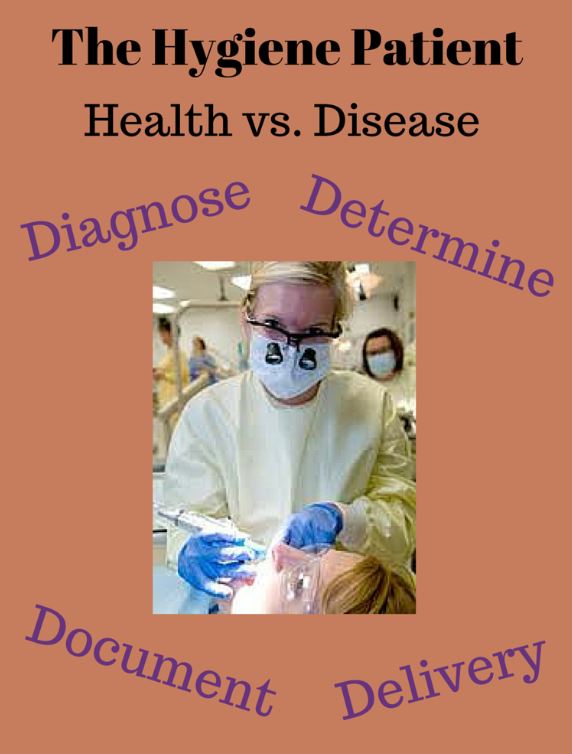
Diagnose DetermineThe American Academy (AAP) states that approximately 50% of the US adult population has periodontal disease. (See homepage of perio.org)  If this is true for the US population, how is your dental practice’ hygiene department in alignment with this statement?

Do you know the information on your practice’ adult dental hygiene patients? What percentage of your adult hygiene patients have been enrolled in peridontal therapy?

If you have not completed the perio percentage formula, I recommend that you create a baseline for this number of Adult Patients in your dental practice enrolled in periodontal therapy. Think about this statistic provided by the AAP and understand how your practice is in alignment of this important information. It will be a WIN-WIN. Improved health for your patients and healthier profits for your practice. Honestly, hygienists will not work as hard when they treat peridontal disease at an early stage and stop the wait and watch syndrome.

If our over arching message to patients is “Optimal Oral Health Leads to a Longer, Healthier Life” then this information from the AAP is valuable for us because we are treating our patients at the highest level of care.

This week’s video training, will walk you through Diagnosis of your hygiene patient. Are they a health patient or do they have periodontal disease? After you read this click the video to review this information.

QUESTIONS TO PONDER: GETTING TO YOUR NEXT LEVEL OF CARE

  1. When do you complete a comprehensive periodontal exam?
  2. How often do you probe your hygiene patients?
  3. Do you find time to complete the Comprehensive Periodontal Exam? (Review the blogs in May on Time Management if you don’t think you have time to pick up the probe before you scale) to read the Time Managment Blogs you can go here: TIME MANAGEMENT AND DATA COLLECTION
  4. What examination instruments are on your tray set-up? (Hint: Besides the curettes)

These and more are questions I provide answers to create a level of care which represents the statistics reported from the AAP when you view the video below.

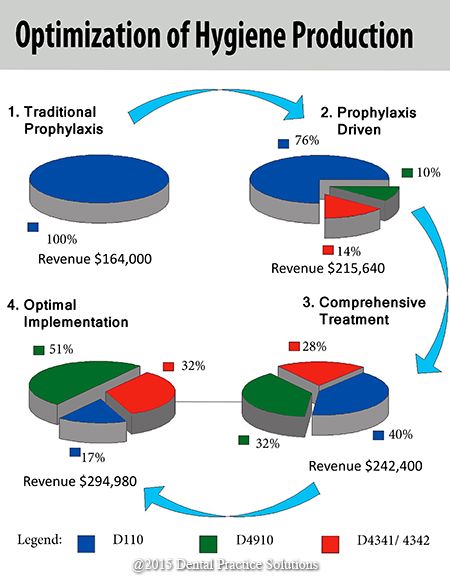
OPTIMIZATION OF HYGIENE PRODUCTION
Optimization Of Hygiene-small

As you begin to refine your treatment of the periodontal patient, not only will your patients improve their total health, but your hygiene department production will increase. The hygienist should find that they are not working as hard. Trying to “get it all clean” when in fact, the patient is “More than a prophylaxis” truly creates more work for the hygienist and is not appropriate treatment for optimal oral health.
Bleeding on tooth brushing

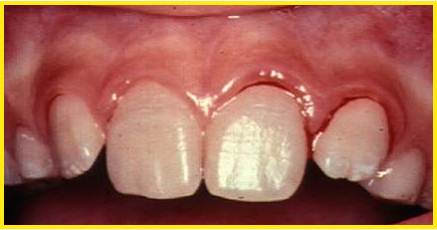
This picture represents a patient who is “More than just a prophylaxis” How often do you see this and think “It’s Just a Prophy!”??

Below is the Examination of the Gingival Clinical Markers and this is shared in the video. Use this information now so everyone: Doctor and hygienists, can get on the same page for calibrating what they agree is a healthy mouth and what is considered disease.
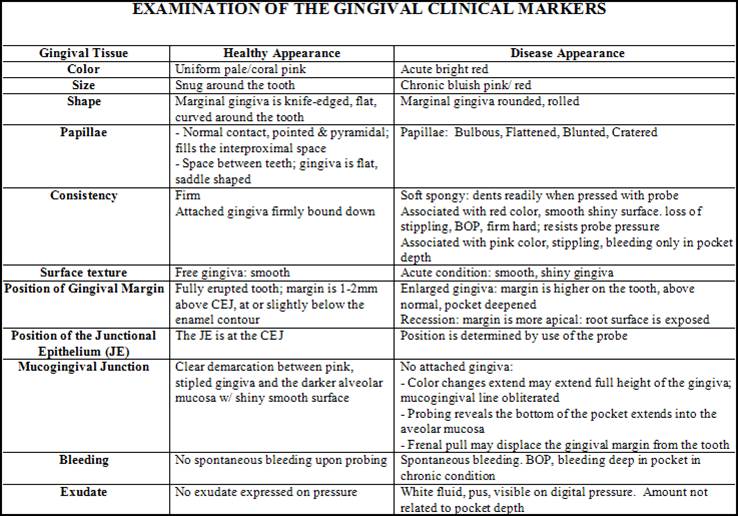
INFLAMMATORY MARKERS

eBook and Video Training Series on the Topic of Diagnosis of the Perio Patient, Determining a Treatment Plan, Discussing the Treatment Plan and Simplified Documentation Skills.

Click on this Link for More Information on this Training Series.


Lead Pages picAbout Debbie

In 2000, Debbie founded Dental Practice Solutions, a dental practice management business focused on creating profitable dental hygiene departments, as well as improving the total bottom line of the dental practice. She has been named as one of Dentistry Today’s Top Consultants for 10 years in  row!

Debbie is a former clinical assistant professor from the University of Southern California where she taught the senior dental hygiene students skills to treat periodontal patients. She also co-taught the practice management course  at USC from 200o-2002. (Until the school start PBL – Problem Based Learning) Debbie also wrote the accreditation for a new dental hygiene program in Portland, Oregon and is a former dental hygiene program director.

Debbie has a team of experts to guide teams throughout the world to provide quality, patient centered practices that sustain profits for the life of their dental practice.

Posted in Uncategorized

Hygiene Time Management: Phase IV The Last Leg of the Race

By: admin

May 27, 2015

Hygiene HandoffDuring a relay race the last leg of the race is the most valuable leg.

Imagine, the baton is your dental hygiene patient and if the dental hygienist drops the baton you know what happens – – YES?

If you don’t know what happens watch my VLOG today (Video below) and I will tell you what happens when the baton is dropped.

This last leg of a relay race uses the strongest runner to run this leg of the relay race. That means the dental hygienist has a strong and powerful position, in the dental practice. They can’t drop the baton.

Time Management can make or break your hygiene appointment, in fact, it can make or break everyone’s day at the office; including your patient!

We are talking about last phase of your dental hygiene appointment: dismissal, hand-off and disinfection.  During this last phaes of the appointment, the hygienist can create additional value and talk or reinforce, the benefits for why the patient needs to return sooner than later, for routine preventive care and/or restorative needs, as necessary.

Some of the important points to remember during your dismissal of the dental hygiene patient are:

1. No more wating until the end of the hygiene appointment for the doctor exam to be completed (See last weeks Video and Blog for more on this)

2. Plan for the last 5-10 minutes to dismiss the patient, hand-off (Verbal communication) to the front office team member. and disinfect/turn the room over for the next patient

3. Patients first language is not “Dental Terminology” so they most likley will need to hear things about three times before it sinks in

i. the three times can be: During the hygiene treatment discussion with patient, the doctor-hygiene exam and the dismissal at the front desk with patient and front office team member

4. Remember these three words need to be discussed before the patient leaves:

i    The WHAT. WHAT does your  patient need to return for? Is it a routine preventive care visit with the hygienist? Restorative treatment? Let the patient know a 2nd and 3rd time (3rd time upon dismissal at front desk)

ii. The WHY. Explain WHY your patient needs to return for “X,Y and Z”, etc.

iii. The WHEN. WHEN does your patient need to return? Does your patient need to return in 3 months or next week?

5. The hygienist is the best auxilary to make the hygiene patients next hygiene appointment.

Why you may ask?

This is the best team member to do this and if planned correctly it can be completed in only 90 seconds of time.

Here’s WHY: The hygienist just spent over thirty minutes with their patient and they understand the WHAT, WHY and WHEN, so I suggest the hygienist schedule the patients next hygiene appointment.

The answer is clear: The hygienist explains the what, why and when while he or she is with the patient in front of the appointment book and usually this is a computerized schedule. It is the click of a mouse and the patient usually will come on the same time and day of the week for their future appointment.

I explain more reasons WHY in the video but this is enough here. I know it can be a sore subject for many hygienists.

Don’t ask the patient when they want to return. Tell the patient what day and time you have available on your schedule. You are in control of your schedule so own it and lead the conversation with the best time for you.

Yes, many patients request a specific time and date but you take the lead and hopefully that patient already is there on their preferred time and day so just keep it the same as much as you can when scheduling the patients next appointment.

Scheduling the patients next appointment means less chance of open holes in the schedule. I have experienced the positive change in offices schedules from utilizing this suggestion. It makes a huge difference in the future of your schedule when the hygienists feel adamant about scheduling their patients next appointment.

View the video this week for more information. I have a lot more to tell you about this so take some time to watch. It’s about 14 minutes long.

[video_player type=”youtube” width=”560″ height=”315″ align=”center” margin_top=”0″ margin_bottom=”20″]PGlmcmFtZSB3aWR0aD0iNTYwIiBoZWlnaHQ9IjMxNSIgc3JjPSJodHRwczovL3d3dy55b3V0dWJlLmNvbS9lbWJlZC81dzIydGFQOG80NCIgZnJhbWVib3JkZXI9IjAiIGFsbG93ZnVsbHNjcmVlbj0iIj48L2lmcmFtZT4=[/video_player]

Would you like to have this information at your fingertips?

Download this eBook which includes all of the important information from the Time Management Information this month. Click on picture below:

Download This Free Resource

Lead Pages picABOUT DEBBIE SEIDEL-BITTKE, RDH, BS

Debbie Seidel-Bittke, RDH, BS is founder of Dental Practice Solutions since 2000. She serves dental offices throughout the world by adding valuable services and systems to the dental hygiene department. She is very unique in the way she is able to look at the total profitability of your dental practice NOT only the dental hygiene department.

Debbie is a former Dental Hygiene Program Director and is a former Clinical Assistant Professor from the University of Southern California. Please contact her for a 30 minute No charge Discovery Call to find the powerful areas  to focus your efforts to be your most profitable and work with more ease during your day at the office:

You can also download your Gift Certificate for a Discovery Call by clicking on this link or the gift certificate below. This is a $500 USD Gift Certificate provided by DentaMetrix who we use to monitor our client key metrics. DOWNLOAD YOUR GIFT BY CLICKING THIS LINK NOW Or the Gift Certificate Picture.

DISCOVERY CALL

 Be sure to download, complete and fax or email to our office. You can also schedule a time by clicking on our calendar here: CALENDAR SCHEDULE NO $ CALL HERE
Posted in Uncategorized

Time Management Phase 3: Do Treatment

By: admin

May 21, 2015

This week I share Phase 3 of Time Management for the dental hygiene routine appointment. These are tips to stay on time when you “do treatment.”

Staying on time is what made me feel stressed during my career as a clinical dental hygienist and this week I have put together tips to keep the hygienist running on time and reduce any stress created.

If you can follow these tips, you will discover you don’t feel like you are running on a treadmill and your patients will leave your office more satisfied because they did not have to sit and wait for doctor to complete their exam.

The follstop watchowing are a few tips: (View the video below for more in-depth tips)

1. Doctor needs to enter for the hygiene exam no later than 30-45 minutes into a 60 minute hygiene appointment. If you have less than 60 minutes you will need to adjust this time. No more waiting until the end of the hygiene appointment to notify doctor of a patient exam

2. A patient of record can remain in a supine position when doctor enters for the exam. The hygienist will leave their provider chair and move to a position opposite of the doctor for the exam process.

3. The hygienist can lead doctor by providing small chitchat about something personal regarding the patient. This chitchat lasts only 6-90 seconds

4. The hygienist will lead doctor through the exam process by giving a report of what was discovered during the data collection process, the determination of treatment and what is necessary for the next hygiene appointment. For example does patient need a full mouth series of x-rays. The exam communication with doctor is a great time to add value and some benefits for why the patient will return for their next hygiene appointment

5. The hygiene exam (When doctor and hygienist have calibrated their services) should last approximately 5-7 minutes

Watch the video below for more specific information to streamline your time management especially when you “Do Treatment.”

Lead Pages picABOUT DEBBIE SEIDEL-BITTKE, RDH, BS

In 2000, Debbie founded Dental Practice Solutions, a dental practice management business focused on creating profitable dental hygiene departments, as well as improving the total bottom line of the dental practice. She has been named as one of Dentistry Today’s Top Consultants for 10 years in  row!

Debbie is a former clinical assistant professor from the University of Southern California where she taught the senior dental hygiene students skills to treat periodontal patients. She also co-taught the practice management course  at USC from 200o-2002. (Until the school start PBL – Problem Based Learning)

Debbie has a team of experts to guide teams throughout the world to provide quality, patient centered practices that sustain profits for the life of their dental practice

Posted in Uncategorized

The 60 Minute Prophylaxis Appointment: Time Management Phase 2

By: admin

May 14, 2015

As a hygienist I know first-hand how stressful it can feel to always stay on time with your hygiene patient appointments.

I have created a four-phase series during the month of May to help hygienists stay on time with their patients during the 60 minute prophylaxis appointment.

Last week I talked about Data Collection and how important this is to treating your patients total health. This week I will talk about another phase of the routine hygiene appointment which I call Determine Treatment.

It is possible that your patients data collection took longer than expected. Typically, when this happens your patient is more than just a prophy so you will need to adjust the other phases during this dental hygiene appointment. Remember that we are in the business of creating optimal oral health so our patients live a longer and healthier life. As hygienists, our focus should not be on “cleaning” a patients teeth.

Rather than feel stressed about running behind or not completing the patients treatment which they were scheduled for, focus on what is in the patients best interest so that you are supporting them to live a longer, healthier life!

Here are some tips to stay patient focused on optimal oral health, patient total health and not run behind: No Hygienist and patient eye to eye

[bullet_block large_icon=”0.png” width=”” alignment=”center”]

  • Sit the patient upright in the chair: Knee-to-knee and eye-to-eye
  • Use intra-oral photos, x-rays (especially great if you have digital x-rays, brochures. models of teeth, etc.
  • Discuss the patients chief complaint (If there is one) first
  • Nix the word “find” and replace this with words such as “see” “look” “show”, etc.
  • Review restorative exam and/or discuss outstanding restorative treatment not completed or if there are new areas of restorative work, discuss these areas
  • Discuss the perio exam results after restorative concerns. Even if you are only spot probing let the patient know if things are status-quo or if there are new areas of “disease” (Show them where these areas of improvement or disease are located in their mouth)
  • Ask patient if they have any questions about the information discussed
  • Attempt a “trial close” before the doctor exam. Make these open-ended questions. Not a “Yes” or “No” type of response question to patients. Example: “What questions do you have about – XYZ for me?”

[/bullet_block]How are your hygiene appointments going? What keeps you and/or your hygiene team from running on time?

Please comment below.

Be sure to keep reading each week because on May 28th, I will put all this information together into a Free Resource that you can download and use with your hygiene team.

You may want to enroll in our no-charge 7 Day Dental Hygiene Profits Program which will automatically give you access to our weekly videos and blog.

Posted in Uncategorized

The 60 Minute Prophylaxis Appointment: Time Management Phase 2

By: admin

[video_player type=”embed” width=”560″ height=”315″ align=”center” margin_top=”0″ margin_bottom=”20″]PGlmcmFtZSB3aWR0aD0iNTYwIiBoZWlnaHQ9IjMxNSIgc3JjPSJodHRwczovL3d3dy55b3V0dWJlLmNvbS9lbWJlZC9PU21hTnY4Sjh6NCIgZnJhbWVib3JkZXI9IjAiIGFsbG93ZnVsbHNjcmVlbj0iIj48L2lmcmFtZT4=[/video_player]

As a hygienist I know first-hand how stressful it can feel to always stay on time with your hygiene patient appointments.

I have created a four-phase series during the month of May to help hygienists stay on time with their patients during the 60 minute prophylaxis appointment.

Last week I talked about Data Collection and how important this is to treating your patients total health. This week I will talk about another phase of the routine hygiene appointment which I call Determine Treatment.

It is possible that your patients data collection took longer than expected. Typically, when this happens your patient is more than just a prophy so you will need to adjust the other phases during this dental hygiene appointment. Remember that we are in the business of creating optimal oral health so our patients live a longer and healthier life. As hygienists, our focus should not be on “cleaning” a patients teeth.

Rather than feel stressed about running behind or not completing the patients treatment which they were scheduled for, focus on what is in the patients best interest so that you are supporting them to live a longer, healthier life!

Here are some tips to stay patient focused on optimal oral health, patient total health and not run behind: No Hygienist and patient eye to eye

[bullet_block large_icon=”0.png” width=”” alignment=”center”]

  • Sit the patient upright in the chair: Knee-to-knee and eye-to-eye
  • Use intra-oral photos, x-rays (especially great if you have digital x-rays, brochures. models of teeth, etc.
  • Discuss the patients chief complaint (If there is one) first
  • Nix the word “find” and replace this with words such as “see” “look” “show”, etc.
  • Review restorative exam and/or discuss outstanding restorative treatment not completed or if there are new areas of restorative work, discuss these areas
  • Discuss the perio exam results after restorative concerns. Even if you are only spot probing let the patient know if things are status-quo or if there are new areas of “disease” (Show them where these areas of improvement or disease are located in their mouth)
  • Ask patient if they have any questions about the information discussed
  • Attempt a “trial close” before the doctor exam. Make these open-ended questions. Not a “Yes” or “No” type of response question to patients. Example: “What questions do you have about – XYZ for me?”

[/bullet_block]

How are your hygiene appointments going? What keeps you and/or your hygiene team from running on time?

Please comment below.

Be sure to keep reading each week because on May 28th, I will put all this information together into a Free Resource that you can download and use with your hygiene team.

You may want to enroll in our no-charge 7 Day Dental Hygiene Profits Program which will automatically give you access to our weekly videos and blog.

Lead Pages picABOUT DEBBIE

In 2000, Debbie founded Dental Practice Solutions, a dental practice management business focused on creating profitable dental hygiene departments, as well as improving the total bottom line of the dental practice. She has been named as one of Dentistry Today’s Top Consultants for 10 years in  row!

Debbie is a former clinical assistant professor at University of Southern California where to taught the senior dental hygiene students skills to treat periodontal patients. She also co-taught the practice management course  at USC from 200o-2002. (Until the school start PBL – Problem Based Learning)

Debbie has a team of experts to guide teams throughout the world to provide quality, patient centered practices that sustain profits for the life of their dental practice.

Posted in Uncategorized

Time Management for the Dental Hygiene Patient

By: admin

May 7, 2015

Knee to Knee Eye to EyeWorking in a dental office can often feel stressful; like you’re running on a treadmill.

I had no clue how rushed I would feel once I began working as a clinical dental hygienist many decades ago.

Now as a consultant, I find it rewarding to help other dental hygienists overcome some of the challenges they face daily. It feels like a grind for most dental professionals I talk to. It happens; patients come late and yet you want to do your very best to provide optimal care. Even when patients do arrive  on time, situations occur and you may still find yourself running behind.

To overcome these daily challenges and help dental hygienists provide optimal care for their patients, I have created this short training about time management for the dental hygiene patient. Please view the short video below.

When you watch the video you will learn about this “Down to a Science Practice Principle” which I have created to support you with staying on time and more easily do what you do best — provide optimal patient care!

After viewing the video and reading this my hope is that you will have more time to enjoy your day with patients. I remember how much I enjoyed my patients and I hope this information takes you to that next level, whether it is a higher level of satisfaction during patient care time or that next level of treating patients with optimal preventive care.

If you don’t have sixty minutes of patient time you will need to tweak this information to fit your hygiene patient appointment time.

DURING TODAY’S SHORT VIDEO I WILL WALK YOU THROUGH:  [video_player type=”youtube” youtube_force_hd=”hd720″ width=”560″ height=”315″ align=”right” margin_top=”0″ margin_bottom=”20″]aHR0cHM6Ly95b3V0dS5iZS9zQWZuRU83ckUzNA==[/video_player]

[bullet_block large_icon=”0.png” width=”” alignment=”center”][/bullet_block]Data collection and the timing of various important procedures you need to complete to provide optimal patient care

Please send me an email if you want to create your own protocol for the timing of your services during the data collection. mailto:support@dentalpracticesolutions.com

Be sure to view next weeks video and read the blog which details the Discussion with your patient about your findings. This is where you and the patient determine the correct treatment to completed that day – perhaps you discovered the patient needs perio therapy or you need to discuss resotorative treatment. Next week I will share more about Time Management for the Dental Hygiene Patient.

* Did you find this information helpful?

* Do you have something challenging you during your timing of the hygiene appointment?

Please leave a comment below so we can provide a solution, let us know if this information is helpful to you and please share your successes with others below.

Debbie Bittke squareAbout Debbie Seidel-Bittke, RDH, BS

In 2000, Debbie founded Dental Practice Solutions, a dental practice management business focused on creating profitable dental hygiene departments, as well as improving the total bottom line of the dental practice. She has been named as one of Dentistry Today’s Top Consultants for 10 years in  row!

Debbie is a former clinical assistant professor at University of Southern California where to taught the senior dental hygiene students skills to treat periodontal patients. She also co-taught the practice management course  at USC from 200o-2002. (Until the school start PBL – Problem Based Learning)

Debbie has a team of experts to guide teams throughout the world to provide quality, patient centered practices that sustain profits for the life of their dental practice.

Posted in Uncategorized

2 Reasons Why Your Patients Will Choose Perio Therapy Over a New iPhone 6

By: admin

April 30, 2015

[video_player type=”embed” width=”640″ height=”360″ align=”left” margin_top=”0″ margin_bottom=”20″]PGlmcmFtZSB3aWR0aD0iNTYwIiBoZWlnaHQ9IjMxNSIgc3JjPSJodHRwczovL3d3dy55b3V0dWJlLmNvbS9lbWJlZC9BWjIybWRaOEJuWSIgZnJhbWVib3JkZXI9IjAiIGFsbG93ZnVsbHNjcmVlbj0iIj48L2lmcmFtZT4=[/video_player]

I am sure that you have patients seated in your chair daily who carry an expensive mobile device. Maybe they have a sleeve of tattoos covering their arm(s) and many patients own a pair of Nike tennis shoes that cost over $100! These are your patients who decided to wait or worst case scenario, not schedule for their treatment or return for routine dental hygiene appointments.

My question to you is, “What can you say to your patients  so they say “YES” to your care? ” 

What will you say to your patients so they choose to schedule and pay for Perio Therapy over buying a new iPhone 6, expensive shoes, tattos, etc., etc?

There are 2 reasons why your patients will choose Perio Therapy (Or your other dental services) over a new iPhone, etc.

2 Reasons Why Patients Say “YES” and Decide to Return to Your Office for Routine Visists:

[bullet_block large_icon=”0.png” width=”” alignment=”center”]

1. Value of Your Services

2. Benefits to Them for the Services You Offer (WIIFM)

[/bullet_block]

Value of your services can be developed when you speak the same language as your patient.

Know what words resonate with each individual patient. One thing I know for sure is that the hygiene appointment is more than a “Cleaning”

Benefits are the result of patients understanding the value of the treatment you will provide for them.

For some patients a benefit means not spending a lot of money at the dental office and therefore preventive treatment can save them money.

For other patients a benefit may mean improving their diabetes and living and longer, healthier life.

One more very important reason WHY patients will say “YES” to their treatment plan and WHY they will return for routine hygiene appointments, etc., is because they trust you.

When people trust you they are most likely to sit up, listen and take action to do what is best for them.

What do you say to add value and explain benefits of treatment to your patients?

Please comment below.

Should you want to take a deeper dive into this topic I have created a Free eBook which will provide implementation tools for the entire team. This eBook provides a worksheet of words and phrases to use that add value and explain benefits to your patients. It gives you a team activity should you want to have a team meeting and get everyone to that next level of YES from your patients.

DOWNLOAD YOUR FREE RESOURCE HERE

DH Value and Benefits


Debbie Bittke squareABOUT DEBBIE SEIDEL-BITTKE, RDH, BS

Debbie Seidel-Bittke, RDH, BS is founder of Dental Practice Solutions since 2000. She serves dental offices throughout the world by adding valuable services and systems to the dental hygiene department. She is very unique in the way she is able to look at the total profitability of your dental practice NOT only the dental hygiene department.

Debbie is a former Dental Hygiene Program Director and is a former Clinical Assistant Professor from the University of Southern California. Please contact her for a 30 minute No charge Discovery Call to find the powerful areas  to focus your efforts to be your most profitable and work with more ease during your day at the office:  Call to schedule: 888-816-1511 or schedule a time here: http://bit.ly/30minDiscoveryCall


Posted in Uncategorized

2 Reasons Why Your Patients Will Choose Perio Therapy Over a New iPhone 6

By: admin

I am sure that you have patients seated in your chair daily who carry an expensive mobile device. Maybe they have a sleeve of tattoos covering their arm(s) and many patients own a pair of Nike tennis shoes that cost over $100! These are your patients who decided to wait or worst case scenario, not schedule for their treatment or return for routine dental hygiene appointments.

My question to you is, “What can you say to your patients  so they say “YES” to your care? ” 

What will you say to your patients so they choose to schedule and pay for Perio Therapy over buying a new iPhone 6, expensive shoes, tattos, etc., etc?

There are 2 reasons why your patients will choose Perio Therapy (Or your other dental services) over a new iPhone, etc.

2 Reasons Why Patients Say “YES” and Decide to Return to Your Office for Routine Visists:

[bullet_block large_icon=”0.png” width=”” alignment=”center”]1. Value of Your Services

2. Benefits to Them for the Services You Offer (WIIFM)

[/bullet_block]Value of your services can be developed when you speak the same language as your patient.

Know what words resonate with each individual patient. One thing I know for sure is that the hygiene appointment is more than a “Cleaning”

Benefits are the result of patients understanding the value of the treatment you will provide for them.

For some patients a benefit means not spending a lot of money at the dental office and therefore preventive treatment can save them money.

For other patients a benefit may mean improving their diabetes and living and longer, healthier life.

One more very important reason WHY patients will say “YES” to their treatment plan and WHY they will return for routine hygiene appointments, etc., is because they trust you.

When people trust you they are most likely to sit up, listen and take action to do what is best for them.

What do you say to add value and explain benefits of treatment to your patients?

Please comment below.

Should you want to take a deeper dive into this topic I have created a Free eBook which will provide implementation tools for the entire team. This eBook provides a worksheet of words and phrases to use that add value and explain benefits to your patients. It gives you a team activity should you want to have a team meeting and get everyone to that next level of YES from your patients.

Posted in Uncategorized

Top 10 Reasons Why Bleeding Gums are Not OKAY!

By: admin

April 23, 2015

April 23 Bloody ProphyI am certain that you have heard patients say “…But my gums always bleed…”

If someone washes their hands and they start to bleed, what does that mean? Do you think they would feel a bit panicked? Would they call their doctor or maybe go as far as rush to the emergency room?

You probably get my point here. It is not normal!  (Be sure to click on the picture to the left to view the video with more information)

My next question is: “Why do patients come to the dental office and think it is no problem that their gums bleed when they brush their teeth?”

Here is a list of Top 10 Reasons Your Patient should not be okay with their gums bleeding:

  1. Bleeding gums are a sign of inflammation
    • Inflammation leads to other diseases in the body – Real important one here!
  2. Trauma to the gums
    • Aggressive tooth brushing or tooth picking, mouth trauma, etc.
  3. Early sign of Periodontal Disease
  4. Can be associated with a vitamin deficiency
    • Scurvy, Vitamin K, etc.
  5. Hormonal changes
    • Pregnancy, Puberty and Menopause, etc.
  6. Medications
    • Aspirin, medications for patients at risk for heart attack or stroke, epilepsy, chemotherapy drugs, etc.
  7. Liver disease
    • Liver disease associated with chronic alcoholism disturbs the liver metabolism which may lead to bleeding gums
  8. Various cancers
    • Leukemia or multiple myeloma may cause gums to bleed
  9. Stress
  10. HIV

Next time you hear a patient say “…but my gums always bleed…” be sure to review a list of reasons they need to be concerned about their gums bleeding.

Use statements that paint a clear picture of why a patient needs to be very concerned about their gums bleeding.

Many times dental professionals don’t want to scare their patient so they eliminate the important words such as bleeding. Next time you have a patient with bleeding gums say the word “Bleeding” and tell your patients why they should be concerned about bleeding gums.

We are in the business of providing a longer and healthier life for our patients. Give them this important message and you are most likely to see them say “YES” to treatment and return for routine dental hygiene appointments.

How do you treat patients who have a lot of bleeding? What does your treatment plan look like when a patient is slightly overdue for their hygiene appointment and they have more than normal amounts of sub and supra-gingival deposits?

When showing patients their bleeding gums and when talking about why bleeding gums are not healthy, use words that will add value to your patient so they understand the benefit for accepting treatment, want to pay for necessary treatment and schedule for future routine visits.

Many patients will create a change in their thinking of the hygiene appointment when they understand the value and benefits of a healthy mouth.

Write down words that you know add value and next to these words write the benefits when patients make the change from disease to health.

Each patient will have different values so understand what is important to them.

Write down the words you can say to help them shift their view on bleeding gums. Next to the “value” word draw a vertical line and write a benefit next to that word on the other side of the vertical line. Practice saying these words that add value and benefits to your patients. Now you will see your patients return for routine visits and not cancel thinking “It’s JUST a cleaning!”

Is this a nebulous area in your dental office? Not sure if your patient will return for another prophy appointment?

Is this a hot button for you or your patients?

Please comment below and tell us more about your side of this story on bleeding gums.

Debbie Bittke squareABOUT DEBBIE SEIDEL-BITTKE, RDH, BS

Debbie Seidel-Bittke, RDH, BS is founder of Dental Practice Solutions since 2000. She serves dental offices throughout the world by adding valuable services and systems to the dental hygiene department. She is very unique in the way she is able to look at the total profitability of your dental practice NOT only the dental hygiene department.

Debbie is a former Dental Hygiene Program Director and is a former Clinical Assistant Professor from the University of Southern California. Please contact her for a 30 minute No charge Discovery Call to find the powerful areas  to focus your efforts to be your most profitable and work with more ease during your day at the office:  Call to schedule: 888-816-1511 or schedule a time here: http://bit.ly/30minDiscoveryCall


Posted in Uncategorized

Treatment and Billing Guidelines for Dental Hygiene Patients: Plaque-Induced Gingivitis

By: admin

April 16, 2015

Plaque Induced Gingivitis

How often to do you have patients scheduled for a dental hygiene appointment and they have no radiographic signs of bone loss, their periodontal screening exam is WNL, but… they have heavy bleeding?

And what about those patients who are overdue to see the hygienist. They should have been to your dental office over a year ago. They finally come to their dental hygiene appointment and they have no signs of perio but there is more than a normal amount of calculus and there is a lot of bleeding during the appointment.  You can also click on the video in the picture above.

How do you treat these patients?

Do you tell them to brush and floss better and you’ll see them in six months?

When a patient is a slightly overdue and they have more than normal amounts of supra and/or subgingival calculus, do you do your best and hope they look better in six months?

Are you telling patients such as these mentioned about, “We’ll see you for your “cleaning” in six months and hope it looks better!” ????  (Note the word “Cleaning”.  Is it really “JUST a cleaning?!”)

Are you concerned about what insurance will pay so you just see the patient back in six months not wanting to deal with a patient complaining that their “insurance won’t pay for another prophy”???

Here is an answer to treating these challenging “Bloody Prophy’s”.  Use this as a guideline but not something set in stone for every bloody prophy.

Each patient is treated individually not everyone gets the same treatment plan. 

At the end of this information I have developed a protocol and you can download this which includes how to get paid and where to read more about the treatment and billing guidelines for dental hygiene patients with “Plaque-Induced Gingivitis”.  Also see the American Academy of Periodontology for their Parameter on the patient with Plaque-Induced Gingivitis.

Let’s look at what the ADA says about the role and responsibility of a dentist and dental hygienist:

“A career as a dental hygienist offers a wide range of challenges. In the dental office, the dentist and the dental hygienist work together to meet the oral health needs of patients.” See www.ada.org for this description. 

Key phrase here is “Meet the oral health needs of patients.”

It says nothing about meeting their financial needs but it specifically states that we meet their oral health needs.

Let’s look at the definition of a Prophylaxis:

Removal of plaque, calculus and stains from the tooth structures in the permanent and transitional dentition. It is intended to control irritational factors.

Now, back to the question of how to treat a patient who has plaque-induced gingivitis?

Here is how the appointments will flow. (See the below for more information about the patient treatment sequence and how to bill for services rendered.)

The first appointment when you discover the patient has gingivitis with the absence of periodontal disease will be a gross debridement. Gross debridement is not a definitive treatment however; this procedure is performed so the doctor can perform a comprehensive oral evaluation or a comprehensive periodontal evaluation at a subsequent appointment. The patient may or may not be a patient who needs active periodontal therapy.

Full mouth debridement is not intended to be reported as “prophy” but this preliminary procedure is completed so that a comprehensive exam may be completed at the second visit. The patient may be either a perio on a non-perio patient.

The main purpose of full-mouth debridement is to “Pave the way” for the oral evaluation by removing “roadblocks” and to allow for preliminary healing. The roadblocks being excessive plaque and calculus that interferes with the patient’s ability to sit through a painful dental hygiene appointment due to inflammation, the hygienist’s ability to pave the way through excessive calculus and hemorrhagic tissue and the dentist to complete a comprehensive exam.

Subsequent Appointments

At the next appointment approximately two weeks later you will complete a prophylaxis or scaling and root planing and at this appointment the comprehensive exam or a comprehensive periodontal exam will be completed.

Plan to schedule a re-evaluation or tissue check in 4-6 weeks. This is considered a post-op appointment and it is billed as another prophylaxis. At this appointment you will check to be sure proper healing as occurred and the patient is now healthy.

Now that you have cleared the roadblocks when you complete a comprehensive periodontal exam it is possible to discover the patient has active periodontal disease and needs scaling and root planing.

During this appointment the hygienist will schedule routine hygiene appointments for future dental hygiene preventive care.

Think about what the patients balance point is. Balance point refers to how long the patient can go between dental hygiene appointments and still remain healthy. (No signs of active perio. i.e. bleeding gums, pockets > 4mms, etc., etc.)

Each patient is an individual and this is only a guideline. Some patients may only need to return for one more prophylaxis after the initial debridement. Use your best judgement as this is only a guideline for you to make your job easier and not have to re-create the wheel yourself.

Wonder HOW you will be reimbursed (especially if you are billing insurance)?

Under the current nomenclature, there is no alternative classification code for a second prophy or a “difficult prophy”. To report a difficult prophylaxis requiring additional time.  Simply report Prophylaxis at a higher fee.

Take insurance out of the equation and think about your role as a healthcare professional. Go back to the description listed above from the ADA.

One primary role of the dental hygienist is to not only collect that data but deliver and communicate the data in a way that adds value to the patient and benefits their life in a way that is most appropriate for each individual patient.

For billing information please refer to: Practice Boost by Charles Blair, DDS or Dentalcodeology by Patti DiGangi, RDH

Conclusion

It is important to understand WHY we do what we do as dental professionals. Today’s dentistry is about treating the whole patient not just the patient’s mouth.

Dental Hygienists do more than clean teeth.  Sit down with your team and review your office protocols and your philosophy of care for the periodontal patient as well as the patient with only plaque-induced gingivitis.

What is doctors’ expectation of how he or she wants patients to be treated? Review the standard of care: ada.org and perio.org

Bottom-line for today’s dental professional is that we are now in the business of helping our patients live a longer and healthier life. When we embrace this thought process it provides satisfaction for what we do and creates patients who want to pay and return for services in your dental office.

Should you want a written protocol and take a deeper dive into this important topic which sometimes seems like a nebulous topic; download the information below.

[button_2 color=”blue” align=”center” href=”https://dentalpracticesolutions.leadpages.net/plaque-induced-gingivitis-optin/”]Send me the Flowsheet for Treating the Patient with Plaque-Induced Gingivitis[/button_2]

Have a question or comment? Please feel free to comment below.

 [headline style=”1″ align=”center” headline_tag=”h2″]

Debbie Bittke squareABOUT DEBBIE SEIDEL-BITTKE, RDH, BS

Debbie Seidel-Bittke, RDH, BS is founder of Dental Practice Solutions since 2000. She serves dental offices throughout the world by adding valuable services and systems to the dental hygiene department. She is very unique in the way she is able to look at the total profitability of your dental practice NOT only the dental hygiene department.

Debbie is a former Dental Hygiene Program Director and is a former Clinical Assistant Professor from the University of Southern California. Please contact her for a 30 minute No charge Discovery Call to find the powerful areas  to focus your efforts to be your most profitable and work with more ease during your day at the office:  Call to schedule: 888-816-1511 or schedule a time here: http://bit.ly/30minDiscoveryCall

Posted in Uncategorized

Post navigation

  • ← Older posts
  • Newer posts →

Return to Your Training Vault

Contact Info

  • 15508 W. Bell Road Suite 101 PMB 431, Surprise, AZ 85374
  • (623) 252-1941
  • admin@dentalpracticesolutions.com

Office Hours

  • Mon-Thu 8:00am - 5:00pm PST
  • Friday 8:00am - 2:00pm PST

Useful Links

  • Home
  • About
  • Sitemap
  • Terms of Use
  • Privacy Policy

Recent PR

  • PrestoSmile® and Dental Practice
  • Dental Practice Solutions - Debbie Bittke
  • Dental Practice Solutions - Debbie Bittke
  • Dentistry Leaders
Copyright 2026 Dental Practice Solutions

    Input this code: captcha

    captcha

    • Home
    • About
      ▲
      • About Us
      • Testimonials
      • Videos
    • Services
      ▲
      • Hire a Dental Hygienist
      • Dental Hygiene MAX Course
      • 6-Month Dental Hygiene Department Optimization
      • 12- Month Dental Hygiene Department Training
      • Dental Hygiene Department / Team Workshop
    • E-Learning
      ▲
      • Free Resources
      • BOOST CASE ACCEPTANCE eBook
      • Treating the Gingivitis Patient
    • Webinars
      ▲
      • Oral Inflammation and Systemic Vitality
      • Properly Sequence Hygiene Appointments
      • Alzheimer’s Disease Prevention.
      • The Mouth-Brain Connection
    • Blog
      ▲
      • Podcasts
    • Contact Us

    Schedule your free coaching call here client login

    (888) 816-1511

    Introduction to Orientation Video Part 1