Dental Practice Solutions
Schedule My Opportunity Call Call us now (623) 252-1941 Client login
  • Home
  • About
    • About Us
    • Testimonials
    • Videos
  • Services
    • Hire a Dental Hygienist
    • Dental Hygiene MAX Course
    • 6-Month Dental Hygiene Department Optimization
    • 12- Month Dental Hygiene Department Training
    • Dental Hygiene Department / Team Workshop
  • E-Learning
    • Free Resources
      • BOOST CASE ACCEPTANCE eBook
      • Treating the Gingivitis Patient
    • More Courses
      • Oral Inflammation and Systemic Vitality
      • Properly Sequence Hygiene Appointments
      • Alzheimer’s Disease Prevention.
  • Webinar
    • Current Webinar
    • Power Hour March 15 2024
  • Blog
    • Podcasts
  • Contact Us

The Dental Hygienist’s Role: Treating the Patient’s Total Health

By: Debbie Seidel-Bittke, RDH, BS

June 14, 2023

Oral Systemic Health

When we think about the role of a dental hygienist, we think about a person who cleans teeth. However, the role of a dental hygienist goes far beyond just cleaning teeth. Dental hygienists in today’s world play a crucial role in promoting oral health and overall well-being by identifying oral inflammation. The dental hygienist and the entire dental team has an important role to share with their patients that what happens in the mouth can travel through the blood stream and cause other systemic diseases.

Our overarching message needs to be, “Optimal oral health leads to a longer, healthier life!”

In this blog post, we will explore the significance of the dental hygienist’s expanded role and how it positively impacts patients’ total health.

Beyond Teeth: A Holistic Approach

Traditionally, dental professionals focused solely on oral health, a single tooth treating dental issues, and maintaining clean teeth and gums. A growing body of evidence has revealed that oral health is intimately linked to our overall health and well-being. Dental hygienists, as primary oral health care providers, have embraced a more holistic approach, understanding that oral health is a vital component of a person’s total health.

Oral-Systemic Link

Research has established a strong connection between poor oral health, gum disease and various systemic conditions, including cardiovascular disease, stroke, diabetes, respiratory infections, Alzheimer’s, low-birth weight babies, etc. During the dental hygiene appointment and the data collection phase, dental hygienists must identify oral inflammation, bleeding gums, gingivitis, and periodontitis, which will lead to timely intervention and improved patient systemic health..

Preventive Care and Education

Dental hygienists are at the forefront of preventive care, advocating for proper oral hygiene practices and educating patients on the significance of maintaining good oral health. Beyond brushing and flossing techniques, they educate patients about the importance of a well-balanced diet, tobacco cessation, excessive alcohol consumption, and the impact of systemic factors on oral health.

By fostering a strong patient-provider relationship, dental hygienists empower patients to take charge of their oral health, leading to a positive ripple effect on their overall well-being, living a longer, healthier life.

The dental hygienist must understand how to empower their patients and effectively communicate so patients will want to “own their disease” and they want what they need.

Detection and Early Intervention

Routine hygiene preventive care appointments provide an opportunity to detect oral inflammation and other oral conditions sooner than later. Dental hygienists visually examine their patient’s mouth for signs of tooth decay, gum disease, oral cancer, and other abnormalities.

By identifying these problems in their infancy, hygienists can take intra-oral pictures and show patients what they see. When dentists complete the hygiene-patient exam, dental hygienists have a great opportunity to communicate with the doctor in front of the patient what they and the patient have been looking at and discussing for the patient’s best care. It is a huge benefit for hygienist’s to be the advocate to their patient while they and the patient are looking together, at the patient’s mouth.

When doctor enters to complete the patient exam he or she is brought into the conversation the hygienist and patient have been having. This saves time during the exam when the hygienist has collaborated with the patient as their advocate for their best dental care options.

One message to the patient: “Prevention costs a little money but treating disease can cost a lot of money.”

To the patient who does not want to spend money at a dental office, here’s an example conversation: “Over time, not treating this gum disease can cause a lot more than loss of money on gum treatment and possibly surgery. It can cause loss of teeth and/or various systemic diseases. Optimal oral health will lead to a longer, healthier life, saving money in the dental office and other medical procedures and medications.”

Collaboration with the Healthcare Team

Recognizing the interplay between oral health and the patient’s overall well-being, dental hygienists and the dentists’ conversation with the patient and must effectively communicate in a way that ensures comprehensive patient care.

It’s important to understand the patients value and then use words and phrases that at attached to what the patient values.

Use words like gum disease, infection and bleeding gums vs. periodontal disease, cleaning, and deep cleaning. If your patient has money as a value and when they have gum disease speak about prevention costing less money than disease. Explain that waiting to treat or not treating disease will eventually cost a lot more money on expensive treatment of the disease, tooth loss, other systemic diseases which take a toll on their life.

This collaborative approach between hygienist, doctor and patient fosters a more comprehensive understanding on the patient’s behalf, allowing patients to take ownership of their disease.

Conclusion

The role of a dental hygienist has evolved significantly, emphasizing the importance of treating a patient’s total health rather than merely focusing on cleaning their teeth. By embracing a holistic approach, dental hygienists contribute to early detection of inflammation and prevention of systemic diseases, they promote preventive care, and empower patients to take control of their health.

Through collaboration with the dentist and dental team, dental hygienists enhance the overall well-being of patients, recognizing and promoting the vital connection between oral health and systemic health. Dental hygienists are no longer just cleaning teeth but playing a pivotal role in promoting total health of the patient.
Posted in Oral Systemic Link

Minimize Short-Notice Cancellations and No-Shows: Important Facts You Need to Know

By: admin

May 28, 2013

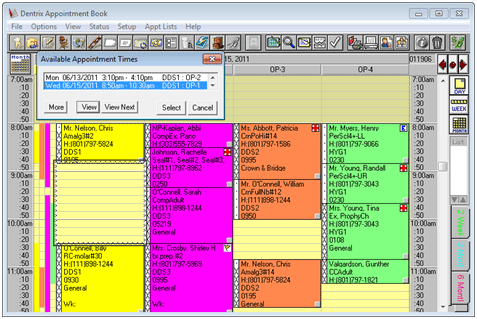
Shows open holes in schedule

What can you say about your schedule today? We are about half way through another year so if you have something you are not satisfied with let’s do something about this challenge. I promise you are not alone!

In a recent survey we took, the most common complaint from dental offices was about cancellations and no-shows. Most reported 2-3 openings in the hygiene schedule daily.

First let’s take a look through a critical eye and dig into this very common situation. Why do you think your patients cancel or no-show for their appointments? Why do hygiene schedules have so many openings? And what can you do about it now?

Have you assessed the reasons why your patients are cancelling short-notice? What are they not showing for their appointment? When you have a clear

Understanding of your patients’ behavior and when you know that you are communicating the benefits or your care, now you can develop an effective plan to reduce cancellations.

At a team meeting this month, review how many short-notice cancellations and no-shows occurred in the past 30 days. Write down the top three reasons patients call to cancel. Do you understand why they neglected to show for their appointment? These answers will shed some light on the problem you have at hand and now you can create working solutions.

Perhaps you have thought about charging or, maybe, you currently charge a cancellation/ no-show fee. I don’t recommend this. First of all, you can’t legally charge for a service that was not rendered. This will also not change the patients’ negative behavior.

There will be a lot of cancellations in the dental hygiene department when patients believe they are coming in for “just a cleaning” and they do not understand how important oral health is to their overall body wellness.

Set a goal of no more than a 5% cancellation rate.

Make sure that your patients understand the urgency of preventive care vs. the urgency of emergency after hour calls to resolve a tooth problem!

Your Appointment Change Policy

The most effective policy to stop the last minute cancellations and no-shows is to ask for 72 hours notice should your patient need to change the day and time of an appointment. I recommend that if patients need to change their dental appointment that they give you 72 hours notice. The reason I suggest this is to stop anyone from scrambling to fill a hole in your schedule last minute and if you don’t work on Fridays this means a patient can’t cancel after Thursday.

When you are out of the office the phone message needs to alert patients that your answering service/machine does not accept appointment changes and they are to call back during your business hours. State your business hours on the phone message.

If you are setting a new policy in place make sure that your patients read and sign acknowledgment of this at their dental visit to your office. You may want to have this posted in treatment rooms, on postcards sent to patients confirming their hygiene appointment and definitely post in the reception area. Include this in your financial policy especially what you charge for missed or last minute cancellations. Do attempt to charge for this fee if patients are not following your policy. I am not going to say that in a court of law you can legally collect on this but I believe patients need to have respect for your time and your business policies.

Always document no-shows and last minute cancellations as well as the reason they have cancelled or no-showed.

One proven method to stop last minute cancellations and no-shows is to use Forever White™. This is a patient incentive program utilizing whitening for your patients. Forever White™ is the same premium whitening product that many offices use today however, Dental Practice Solutions can offer this to dental offices at wholesale prices. There are no hidden monthly fees to order. If you are whitening patient’s teeth for the first time, the take-home trays and whitening gel cost to your office is less than $8.00. Typically patients pay a lot of money to whiten their teeth whether it is take home trays and/or laser whitening. If you can purchase tooth bleaching products for very little cost you can pass this savings over to your patients. When a patient comes in without short-notice cancellation or without failing to show for their appointment, twice a year, at their dental hygiene appointment, patients qualify for a free syringe to whiten their teeth. The cost-benefit ratio of giving a patient two syringes of gel, (1 syringe two times a year) vs. the cost of an open hole in the schedule is a WIN!

Most people work off that mentality of WIIFM?! (What’s in it for me?!)

If a patient understands they can get free touch-ups for whitening how likely are they to miss their dental appointment? Not likely. Isn’t that correct?

I have been in offices and heard the patients calling to cancel because they have a hair appointment. This means the patient never really did value their appointment.

How can you build value for optimal overall health and give patients something they really want? It takes effective and consistent communication about the important  benefits of optimal oral health that will create urgency with patients over time.

It is all in your hands. What will you do differently today?

Posted in Uncategorized

Return to Your Training Vault

Contact Info

  • 15508 W. Bell Road Suite 101 PMB 431, Surprise, AZ 85374
  • (623) 252-1941
  • admin@dentalpracticesolutions.com

Office Hours

  • Mon-Thu 8:00am - 5:00pm PST
  • Friday 8:00am - 2:00pm PST

Useful Links

  • Home
  • About
  • Sitemap
  • Terms of Use
  • Privacy Policy

Recent PR

  • PrestoSmile® and Dental Practice
  • Dental Practice Solutions - Debbie Bittke
  • Dental Practice Solutions - Debbie Bittke
  • Dentistry Leaders
Copyright 2026 Dental Practice Solutions

    Input this code: captcha

    captcha

    • Home
    • About
      ▲
      • About Us
      • Testimonials
      • Videos
    • Services
      ▲
      • Hire a Dental Hygienist
      • Dental Hygiene MAX Course
      • 6-Month Dental Hygiene Department Optimization
      • 12- Month Dental Hygiene Department Training
      • Dental Hygiene Department / Team Workshop
    • E-Learning
      ▲
      • Free Resources
        ▲
        • BOOST CASE ACCEPTANCE eBook
        • Treating the Gingivitis Patient
      • More Courses
        ▲
        • Oral Inflammation and Systemic Vitality
        • Properly Sequence Hygiene Appointments
        • Alzheimer’s Disease Prevention.
    • Webinar
      ▲
      • Current Webinar
      • Power Hour March 15 2024
    • Blog
      ▲
      • Podcasts
    • Contact Us

    Schedule your free coaching call here client login

    (888) 816-1511

    Introduction to Orientation Video Part 1