Dental Practice Solutions
Schedule My Opportunity Call Call us now (623) 252-1941 Client login
  • Home
  • About
    • About Us
    • Testimonials
    • Videos
  • Services
    • Hire a Dental Hygienist
    • Dental Hygiene MAX Course
    • 6-Month Dental Hygiene Department Optimization
    • 12- Month Dental Hygiene Department Training
    • Dental Hygiene Department / Team Workshop
  • E-Learning
    • Free Resources
      • BOOST CASE ACCEPTANCE eBook
      • Treating the Gingivitis Patient
    • More Courses
      • Oral Inflammation and Systemic Vitality
      • Properly Sequence Hygiene Appointments
      • Alzheimer’s Disease Prevention.
  • Webinar
    • Current Webinar
    • Power Hour March 15 2024
  • Blog
    • Podcasts
  • Contact Us

Fluoride: What to Use and When!

By: admin

May 14, 2019

Last week I wrote about the “F” word. Yes, I decided to give this word a negative connotation because so many people; dental professionals and the public, are against the use of fluoride.

Who are we to tell our patients they can’t use something that we know may reverse a type of disease they have been diagnosed with.

This week I will talk about fluoride: What to use and when to use it.

WHAT IS FLUORIDE?


So, you may be one of the healthcare professionals who think fluoride is harmful.

I used to drink a lot of milk as a child. It was so much milk that my parents told me they would have to buy a cow. Can I drink milk as an adult? Am I lactose intolerant?

The answer is a bold, YES!

I overdosed on milk and now I am lactose intolerant.

So is it possible fluoride is a poison?

Yes, if too much is ingested on a regular basis. Fluoride can be very toxic if too much is ingested in a small period of time.

Fluoride is a naturally occurring element found in our soil but if not used properly it can cause serious medical problems.


OUR ROLE

I believe that we have a responsibility to treat each patient with a customized, individualized plan of care.

WHEN TO USE

In last week’s blog, I shared the latest CAMERA update and I invite you to refer to this when you have a patient who is at high-risk for caries. When you look at this information you will have a template that outlines “who” is at risk for caries.

WHICH FLUORIDE TO USE

There are many choices of fluoride to use so I will provide a brief overview of the most widely use, as well as, the latest on Silver Diamine Fluoride.

ACIDULATED PHOSPHATE FLUORIDE

This fluoride is also known as APF 1.23% and contains 12,300 ppm fluoride ion and it comes in foam and gel.

Please be aware that in 2013 the ADA Council on Scientific Affairs chairside recommendation’s advise against the use of 1.23% (APF) foam. The reason for this is that the research has not demonstrated its efficacy for caries prevention,

The benefits of using this fluoride are storage, stability, acceptable taste and tissue biocompatibility.

APF needs to remain in contact with the teeth for 4 minutes.

This can make administration more difficult for small children who have trouble sitting still in a dental chair. For this reason, children under 6 years of age should receive a fluoride varnish.

NEUTRAL SODIUM FLUORIDE

This gel was not included in the ADA Council on Scientific Affairs guidelines for caries prevention but it is still available for topically applied fluoride use.

The gel and foam have a ph of 7.o. A 2.0% Sodium Fluoride gel or foam has 9.050 ppm fluoride ion. Very much like APF, neutral sodium fluoride has good bioavailability and people find the taste pleasant.
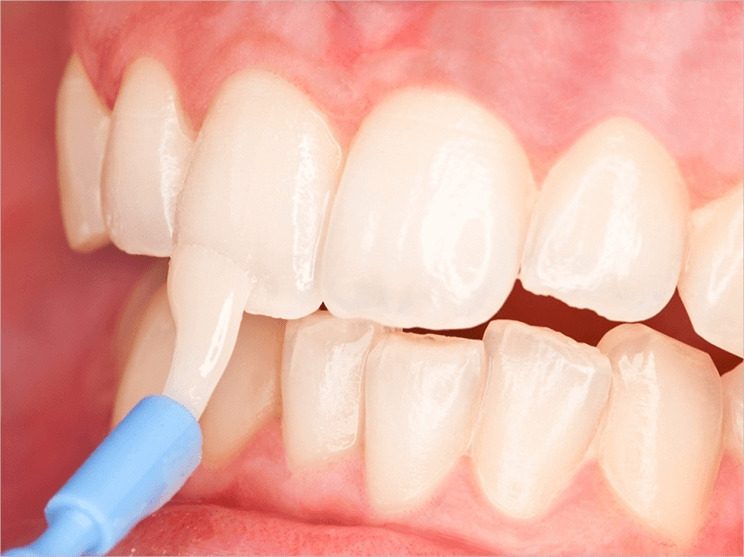


Fluoride varnish is a highly is a highly concentrated form of sodium fluoride. 5% sodium fluoride varnish contains 22,600 ppm of fluoride ion.
Fluoride varnish was originally approved by the US Food and Drug Administration for the treatment of hypersensitivity but is used off-label for caries prevention.

The Cochrane Review states that patients treated with a fluoride varnish experienced an average reduction of 43% in carious lesions, less missing teeth and tooth restorations.
When looking at the effect on newly erupted or deciduous teeth the Cochrane Review discovered a 37% reduction in decayed, missing and tooth surfaces with restorations.

This is my personal choice when applying fluoride and it is what I recommend our clients use for their patients who are high-risk for caries and for children who qualify for a fluoride treatment.

The delivery of fluoride varnish allows the fluoride to remain in contact with the teeth for an extended amount of time.

Depending upon the patients’ risk for caries, fluoride varnish can be applied 2 to 4 times a year by a dental professional.

There is little evidence of adverse reactions to fluoride varnish placement and patients (especially younger children) are accepting of this preventie service.

From a personal point of communication, I share a story with patients, about living in Oregon and we MUST apply a varnish to our back deck or the wood will rot due to all the rain we receive in Oregon.

Use the example of the wood on a deck rotting when varnish is not applied. Explain that saliva has chemicals and possibly an unbalanced ph that will make the teeth rot. Applying the fluoride varnish will prevent the rot in teeth

Sounds corny? Sounds cheesy? Well, patients get it!

When you talk to patients about application of fluoride and/ or using fluoride at bedtime, talk about the cost benefit.

Explain that to have a fluoride varnish in the office two times a year and buying the take home fluoride gel may cost “X” but if the teeth need restorative services it now costs “x, y and z.”

Show your patients the plaque, the biofilm that is causing the carious lesions. Show your patients where decalcification areas are located and explain the benefits of prevention.

Explain that prevention costs less than treating disease (tooth decay; a cavity). Show your patient areas of root exposure and crown margins which at some point may have a carious lesion (cavity).

Showing patients is very helpful in getting them to make the change needed to prevent decay, use the fluoride, pay for what they want.

As the saying goes, “Seeing is believing!”

Also, check the ADA Codes when submitting for insurance reimbursement of the fluoride varnish.

I see it all the time that offices are using an old CDT code and therefore they don’t receive reimbursement or the highest dollar amount that can be reimbursed.

SILVER DIAMINE FLUORIDE
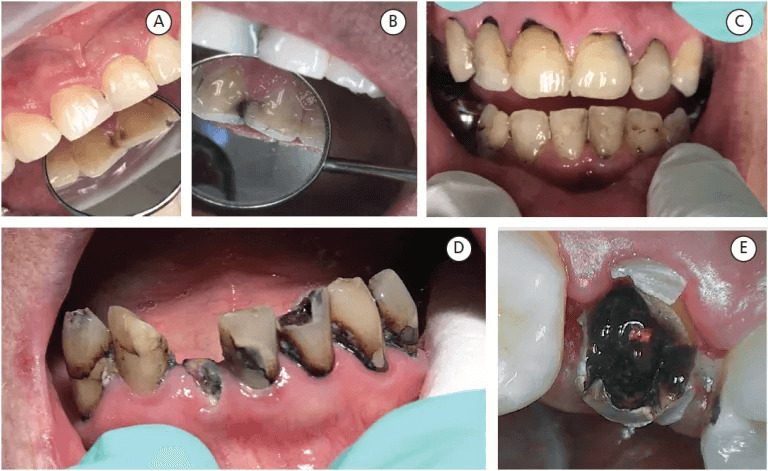
Silver diamine fluoride (SDF) is a combination of sodium fluoride and silver nitrate. Silver nitrate has been known for years as an antimicrobial agent. Sodium fluoride is known to reduce caries.

Sodium nitrate has the ability to arrest and prevent caries due to silver nitrate’s potent germicidal effect and fluoride’s ability to reduce decay. SDF is available in liquid concentration of 38.3% or 43.2%.

SDF is also approved for hypersensitivity and is used off label for caries management.

CONCLUSION

As healthcare professionals we have a responsibility to our patients to understand the value of the various types of fluoride. We must also know the indications for when to use each type of fluoride.

The best care we can provide our patients will be individualized and customized for their needs.
If you were asked, “Is this the best service you have to prevent cavities in my teeth?” what will your answer be?


Debbie Seidel-Bittke


ABOUT DEBBIE SEDIEL-BITTKE, RDH, BS

Debbie Seidel-Bittke, RDH, BS is founder and CEO of Dental Practice Solutions. Debbie is also a former dental hygiene program director. Her expertise is optimizing the hygiene department by taking a total team approach; including the doctor as the leader. Our Dental Practice University will launch for dentists and their team on June 6, 2019.

We are looking for ten offices to test drive (Beta-test) the university. The Dental Practice University has training video modules, forms and scripts for each department in your dental practice.

*For our beta-testers this includes modules for the doctor(s) about creating a culture to have a lot of new patients, keep your dental team the life-time of your dental practice, as well as re-create or create your vision and mission. Doctors receive a 90-Day goal setting journal.

The hygienists have their own training video modules that cover time management, caries risk, treating the gingivitis and periodontal patient.

The front office has video modules on phone calls, new patient calls, we provide job descriptions and a lot of information for hiring and keeping employees long- term.

You receive 24 AGD CE Credits. Once the University is open to all dental practices around the world, it will be FREE for the first 2 weeks and then $97.00 a month indefinitely. It includes AGD CE Credits for up to 2 employees each month. Additional employees can register and get the AGD CE Credits for $20/month.

If you would like to test drive the University over the next year, we do have a few requirements. Please text our office: 949-3551-8741 AND write DPU. You must include: YOUR NAME, YOUR DENTAL PRACTICE NAME, BEST PHONE NUMBER and EMAIL.

Once we receive this we will get back to you to discuss if you qualify for the “test drive” to Beta Test the Dental Practice University.

P.S. If you are chosen to test drive the DPU, two of your team members will receive the 24 AGD CE Credits.*


 

Posted in cambra, flouride

Caries Risk: Fluoride Risk and Benefits

By: admin

May 7, 2019

This is about the “F” word. I say the “F” word because there is so much controversy around the use of fluoride. Very few dental materials have created this strong of a controversy. Much of this controversy is about fluoridated water.


This blog will talk about caries risk: Fluoride risk and benefits. Part II will be posted next week and it will cover the various caries prevention products.

Questioning isn’t wrong; good research should always stand up to scrutiny or be dismissed when discovered to have incorrect, unprovable, or unreproducible data. The public is asking questions and we must provide best answers.

Water fluoridation began about 60 years ago as an experiment and the purpose were to find out if it would reduce the amount of tooth decay.

In 1959 the study concluded that fluoride in the water reduced caries in children by 55.5%.

The CDC has stated that, “Fluoride is safe and effective in preventing and controlling dental caries when used appropriately.” The American Dental Association (ADA) endorsed water fluoridation as safe and effective in the 1950s and continues to champion the impressive results.

Many caries-risk assessment tools are available to help with the decision. The ADA offers several resources to help clinicians decide how to balance the fluorosis negatives of fluoride with the anticaries positives. They advocate frequent caries risk assessment along with analysis of overall fluoride source intake. Printable caries-risk assessment forms are available online from the ADA, AAPD, and other professional and commercial websites.
Nonfluoride therapies

Nonfluoride therapies include oral xylitol and topical chlorhexidine products. Reducing sugar consumption and placing sealants are known to be the best adjunctive services to prevent tooth decay.

The ADA Journal has printed the research on Caries Assessment by Risk Management with protocols and a wealth of information to help educate our patients and this provides information to provide our patients with the best possible care.

The journal can be accessed here.

The Caries Risk Assessment Coalition meeting frequently to collaborate on the latest research on caries and the prevention of tooth decay.

The Caries Risk Assessment Tool (CRA) is also updated frequently. This is a tool that every dental practice should use to educate their patients about their risk for caries.

The most recent ADA Journal reports that an instituted early-caries-management program includes a family meeting with a registered hygienist for 30 minutes. The dental hygienist will complete a screen and provide education which includes nutrition counseling, a toothbrush prophylaxis and a fluoride varnish application.

For the past 21 years of CAMBRA existence, there is an overwhelming evidence due to the CRA tool that results in an accurate assessment of caries risk.

This also supports the creation of effective and individualized caries management plans.

To access the CRA forms please view this CDA CAMBRA Guide by the CDA Foundation and view pages 19 and 20.


BIOLOGICAL AND ENVIRONMENTAL FACTORS

Biological risk factors contribute directly to the initiation or progression of dental caries. They include an assessment of cariogenic bacteria and fermentable carbohydrates, the two required conditions for dental caries.

Additional factors such as frequency of ingestion of fermentable carbohydrates and salivary-reducing medications have been established as important.

The following are the risk factors utilized in the updated CRA form.


1. Frequent snacking on fermentable carbohydrates at least three times daily outside of meal times.

Frequent carbohydrate intake results in a prolonged acidic environment in the plaque that dissolves the tooth mineral and can act as a driving force to reinforce the overgrowth of cariogenic bacteria and the suppression of oral commensal (beneficial) bacteria, leading to future caries development.

Fermentable carbohydrates such as sucrose, fructose (high-fructose corn syrup), glucose and cooked starch are included. Fruit juice (e.g., apple juice) is an important but often overlooked source of fermentable carbohydrates among young children.

2. Use of bottle or non-spill cup containing liquids other than water or milk.

This provides a continuous ingestion of carbohydrates, such as from fruit juices, that leads to a continual acid environment in the plaque. It should be stressed that the use of milk in a bottle overnight and nursing on demand in the presence of cariogenic bacteria provide a prolonged acid challenge that increases the risk for caries and should be strongly discouraged.

3. Mother/primary caregiver or sibling has current decay or a recent history of decay.

Presence of recent decay indicates they have high levels of cariogenic bacteria, especially mutans streptococci (MS), which can be transmitted to the child. Early colonization of MS by age 3 will increase the child’s risk for developing caries.

Current or recent decay in the parent or caregiver is an important indicator of potential high caries risk for the child. This becomes more important in infants with few teeth present, where signs of additional risk factors are not yet evident and is supported by the strong correlation found in numerous studies.

4. Family has low socioeconomic/ health literacy status.

Low socioeconomic status cannot usually be changed and is not a biological contributor to the caries process. However, as a social determinant of health for many other diseases, it is one of several statistically significant factors associated with high caries risk.

Practitioners should account for a challenging family socioeconomic context in formulating a personalized caries management plan. Similarly, low health literacy is not a biological risk factor, but it is often associated with socioeconomic levels and contributes to increased risk of disease. Importantly, it is possible to educate the parent/primary caregiver regarding caries and caries prevention.

5. Use of medications that induce hyposalivation.

Hyposalivation is a side effect of some of the most commonly prescribed medications, such as those used to treat allergies, asthma, mental disorders and cancer. The risk of dry mouth increases with the number of medications prescribed.


PROTECTIVE FACTORS

Protective factors are environmental factors or chemical therapy that help to swing the caries balance to caries prevention or reversal. The factors included in the newly proposed CRA form are:

1. Lives in a fluoridated drinking water area.

2. Drinks fluoridated water.

The beneficial effect of drinking fluoridated water is well established.

3. Uses a fluoride-containing toothpaste at least twice daily.

The beneficial effect of brushing with fluoridated toothpaste has been well established in numerous clinical trials and is a major factor in reductions in caries over recent decades. The American Academy of Pediatric Dentistry (AAPD) recommends the use of a smear of fluoride toothpaste for ages 0 to 2 years and a pea-sized application for ages 3 to 6 years. For children aged 0 to 6 years, it is recommended that the parent/caregiver brushes the child’s teeth or supervises toothbrushing twice a day. Parent-supervised toothbrushing with fluoride toothpaste at least twice daily provides considerable added benefit greater than once daily.

4. Has had FV applied in the last six months.

The caries-reducing benefit of FV is well established, including when used in young children.

Note: Xylitol use by the caregiver is no longer listed as a protective factor in this revised CRA version
as the evidence of its antimicrobial effects to achieve caries prevention is limited for adults or children.

CONTINUATION


Next week’s blog will continue on this topic, but I will outline some of the products to prevent caries.

REFERENCES

https://www.cda.org/Portals/0/journal/journal_012019.pdf

Information accessed on May 6, 2019


Debbie Seidel-Bittke

ABOUT DEBBIE SEDIEL-BITTKE, RDH, BS

Debbie Seidel-Bittke, RDH, BS is founder and CEO of Dental Practice Solutions. Debbie is also a former dental hygiene program director. Her expertise is optimizing the hygiene department by taking a total team approach; including the doctor as the leader.


Our Dental Practice University will launch for dentists and their team on June 6, 2019.

We are looking for ten offices to test drive (Beta-test) the university. The university has training video modules, forms and scripts for each department in your dental practice.

*For our beta-testers this includes modules for the doctor(s) about creating a culture to have a lot of new patients, keep your dental team the life-time of your dental practice, as well as re-create or create your vision and mission. Doctors receive a 90-Day goal setting journal.

The hygienists have their own training video modules that cover time management, caries risk, treating the gingivitis and perio patient.

The front office has video modules on phone calls, new patient calls, we provide job descriptions and a lot of information for hiring and keeping employees long-term.

You receive 24 AGD CE Credits. Once the University is open to all dental practices around the world, it will be FREE for the first 2 weeks and then $97.00 a month indefinitely. It includes AGD CE Credits for up to 2 employees each month. Additional employees can register and get the AGD CE Credits for $20/month.

If you would like to test drive the University over the next year, we do have a few requirements. Please text our office: 949-3551-8741 AND write DPU.

You must include: YOUR NAME, YOUR DENTAL PRACTICE NAME, BEST PHONE NUMBER and EMAIL.
Once we receive this we will get back to you to discuss if you qualify for the “test drive” to Beta Test the Dental Practice University.

P.S. If you are chosen to test drive the DPU, two of your team members will receive the 24 AGD CE Credits.*


Posted in CARIES RISK

Return to Your Training Vault

Contact Info

  • 15508 W. Bell Road Suite 101 PMB 431, Surprise, AZ 85374
  • (623) 252-1941
  • admin@dentalpracticesolutions.com

Office Hours

  • Mon-Thu 8:00am - 5:00pm PST
  • Friday 8:00am - 2:00pm PST

Useful Links

  • Home
  • About
  • Sitemap
  • Terms of Use
  • Privacy Policy

Recent PR

  • PrestoSmile® and Dental Practice
  • Dental Practice Solutions - Debbie Bittke
  • Dental Practice Solutions - Debbie Bittke
  • Dentistry Leaders
Copyright 2026 Dental Practice Solutions

    Input this code: captcha

    captcha

    • Home
    • About
      ▲
      • About Us
      • Testimonials
      • Videos
    • Services
      ▲
      • Hire a Dental Hygienist
      • Dental Hygiene MAX Course
      • 6-Month Dental Hygiene Department Optimization
      • 12- Month Dental Hygiene Department Training
      • Dental Hygiene Department / Team Workshop
    • E-Learning
      ▲
      • Free Resources
        ▲
        • BOOST CASE ACCEPTANCE eBook
        • Treating the Gingivitis Patient
      • More Courses
        ▲
        • Oral Inflammation and Systemic Vitality
        • Properly Sequence Hygiene Appointments
        • Alzheimer’s Disease Prevention.
    • Webinar
      ▲
      • Current Webinar
      • Power Hour March 15 2024
    • Blog
      ▲
      • Podcasts
    • Contact Us

    Schedule your free coaching call here client login

    (888) 816-1511

    Introduction to Orientation Video Part 1