Dental Practice Solutions
Schedule My Opportunity Call Call us now (623) 252-1941 Client login
  • Home
  • About
    • About Us
    • Testimonials
    • Videos
  • Services
    • Hire a Dental Hygienist
    • Dental Hygiene MAX Course
    • 6-Month Dental Hygiene Department Optimization
    • 12- Month Dental Hygiene Department Training
    • Dental Hygiene Department / Team Workshop
  • E-Learning
    • Free Resources
      • BOOST CASE ACCEPTANCE eBook
      • Treating the Gingivitis Patient
    • More Courses
      • Oral Inflammation and Systemic Vitality
      • Properly Sequence Hygiene Appointments
      • Alzheimer’s Disease Prevention.
  • Webinar
    • Current Webinar
    • Power Hour March 15 2024
  • Blog
    • Podcasts
  • Contact Us

Developing a Comprehensive Dental Recare System for Improved Patient Retention

By: Debbie Seidel-Bittke, RDH, BS

June 7, 2023

Dental Patient Retention

Patient retention is a crucial aspect of every successful dental practice. Building long-term relationships with dental patients not only ensures their oral health is well-maintained but also contributes to the overall growth and success of the dental practice. One effective strategy to achieve this is by developing a comprehensive dental Recare system.

In this blog, we will explore the importance of a Recare system, its benefits, and some key steps to establish an efficient and effective Recare system.

Importance of a Dental Recare System:

A dental Recare system refers to a structured process through which dental practices contact (various contact methods outside of phone calls) and schedule routine dental hygiene appointments for their patients. This system is a proactive approach to maintain patient engagement and prevent patients from falling off the radar.

By implementing a Recare system, dental practices can stay connected with their patients, demonstrate their commitment to their oral health, help put a halt to (oral and systemic) diseases, abnormalities and ultimately enhance patient retention rates.

Benefits of a Dental Recare System:

  1. Improved Patient Retention

A well-executed Recare system significantly improves patient retention. By actively reaching out to patients for regular appointments, dental practices can demonstrate their commitment to their patients’ oral health. This personalized approach creates a sense of care and concern, making patients more likely to remain loyal to the practice.

  1. Enhanced Oral Health Outcomes

Routine dental hygiene – preventive care appointments are essential for maintaining optimal oral health. A Recare system ensures that patients are reminded and encouraged to schedule these crucial visits, leading to optimal oral health in the long run this will support living a longer, healthier life.

When identifying any issues before they become a serious problem for the patient’s health, dentists can provide timely care, preventing minor problems from escalating into more significant oral health concerns.

  1. Efficient Practice Management

Implementing a Recare system streamlines the future success of a dental practice. By automating appointment reminders and scheduling, dental practices can minimize no-shows and cancellations, leading to a more efficient and productive practice. It allows dental professionals to allocate their time and resources effectively, ensuring a smooth workflow and improved patient experience.

Developing a Comprehensive Dental Recall System:

  1. Define Recall Intervals

Establishing appropriate preventative care intervals is a crucial first step. This involves assessing factors such as the patient’s oral health status, risk factors, and overall dental and total health history. By tailoring Recare intervals to individual patients’ needs, dental practices can provide personalized care and maintain regular contact.

  1. Utilize Technology

Leveraging technology is key to an effective recall system. Use practice management software or customer relationship management (CRM) tools to automate appointment reminders via email, text messages, or phone calls. This reduces the administrative burden and ensures timely communication with patients.

One patient engagement system our clients have had great success keeping patients on their schedule is called NexHealth. If you are not familiar with NexHealth please contact us and we can set up a no-cost demo.

  1. Team Training

Properly train your team about the importance and implementation of the Recare system. They should be equipped with the necessary knowledge and skills to communicate effectively with patients, answer their queries, and assist them in scheduling appointments.

A well-informed and supportive staff enhances patient satisfaction and reinforces the recall system’s effectiveness.

This system goes beyond calling to tell a patient, “You need a cleaning.” 

  1. Monitor and Analyze Results

Continuously monitor the effectiveness of your Recare system. Track patient response rates, appointment retention, last minute cancellations and overall patient retention.

Analyze this data regularly to identify any areas for improvement and make necessary adjustments to your recall strategy.

WIIFM/Patient Rewards

For many years patients have responded well to keeping pre-scheduled appointments when they know there is something “in it for them.” It’s the WIIFM syndrome. Is this human nature? I don’t know but I do know that it has worked for many years to keep patients on your schedule!

Consider offering free whitening as a reward to patients who do keep their dental appointments, patients who follow your “Change of Appointment” Procedure.

How Does This Work?

  • All new patients and whenever a patient updates their health history they get a Smile Evaluation to complete.
    • This takes no more than 60 seconds for your patient to complete.
    • Now you know what your patient “wants” and people are more likely to “Pay” for what “they” want vs. what you tell them they “need.”
  • The hygienist or doctor (New patients) will review the Smile Evaluation after the patients completes this.
  • Most patients will respond they want whiter teeth. Others want Invisalign, etc., etc.
  • This opens the door for a conversation and a chance for you to enroll patients into your “THE CLUB” (Free teeth whitening) and/or maybe Invisalign, Veneers, etc., etc.
  • Patients pay a nominal fee to enroll in THE CLUB which gives them a Whitening kit and when they complete their enrollment form (now they know what is expected to join THE CLUB and receive a whitening pen at hygiene appts).
  • When patients keep their appointments or call within your “Change of Appointment” Guidelines, they get a Free Whitening Pen at each hygiene appointment.
  • You buy the whitening products wholesale from Dental Practice Solutions
  • Learn more about The Club and all the systems you receive to enroll patients into The Club plus reduce last minute cancellations and grow New Patient numbers!
  • Click the link below to learn more about THE CLUB.

Conclusion:

Implementing a comprehensive dental Recare system is crucial for improving patient retention rates and optimizing oral health outcomes. By proactively engaging with patients, dental practices can establish stronger relationships, enhance patient satisfaction, and streamline practice management. Investing in technology, staff training, and regular monitoring will ensure the recall system’s effectiveness and contribute to the long-term success of the dental practice.

Remember, maintaining a healthy Recare system is not just about reminders—it’s about showing patients that their oral health matters and that their dental practice is committed to their well-being.

Learn More About THE CLUB Here

 If you wish to chat about your dental hygiene department or this blog please schedule a coffee (tea or ____) chat here.
Posted in Dental Hygiene Recare, Recare System

Check Your Dental Hygiene Department Pulse and Increase Your Profit Potential

By: admin

May 21, 2013

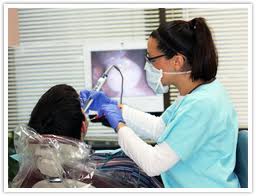
Dental RDH an intraoral camera

Is your dental hygiene department the second highest profit center of your dental practice? What do profitable hygiene departments have in place that will allow them to work like a well-oiled machine and be their most profitable? Why does one hygiene department create more treatment plan success from their dental hygiene department than many others? Do these hygiene departments see more patients to create these higher results? Do they perform more dental hygiene services? Do these auxiliaries work longer hours?

Strategic Systems

New patients are the lifeline to every successful dental practice. Without new patients, production will decline and the practice will not exist. Every dental practice has a normal attrition of patients. This is a fact of business. People move, pass away, or leave because you are not on their “insurance plan” and this can mean an annual loss of 10%. Just as your heart beats at least 60 beats per minute, you must have a continual flow of new patients walking in the front door to make up for those patients who are walking out the back door.

Patient retention (continuing care) is the heartbeat of the dental practice. Your active patient base consists of patients who value your care, accept your recommendations, and pay for treatment. These are the people who trust you and your team. They refer their families, friends, and colleagues to you. These are the are key players to the ongoing success of your business Most patients see the hygienist more than any other auxiliary of the dental team. This is what makes the hygienist carry and important role in building and maintaining the current active patient base.

Maintaining the Active Patient Base

Always preschedule 90 percent of your hygiene department patients. Patients are more likely to understand the importance of why they need to schedule their next hygiene appointment. When the hygienist schedules the patients for their next hygiene visit there is a continuation in the practioner/hygiene communication process. You most likely see a positive patient attitude and an increase in patient compliance occur when the hygienist is engaged in scheduling the patient next hygiene appointments. Ideally this should occur when the patient is still present in the hygiene treatment room.

Words do matter

The dialogue between the auxiliary and patient is extremely important. Here is an example of how the conversation may go:

Example: “Today I found a few areas of bleeding that were considered abnormal and doctor is observing and area where you have the beginning of decay. Our schedule is very tight because patients usually schedule before they leave their dental hygiene appointment. I know that you like to come in first thing in the morning on Thursdays so I recommend that we reserve your next appointment to assure that you can return on that day of the week and at that time in fact that is a very valuable and popular time for most of our patients. To make sure you have your next appointment on this day of the week and at this time, I want to schedule and reserve this time for you now. I can see you on Thursday, October 18th at 8am. Will this work for your schedule? ”

The dental hygienist is the oral health educator for every dental practice. It is the role of the dental hygienist to educate patients about the relationship between oral health and systemic health. Patient involvement and active participation create ownership and accountability and will ultimately reduce the cancellation and failure rates of the continuing care patients. The preventive care and supportive periodontal maintenance appointments have the highest cancellations and failed appointment rates of any service in the dental practice. If you have one hygienist working four days a week and each day you have one cancellation you this can lead to an annual loss as high as $150,000 in hygiene department profits and this does not account for the treatment normally diagnosed from the hygiene appointments.

For a hygiene department achieve success they should be scheduling 95 percent of their future dental hygiene appointments at the time of the patients current dental hygiene appointment. Always create monitors and track the scheduling ratio. Count the total number of patients seen in the hygiene department each month and divide this number by the number of appointments available for the month. The hygiene or scheduling coordinator should then report the current scheduling rate to the team at monthly team meetings. The scheduling coordinator needs to always report in the morning huddle the open times available on the hygiene schedule each day for the next week.

Many dental practices charge a fee for failed appointments, and the effect of doing this has been positive in raising patient awareness of the importance of the time set aside for their appointments.

Team approach

Everyone on the team should understand the words which are effective for a positive patient response. Courtesy confirmation calls, emails, text messages and written communications define the hygiene appointment (continuing care) with dialogues such as this:

“Hello Mr. Goodman, its Megan calling because Maria (Insert the name of the hygienist seeing the patient) and I are looking forward to seeing you tomorrow at 3 o’clock for your preventive care appointment. I see on the schedule that Maria will be doing your annual periodontal screening exam and Dr. Goodtooth mentioned to me that you were in tested in the new whitening product we are using. We’ll see you then. By doing this, patients are moved beyond the“just-a-cleaning-and-a-check-up” mentality. It is best not to discuss any type of cancellation policy because this is only a subconscious reminder that if something else comes up they can cancel and it sets up for failure for your continuing care systems’ success. Do not ask for calls back to the office to verify an appointment. Have the expectation that patients understand the importance of their dental service and desire to come to see the doctor and/or hygienist.

Accountability

Chart audit and patient activation must be ongoing systems that are frequently performed in the office. This is completed through daily reviews and computer reports. While everyone on the team plays an important role, one auxiliary (the hygiene or scheduling coordinator) is responsible and accountable for keeping the daily schedule full and productive. At team meetings, the scheduling coordinator reports and discusses the scheduling effectiveness rate. Everyone needs to be aware of what is working and what is not working so that problem-solving can take place.

Create a plan of action when there is a crack in the system. Ask for suggestions to overcome these challenges which may occur and when you are feeling like a hemorrhaging is occurring in your dental hygiene schedule you may want to consider the advise of a dental expert who is knowledgeable in overcoming these challenges, especially during these stressful economic times.

Scheduling effectively for today and the future

To achieve and assure a full and productive schedule (for all providers), the team should always prepare for the day by auditing patient records. The hygienist reviews patient records for incomplete dental treatment, updated X-rays, status exams, perio, update the medical history, etc. The hygienist needs to be prepared to discuss, demonstrate (with an intraoral camera), answer questions, and provide the facts and findings, risks and benefits, when the doctor enters the treatment room to provide the patient exam. Ideally, a brief meeting (the morning huddle) enables the entire team to communicate, delegate, and maximize the day. One of the most important topics reviewed at huddles with my consulting clients is having the clinical assistants audit their records and identify patients who are seeing the doctor that day that are overdue for hygiene care.

Picture Paint

When patients are in for the appointment with doctor and overdue or need a dental hygiene appointment ask them to stay for the dental hygiene appointment using words such as: “save you-time missing work another day, Save you time returning to the office, etc. Create statements that are certain to benefit the patient. The hygienist does the same if the doctor has an opening and the hygienist has a patient with undone dentistry.

PHILOPHYSHARE (PLAYING WITH PHILOSOPHY)

Finally, by working together, the doctor, hygienist and entire team, communicate and share a practice philosophy for the patients, the hygiene department, and the practice. Working with the dentist as a partner in oral/systemic health care, everyone on the team is committed to the vision of the practice, proudly recommends dental treatment, and refers family and friends to the doctor.

Facilitate change by regularly scheduling meetings with your hygiene team and as a whole team to support and reinforce initiatives and explore new ideas and opportunities for growth and development. Open pathways for communication will lead to mutual respect and admiration and will be reflected in increased profits, a harmonious dental team, and most importantly, healthier patients. It’s a win for all!

Posted in Uncategorized

Return to Your Training Vault

Contact Info

  • 15508 W. Bell Road Suite 101 PMB 431, Surprise, AZ 85374
  • (623) 252-1941
  • admin@dentalpracticesolutions.com

Office Hours

  • Mon-Thu 8:00am - 5:00pm PST
  • Friday 8:00am - 2:00pm PST

Useful Links

  • Home
  • About
  • Sitemap
  • Terms of Use
  • Privacy Policy

Recent PR

  • PrestoSmile® and Dental Practice
  • Dental Practice Solutions - Debbie Bittke
  • Dental Practice Solutions - Debbie Bittke
  • Dentistry Leaders
Copyright 2026 Dental Practice Solutions

    Input this code: captcha

    captcha

    • Home
    • About
      ▲
      • About Us
      • Testimonials
      • Videos
    • Services
      ▲
      • Hire a Dental Hygienist
      • Dental Hygiene MAX Course
      • 6-Month Dental Hygiene Department Optimization
      • 12- Month Dental Hygiene Department Training
      • Dental Hygiene Department / Team Workshop
    • E-Learning
      ▲
      • Free Resources
        ▲
        • BOOST CASE ACCEPTANCE eBook
        • Treating the Gingivitis Patient
      • More Courses
        ▲
        • Oral Inflammation and Systemic Vitality
        • Properly Sequence Hygiene Appointments
        • Alzheimer’s Disease Prevention.
    • Webinar
      ▲
      • Current Webinar
      • Power Hour March 15 2024
    • Blog
      ▲
      • Podcasts
    • Contact Us

    Schedule your free coaching call here client login

    (888) 816-1511

    Introduction to Orientation Video Part 1