Dental Practice Solutions
Schedule My Opportunity Call Call us now (623) 252-1941 Client login
  • Home
  • About
    • About Us
    • Testimonials
    • Videos
  • Services
    • Hire a Dental Hygienist
    • Dental Hygiene MAX Course
    • 6-Month Dental Hygiene Department Optimization
    • 12- Month Dental Hygiene Department Training
    • Dental Hygiene Department / Team Workshop
  • E-Learning
    • Free Resources
      • BOOST CASE ACCEPTANCE eBook
      • Treating the Gingivitis Patient
    • More Courses
      • Oral Inflammation and Systemic Vitality
      • Properly Sequence Hygiene Appointments
      • Alzheimer’s Disease Prevention.
  • Webinar
    • Current Webinar
    • Power Hour March 15 2024
  • Blog
    • Podcasts
  • Contact Us

Dentists: How to Choose an SEO Company

By: admin

April 14, 2017

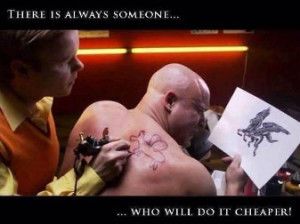
While there may be simple dental SEO factors within a website’s coding that need to be addressed, most competitive areas require ongoing monitoring to ensure no other dental website passes you up.  If SEO is priced at $300/month, they can’t create useful, engaging content.  Especially after half of your money goes to pay the sales force that cold called you in the first place.

#2 Bragging About The Size of Sales Force

A true dental SEO expert doesn’t brag about his sales force.  Rather, you should inquire about the kinds of relationships the SEO expert has with people within the dental industry or other websites they can publish on.

Dr. Seth Lookhart has dental offices in 3 countries and is widely considered an accomplished dentist.  He says “When looking for an SEO consultant, I wasn’t interested in finding the cheapest there is. It’s about ROI, and knowing that everything is running efficiently.”

More and more dental offices are interested in knowing the SEO tactics actually being used, rather than getting sucked into a sales process with fancy buzzwords.  This dentist in Apex, NC found that the key was learning the basics about SEO, in order to gain new patients for his growing practice.

The quality of your SEO expert’s writing skills, or their staff’s ability to produce remarkable content is important.  Does the writing team create stories that people care about?  Does the content consistently rank atop Google?  How does the SEO company handle satisfying searcher intent?  There are many ways to show how successful you are in SEO, but having a boiler room full of salesmen dialing-for-dollars isn’t one of them.

#3 “Secret Sauce” SEO

Transparency in SEO is a great sign.  Being able to cogently identify exactly what’s being done for your SEO is of paramount importance.

Most SEO firms who are transparent in their tactics are much more likely to have an SEO strategy that involves both higher quality content, and relevant inbound links.  While you should only work with an SEO professional you trust, nothing replaces great communication about what’s actually being done.  My general rule of thumb is this: if they can’t explain in plain english what’s being done, it probably isn’t that great.

So what SHOULD you look for?

  1. Look for an SEO expert that teaches about SEO.  Thought leadership is a great sign in a consultant or company that claims to understand Google’s algorithms.
  2. Work with an SEO expert that assesses your unique needs, before pitching a “sale.”  By doing some quick keyword research, you can find out exactly how many people are searching for dental services in your area.  Before you make the upfront investment.
  3.  A firm grasp of the dental industry.  The SEO expert should be able to provide a wide array of dental marketing ideas that help SEO, and new patient flow.  By knowing about the dental industry, SEO works much more seamlessly.  From knowing which types of websites to earn links from, to knowing the kind of dental content Google favors, you can be sure that a dental SEO expert can be superior to a general SEO company.

Justin L. Morgan, known in the dental industry as “The Dental Marketing Guy,” teaches about dental marketing on his blog and YouTube show. Justin has been featured in major media outlets such as Dental Products Report, Dentistry Today, Dentistry IQ, Dental Town, Entrepreneur, and a number of Fortune 500 company blogs. He is the creator of The Invisalinks Method, the first and only SEO course for dental professionals.

Posted in Blog

The Dental Hygienists’ Role in Patients’ Treatment Plan

By: admin

April 6, 2017

[youtube http://www.youtube.com/watch?v=DFh4qnuPKbI?rel=0&controls=0&showinfo=0&w=560&h=315]

Hygienists’ Role

During the hygiene appointment, it is valuable for the hygienist to discuss what they see in the patient’s mouth.

The blog today is about a topic we are asked about often and it will support the Dental Hygienist’s role in patients’ treatment plan.

In Diagram A you will see our Time Management Formula which outlines where the hygienist should be during the hygiene appointment. This time management formula helps hygienist to find time to discuss what is seen in the patient’s.

The first part of every hygiene appointment will be the data collection. This will include not only the review of medical history but the perio exam, oral cancer exam, radiographs when necessary, a smile evaluation, visual exam, intra-oral photos.

After you collect all the important patient information you will sit the patient upright and knee-to-knee-eye-to-eye to now create a partnership with your patient to show them what you see. Now you are in the Treatment Planning phase of the hygiene patient appointment.

Please note: this time management formula is only a suggestion of time and if you have less than sixty minutes of time with your patient you will adjust the time formula so it meets your schedule. This is an example of time for the sixty minute hygiene appointment.

During this time with your patient you will show them what you see on their perio chart, radiographs and/or intra-oral photos. Let your patients be a part of what you see. Ask them to show you what they see after you show them. Say words like “bleeding, infection, large black area is tooth decay moving very close to the nerve which can cause you a toothache.”

Your patient is possibly hearing this information for the 1st time and all these words are new to their oral condition. It can feel overwhelming for your patient to hear all this information, so break it down into words you believe they will understand.

This means that you will not say words like “Periodontal Treatment” but instead you will say “Gum Treatment.” You do not want to say, “Deep Cleaning” because when a patient has gum disease (AKA: Periodontal Disease) this is not treated with a cleaning but with a special “gum treatment” or “gum therapy.” It also down-plays what is actually happening in their mouth. A periodontal patient is not going to get a cleaning.

Once the doctor enters to do the exam it is the hygienists’ role to connect them with the patient and guide them through what has occurred during the appointment.

The connection is an update your patient; a personal aspect of their life. This is rapport building. It doesn’t need to take but a minute for doctor to be reconnected with a routine patient.

With the hygienist’s guidance, when talking with doctor in front of the patient and doctor, the patient will hear the same words used to describe the patient’s oral condition.

Then when dismissing the patient, the hygienist will again explain to the front desk what was completed, what the patient needs to schedule for (if not scheduled in hygiene room) and the valuable “reason the patient will return.”

Now your patient has heard this topic of discussion, these words which describe their oral condition, at least 3 times and they are beginning to be more familiar plus have a deeper understanding of what is happening in their mouth. They are now understanding why it is important to return sooner than later.

This system is part of what we teach our clients (Our doctors and their team) which is helping to “close the back door.” This is what helps keep our client schedules full and productivity high.

  • Do you know what percentage of your treatment plans come from the hygienist showing the patient hat is happening in their mouth?
  • Do you know the specific words to use that will add a lot of value for your patients to schedule, pay and return to your office?

This is what we spend a lot of time working on with our clients.

Let us know how we can support your team and get you to that next level of success.

Posted in Blog

Dental Appointments. Your Patient’s Reason to Return

By: admin

March 29, 2017

[youtube http://www.youtube.com/watch?v=uXW-wGS-z8E?rel=0&controls=0&showinfo=0&w=560&h=315]

How do you know what is valuable to your patient?

What is the benefit to your patient if they complete their dental treatment or return for their dental hygiene appointment routinely?

What is your patient’s reason to return?

Let’s think about when you will learn what is valuable to your patient.

When will you know what is valuable to your patient?

For new patients you will (or should) discover what is valuable to them during that first phone call to your office.

It is important to listen closely to the words your patient is saying and the way they say what they are saying. Do they speak loud or soft? Do they speak fast or slow? What is their tone as they speak?

Do they say things like, “Money is going to be my reason for completing this treatment I know I need.”

BTW: This is a comment from a walk-in new patient for an office (a client office) I was working with today.

Most of the time your patient will make their decision based on their value around time or money. These are the two main factors that come into play when patients are making a decision and it is your job to overcome these objections before they even are a stated objection.

Why many patients will not return to a dental office is due to fear of anxiety from a previous bad dental experience. This is another topic of conversation.

Patient Discovery 

When is the best time to discover what is valuable to your patient?

Answer: The first 2 minutes will be the most valuable time with building rapport and understanding your patients’ needs, what’s important to them and even how their day is going (ex: If they are rushed for time or having a stressful day!).

In fact, the first “Hello” and a handshake can tell you a lot about what kind of day your patient is having. This is where you can first begin to build (or re-establish) rapport.

This conversation can be as simple as “What are you doing this summer?”

If you were to ask me this question, I will tell you that I am going to an important high school reunion.

The topic of my conversation (If I am your patient today) will center around meeting up with old friends and wanting to look my best!

Now, it’s your turn as the clinician to open the door for me to look my best.

Do you have a special laser whitening offer going on?

YES?! 

Now is a great time to ask “Debbie, if there is one thing that we can do to make you look better than ever for you high school reunion, what would that be?”

Great question! And if I am your patient here is what I will tell you:

“I would love to have my teeth look youthful again. I want them whiter and also longer.”

Does your office have a special smile makeover process?

If so, now is a great time to talk about this process and how it can make me look my best for the summer high school reunion.

Complete the scheduled appointment, do an “initial” smile evaluation and then have me back for a 20 minute consultation later this week. At this consultation appointment you will have your treatment (or financial) coordinator discuss the smile makeover and work out the financial arrangements. Now you will schedule the treatment.

This special consult adds value to your patient appointment. The initial patient value you discovered is why this patient wants to return ASAP for the consultation and find out more information about how you can help her meet her needs.

Do you see how simple that can be to have your patient understand “their” important reason to return to your office?

When you think back to the last day of patients in your dental office, can you think about each patient’s personal reason to return to your office?

This is not a reason around what you “found” in their mouth. This important reason to return has to be a reason important to your patient. This is a value to your patient.

In closing today I want to ask you, “Do you know each patient’s important reason to return?”

We teach this system with our clients, their team and it becomes a part of every patient appointment. This is what we call the R2R and it becomes a part of each patients record.

Posted in Blog

Case Acceptance: Reason to Return

By: admin

March 22, 2017

[youtube http://www.youtube.com/watch?v=6aRy5tdAszY?rel=0&controls=0&showinfo=0&w=560&h=315]

What factors help you decide to buy a certain car?

What criteria helped you decide to buy your last washer and dryer?

And why do you buy your groceries where you do?

Think about this and when you last provided a diagnosis for dental implants or even something as simple as tooth whitening?

How did you present treatment diagnosed to your patient?

Did you tell your patient how cool it is that you can easily screw in the implant or did you explain about the high-tech NASA Technology and these Implants are made of titanium and should last the rest of your life if cared for properly?
Did you tell them the implants are inexpensive?

I highly doubt it!

Your patients are making their decision on the expected result and how this will benefit them.

So, they are not buying a washing machine based on how well it is designed but how well it works to clean their clothes, how it functions and it is possibly all that plus the cost to buy it.

Your patients reason to pay, schedule and return for treatment and routine appointments is the same as why the shop at a specific grocery store and why they decided to buy their car, etc.

Here are some tips to Keep Your Schedule Full:

  1. Create a partnership with your patient
    • Help your patient to own their oral condition
    • Show your patients what you see
  • Show your patients what their oral condition is
  • Show your patient what their condition can look like when they choose your care
  • Show them any treatment you have completed in their mouth

“Remember when you had that open space and food was getting trapped there? Look how beautiful it is now? And you don’t have that terrible feeling of food stuck between your teeth anymore, do you? We can do the same thing in your mouth over here.”

  1. We suggest to our clients (Dentists and their team) that if a treatment plan is X dollars or more (Typically $2,000) the patient will return for a special consultation with the office treatment coordinator.
  • This is a separate appointment with someone in your office who can review the value and benefits of why the patient needs to schedule this appointment and keep in mind what is specifically valuable to the patient
    • This is someone on your team who is comfortable talking about dental treatment. They are
    • Someone who is not afraid to talk about how much something costs – ex: comfortable talking about money
  1. Always remember to show-off your beautiful dentistry
  • Take before and after photos
    • Place these photos on the walls of your office
    • Place a photo album of your patients before and after photos on a coffee table in your reception area
    • Be sure your team is comfortable bragging—complimenting doctors amazing clinical skills and the patients’ outcome!
    • Create Your Own “Wall-of-Fame!”

When working with our clients and inside our member-site called “Hygiene Empowerment, we teach you more about Case Acceptance and how you can keep your back door closed!

Posted in Blog

To Charge or Not to Charge. Oral Cancer Screenings

By: admin

March 13, 2017

[youtube http://www.youtube.com/watch?v=XRCcKrFxdac?rel=0&controls=0&showinfo=0&w=560&h=315]

Years ago, the dilemma that most dental professionals faced was regarding whether to use advanced technology to screen for oral cancer.

Today’s Facts: The occurrence of oral cancer has continued to rise and has begun affecting a younger demographic, due to a staggering increase in the prevalence of human papillomavirus (HPV). Fluorescent technology for early discovery of this growing epidemic has continued to evolve. Adjunctive devices have been simplified and very cost-efficient. My preference is the OralID because of the light weight and small size of the device. This technology makes oral cancer screening a no-brainer.

The questions that continue to repeat in the dental clinicians mind is:  “Should we charge for this or not charge?”

Once the dental team has decided to charge the next questions are:
“How much do we charge our patients for this enhanced oral cancer screening?”
“Do we only bill insurance, or do we screen for free as a service to our patients?”

The great news is: With the latest device having zero cost per patient use, you can incorporate the technology with whichever answer to the question fits your practice best.

Below, I will outline a few examples on ways to incorporate enhanced oral cancer screening into your practice.
To Charge
Charging for services performed is standard in health care. As you invest in your practice, in terms of both time and money, it is natural to assume compensation will allow you to make a return on your investments. Enhanced oral cancer screening is a service you provide, and it is perfectly acceptable to expect an increase in revenue in return for the service.
How to charge for enhanced oral cancer screening can vary from office to office. Here are a few options for charging:
Charge an annual fee: You can simply charge a flat fee for your enhanced oral cancer screening. Set a fee of around $20 (or within a range of $10 to $35) per patient, per year. If you educate your patients properly, you should see fairly high acceptance rates in your office. But if you just hand a patient a consent form and ask for a $65 fee, you will not have any success. So, if you decide to incorporate this method, make sure that the fee is reasonable and that you have educated your patients about the importance of what you are doing. Explain that you have invested in the technology because it could potentially save their lives. OralID offers Lifetime Team Training by our in-house hygienist, so you can get help with ideas on how to best educate your patients and maximize screening acceptance.
Charge one fee for life: In the spirit of the “whitening for life” campaigns that some offices offer, you can charge up-front for participation in an “oral cancer screening for life” program. Charge $35 to $100 at the first visit and then screen the patient at no additional charge during future visits (as long as he or she does not miss any hygiene appointments, of course).
Raise your fees: Increase your exam and/or prophy fees to include the service and do not charge the patient directly for it. This allows you the freedom to screen every patient and compensates you for your time and for your investment.
Not To Charge
Dental practices are always looking for ways to differentiate themselves from competitors. Offering advanced oral cancer screenings is a proven method for increasing marketability and gaining new patients. Performing free oral cancer screenings for every patient is a service that will be appreciated by patients and that will not only get you more loyalty from current patients but also motivate them to refer friends and family-and this is the ultimate marketing goal.
You can hand a card to each patient that reads, “Has your loved one been screened for oral cancer?” or a coupon for a free oral cancer screening. Doing so will certainly differentiate your practice from the others, building value in the practice by maintaining and growing the patient base. The days of “whitening for life” are unfortunately over, but offices can now incorporate “oral cancer screening for life” for their patients due to the latest technology finally being affordable enough to make it possible.

CDT Code to Bill: D0431
A change in thinking
Patient care should be the focus for all offices. Given that, you may eventually change the method you choose in regard to charging or not charging. It’s not uncommon for offices to begin screening by charging for the service, only to decide not to charge after finding a lesion that might not have been discovered without the device. For many practices, a situation like this one is a practice changer that leads to the realization that enhanced oral cancer screening is important for every patient.
So, when you are thinking about the new screening decision, whether “to charge or not to charge,” remember that there is no right or wrong. By making the simple choice to incorporate this technology into your practice, you could be making a life-changing decision for your patients.

For more information on the OralID go to: ORALID MORE INFORMATION

Posted in Blog

Gingivitis Code: What You Must Do!

By: admin

February 2, 2017

[youtube http://www.youtube.com/watch?v=08KUTmVaj2Q?rel=0&controls=0&showinfo=0&w=560&h=315]

Welcome to 2017 and our new CDT Codes! The long-awaited gingivitis code has arrived and we should be jumping for joy!
But wait….You are saying you don’t think you should use the code? Yes, that is what we are hearing. Some of you are not sure insurance  will reimburse your patient for this service.

Gingivitis Code: What You Must Do!

What you must do it record in your patient notes what treatment you provided your patient.

BTW: Our clients who are utilizing the D4346 Code have received payment. The payment they  received was about or around the same amount as the reimbursement paid for D4910 – Periodontal Maintenance.

We know that some of the Delta Plans have made payment for this code as well as Blue Cross and a 3rd party umbrella plan “DHA” have all reimbursed for our clients who billed D4346.

Some of you may remember when we first had the fluoride varnish code. Not all insurance companies reimbursed for this insurance code when billed but as time passed and the more offices billed and insurance companies saw this code being submitted for payment, the more insurance companies began to reimburse for this service.

Bottom Line. Bill exactly what you diagnose treatment and then treat according to your diagnosis.

D1110 Definition

Prophylaxis is”only for people who do not exhibit any of the signs and symptoms of periodontal disease, including bone loss, bleeding, mobility, exudate, and recession.” It is for  “the removal of plaque, calculus, and stains from the tooth structures in the permanent and transitional dentition. It is intended to control local irritational factors.”

D4346 Definition

“Scaling in presence of generalized moderate or severe gingival inflammation – full mouth, after oral evaluation The removal of plaque, calculus and stains from supra- and sub-gingival tooth surfaces when there is generalized moderate or severe gingival inflammation in the absence of periodontitis. It is indicated for patients who have swollen, inflamed gingiva, generalized suprabony pockets, and moderate to severe bleeding on probing. Should not be reported in conjunction with prophylaxis, scaling and root planing, or debridement procedures.”

Legally you need to document a diagnosis. The next time you see your hygiene patient and make your diagnosis before you begin your patient care, be sure to match your diagnosis with Healthy, using one of these procedures or Disease, which indicates you begin or continue periodontal therapy.

Next time you question insurance payment for your hygiene patient care refer to these definitions for determination of your diagnosis and then treat accordingly.

We are in the business of helping our patients live a longer and healthier life. It is also our ethical and legal respsonsibility to treat our patients according to their diagnosis.

This is what we must do!

Got questions about  this new code? Yes, it can be confusing but here is what you can do now:

  • Grab our Free Resource on treating gingivitis
  • Once you grab this resource you will receive an invitation to join the webinar on Feb 21, 2107 with Dr. Roy Shelburne – The coding and billing expert
  • Read our other numerous articles  written previously
  • Mark your calendar for February 21st at 5:30PM Pacific and plan to join me with Dr. Roy Shelburne as we discuss this topic in more depth.
Posted in Blog

Dental Practice Systems Create Wealth

By: admin

January 5, 2017

There are hundreds of dental stories inside the dental jungle.

Dr. Frank Frederickson is the Guide taking dentists through the dental jungle and offering sage advice.

Dr. Carly Carlson is a young, new dental practice owner and she is fired up, ready to rock and roll in her new dental office. Dr. Carlson’s first question to Dr. Frederickson is about growing her retirement account so that she can one day, have a good retirement. Dr. Carlson specifically asks, “How can I maximize my new dental practice so that one day I can have enough money to retire?”

Dental Practice Systemscreate wealth.

Dr. Carlson had not heard of having an 8:00 a.m. start-the-day right goal in addition to a daily goal. She did not understand the value of holding a team meeting so that everyone on the team can “close any gaps”and “be on the same page.”

Dr.Frederickson advised Dr. Carlson that this system is something that needs to be done on Monday. To have the right goals at the start-of-the day is really not too difficult and it would not take a lot of planning. You need to communicate your goal to everyone and make it happen with a lot of effort and desire.

Dr. Frederickson knows a lot about systems that create success for the dental practice and he explained to Dr. Carlson that it’s never too late to create and then start running systems.

It’s All About the Patient Care Systems

Systems create wealth. Ask Henry Ford about his production system. Ask Bill Gates about his operating system. Ask Julia Child about her recipe system. Ask Richard Branson about his entrepreneur system. All will say that their secret to creating wealth was that they created and then followed a system.

Patient Care Systems are a significant part of a $10,000 A Day Dentist’s strategic plan. They include carefully outlined the steps for every procedure performed in the practice. Each system is known and understood by the entire team. There is no creating-it on-the-fly, no winging-it, and no last-minute-planning in a “well-oiled machine” practice.

Examples of a Patient Care System would include:

1. The Dental Emergency Appointment
2. The New Patient Experience
3. The Ultimate Hygiene Patient Experience
4. The VIP Consult (which is a free second opinion consultation)
5. CMO Exam – the craniomandibular orthopedic workup.
6. The Smile Analysis – the Cosmetic Evaluation
7. Periodontal Evaluation: Oral/Systemic Health Connection and Treatment Protocol
8. Dental Implant Exam and Diagnosis Appointment with the cone beam CT scan
9. Full Mouth Reconstruction Pre-planning Appointment
10. Invisalign® Exam and Impression Appointment

Every procedure has a system and every appointment follows a system. Imagine a scenario in which you have a system to diagnose a problem and then you will treatment plan the solution. Next, imagine the business assistants activating a system to get the patient into that treatment and then the clinical assistants implementing a system to actually do that work. All of this is completed without additional time consuming input from you; the dentist.

Now imagine that being done for every procedure, every patient, and every day.

Would the stress in the office be lower, production higher and profits magnified? The answer is always, yes!

Having Patient Care Systems in place all across the practice are like everyone on the team having their own Swiss Army Knife ready to handle anything, anytime, anywhere. Our Team Training combined with the Solstice 5M Mastermind groups examine many systems in-depth within their individual practices. This consistently results in increased production within the practice.

Planning for a good retirement includes examining how you can maximize productivity in your dental practice and making wise decisions to implement the changes. It’s the same when creating Patient Care Systems that are necessary to increase value in your practice.

Dr. Carlson is off to a great start with her new practice. It’s never too late for you as a dental practice owner to travel into the dental jungle and follow your guide.

How are you doing? Are you lost in the dental jungle? Do you believe that a guide will help you create efficient systems to increase your profits in 2017?

Please comment below how you are doing in your dental practice. Which of the above systems do you have in place? How are these systems working for you?

These systems are your key to building wealth.

You may want to ask about our Mastermind Training which begins on Friday January 20, 2017.

Schedule a Call with Debbie Seidel-Bittke, RDH, BS and Dr. Bill Williams

Posted in Blog

Maximizing Your Capacity Inside the Dental Jungle

By: admin

December 28, 2016

In the dental jungle there are thousands of success stories. Let me introduce you to our guide an elite dentist, a peak performer, in our dental industry. His name is Dr. Frank Frederickson.

DENTAL HYGIENE DEPARTMENT/TEAM EMPOWERMENT – MAXIMIZING YOUR CAPACITY INSIDE THE DENTAL JUNGLE

Dr. Carley Carlson is a dentist of five years. She purchased a dental practice three  years ago from a dentist who basically let his practice die. She was able to get a good deal on the price of this practice because it was run down by the previous dentist.

Dr. Carlson decided that in 2017 she wants to take a big leap forward so she has paid to travel into the dental jungle and she has hired her guide named Dr. Frederickson.

Dr. Carlson’s first goal is to break the two million dollar mark for 2017. She knows that focusing on her dental hygiene department will be one of the best ways to accomplish her big goal for 2017.

Dr. Carlson’s question to Dr. Frederickson is, “How do I break the two million dollar mark in 2017?” Dr. Frederickson’s response: “In all honesty, not many dentists think like this but those who do, they actually do it. Size doesn’t matter. You will only be limited by what lies inside the mind.”

Simply put, dentistry is a series of interactions. The student learns from his or her professors and then they will apply what they learn on their patients. A dentist learns from his advanced General Practice Residency and applies what he or she learns on her patients. An experienced dentist moves up the ladder of success by taking continuing education courses; one symposium at a time, adding to their repertoire to help patients.

The king of dental learning experiences a life of success inside the dental jungle with their guide such as Dr. Frederickson.

In the team training with Dr. Frederickson; an experienced mentor or coach, combined with the “Empowered Hygiene” curriculum, you exactly what your team needs to grow your dental practice. Each member of your team will have a leadership role with specific responsibilities, accountability and support to grow the dental practice.

Dr. Frederickson says that empowering the team, providing leadership and accountability from your guide, aka: your coach, will yield the biggest boost to your dental practice.

I’m not just boasting about being “The Guide” so that others can achieve the same outstanding results that our other doctors who walked through the Dental Jungle have experienced, but I do know that doctors who allow a guide to take them through the dental jungle, they double their practice production.

Because they follow a guide who has traveled through the jungle before them, it’s conceivable that a two million dollar practice for Dr. Carlson is easily within reach.

Within a local study club, you have dentists who are competing for patients. By contrast, your guide and everyone supporting you, take a personal interest in you doing well. That in itself can’t hurt when you have the right mindset.

In our Hygiene Department, Team Training, we ensure success by creating a team driven practice. The team members are empowered to be their very best. This means that your team members are peak performers. Each member of the team has a leadership role with accountability and rewards for their success.

I really enjoy helping doctors walk through the dental jungle to maximize their capacity. The leap to your next million dollars in 2017 is only limited by your mindset.

The Hygiene Empowerment with Team Training, will be the best investment you can make for your success in 2017. There is no other place you can go to deposit one dollar and have a return of ten dollars! And those dollars earn dividends for years to come.

Let me know if you are ready to walk with your guide through the dental jungle in 2017. I’d like to show you the way.

You may want to ask about our Mastermind Training which begins on Friday January 20, 2017. Schedule a Call with Debbie Seidel-Bittke, RDH, BS and Dr. Bill Williams

Posted in Blog

Efficient Scheduling For a Successful Dental Practice

By: admin

December 20, 2016

[youtube http://www.youtube.com/watch?v=91B4gh4DwBE?rel=0&controls=0&showinfo=0&w=560&h=315]

TIME IS THE MOST valuable commodity in any business. Equipment and supplies can always be restocked, but lost time is not as easily replaced.

There are countless ways time slips away in a busy dental practice—from late and cancelled appointments to being unable to efficiently move between treatment rooms, the list goes on and on.

So how do you make the most of your time while dealing with the usual hiccups throughout the day? We have a few tips to help you out because let’s face it; your schedule is the core of every successful dental practice.

Keep reading for tips on efficiently scheduling appointments in your dental practice.

Maximize Your Practice Potential with These Scheduling Tips

Some of the most common scheduling mistakes we see are no plan to add new patients to your schedule when you are running a successful new patient marketing campaign.

Another mistake we see is when a practice does run an overdue hygiene patient campaign to get patients to return to your office, many of these patients need perio therapy and there are no openings in the hygiene schedule for months out. These hygiene patients end up waiting months before they can begin their perio therapy.

What you must do to have a productive schedule is:

  • Know your production goals and then schedule to goal
  • Utilize blocked scheduling to accomplish your goals
    • Crown/bridge procedures
    • Seat appointments
    • CEREC procedures
    • New Patients
  • Time your procedures for each section of the appointment
    • Anesthetic
    • Hygienist time
    • Assistant time
    • Doctor time
  • Hygienists are a key member of the team who must schedule all future routine hygiene appointments
  • When patients call to change an appointment offer a solution to help them keep their appointment

Successful schedules allow your practice to avoid unexpected surprises. Maintaining a predictable flow in your schedule means consistent productivity.

Time Is an Invaluable Asset

We know managing a successful practice isn’t an easy task. That’s why we’re here. If you have questions about improving the efficiency of your day-to-day operations, let us know! We can provide you with proven time-management and scheduling strategies that not only improve your team’s workflow, but will add to your bottom line as well.

Posted in Blog

Dental Marketing: Life in the Dental Jungle

By: admin

December 9, 2016

The Dental Jungle and Web Centric Dental Marketing Focus

The dental jungle has 101 stories; this is one of them. We follow Dr. Alex Middleton, the Guide, as he gives sage advice to his dentist friend, Dr. Jack Mudd.*

Not all dentists understand marketing after all; they went to school to learn clinical skills not marketing strategies.

Life in the Dental Jungle

We all see what comes in the mail each week. What you may think is that the so-called “Junk mail” is marketing. You may think this is the sum total of what marketing is all about.

Jack did not seem to do much dental marketing and asked a question that showed his frame of mind, “What good does marketing your dental practice do when all you see are $29 exams and $600 crowns in the mailers sent? No dentist can make a profit on these kinds of fees.”

Alex explained the role of a loss leader, a call to action and an irresistible offer to Jack. Alex helped Jack get a view of the true marketing picture. Kind of like looking at it from 50 feet in the sky.

WEB CENTRIC MARKETING: MOBILE RESPONSIVE REQUIRED

Many, many years ago, all roads, at one time, led to Rome. Today, all roads, blogs, tweets, social media posts and shares must lead to your website. Web Centric marketing means that the practices’ website is the center of all your marketing efforts.  All marketing needs to be directed to your website. This is your marketing hub; the center of all that is important about the practice.

Three key ingredients need to be included in your web centric marketing action plan:

  1. Website mobile responsive
  2. An irresistible offer
  3. A strong call to action

It’s imperative that you know where your ideal patients hang-out, what activities they participate in, etc. To create successful marketing efforts, you want to know what type of activities your future and current patients participate in, what churches they attend, what schools their children attend and even what magazines/newspapers they read.

Mobile responsive and mobile capability is 100% necessary. The practice that does not plan for mobile responsivness will lose market share over time to those that do. Most people in today’s world search the internet on their mobile phone, iPad or mobile device. If your website is not mobile responsive it is likely that these people will never see your website.

To move people from spectator to customer there needs to be a strong reason for them to make a choice; make a decision. Give people your best offer and they will respond. What do you find irresistible? Chances are others will feel the same way. When they do feel good about your irresistible offer they will buy.

Everyone likes a deal—so get good at closing deals. But beware, not all deals need to involve a huge discount. Adding value often trumps discounts. Many people want access to a limited supply of their doctor’s time. Many value the VIP status that comes with being an insider. How can you create added value without devaluing your services and decreasing your profitability?

To cut the fee or not… Now, that is the question! Do your research and see how much more you will grow if you have a marketing action plan that includes some fee discounts for specific purposes. Those purposes could be filling hard-to-fill appointment slots, attracting new patients, reactivating patients who have not been in for the last eighteen months or filling in an empty schedule today. Another opportunity is when you have a new associate and need to fill their schedule.

Have you re-evaluated your practice’s website lately? Does it clearly illustrate the added value you bring to patients? Does is display your irresistible offer boldy? Does your website draw new patients in? Do current patients visit your website to see what new things are going on in the life of your practice from which they can benefit? Perhaps it’s time to “put fresh eyes” on your website.

*Excerpt from The $10,000 A Day Dentist Author: Dr Bill Williams Director of the 5M Mastermind


Posted in Blog

Post navigation

  • ← Older posts
  • Newer posts →

Return to Your Training Vault

Contact Info

  • 15508 W. Bell Road Suite 101 PMB 431, Surprise, AZ 85374
  • (623) 252-1941
  • admin@dentalpracticesolutions.com

Office Hours

  • Mon-Thu 8:00am - 5:00pm PST
  • Friday 8:00am - 2:00pm PST

Useful Links

  • Home
  • About
  • Sitemap
  • Terms of Use
  • Privacy Policy

Recent PR

  • PrestoSmile® and Dental Practice
  • Dental Practice Solutions - Debbie Bittke
  • Dental Practice Solutions - Debbie Bittke
  • Dentistry Leaders
Copyright 2026 Dental Practice Solutions

    Input this code: captcha

    captcha

    • Home
    • About
      ▲
      • About Us
      • Testimonials
      • Videos
    • Services
      ▲
      • Hire a Dental Hygienist
      • Dental Hygiene MAX Course
      • 6-Month Dental Hygiene Department Optimization
      • 12- Month Dental Hygiene Department Training
      • Dental Hygiene Department / Team Workshop
    • E-Learning
      ▲
      • Free Resources
        ▲
        • BOOST CASE ACCEPTANCE eBook
        • Treating the Gingivitis Patient
      • More Courses
        ▲
        • Oral Inflammation and Systemic Vitality
        • Properly Sequence Hygiene Appointments
        • Alzheimer’s Disease Prevention.
    • Webinar
      ▲
      • Current Webinar
      • Power Hour March 15 2024
    • Blog
      ▲
      • Podcasts
    • Contact Us

    Schedule your free coaching call here client login

    (888) 816-1511

    Introduction to Orientation Video Part 1